#browser extension debugging
174 related articles

·3 min
Tigriden: A 40MB Rust Minimalist IDE Designed Specifically for AI Coding Agents
Tigriden is a minimalist Rust workbench using only 40MB of memory, designed for AI coding agents like Claude Code. No Electron, no LSP—leaving resources for AI.
Read more →

·2 min
Browser FX: A Review of the Real-Time Audio Effects Chrome Extension
Browser FX is a Chrome extension that captures audio from any tab for real-time effects processing, featuring studio-style knobs, Cymatic visualization, and MIDI controller support.
Read more →

·2 min
Chrome Web Store Review Approval Guide: Dead Code Cleanup and Packaging Best Practices
Chrome Web Store submission rejected? Learn how to pass review by cleaning dead code, removing node_modules from builds, and ensuring compliance with store policies.
Read more →
·3 min
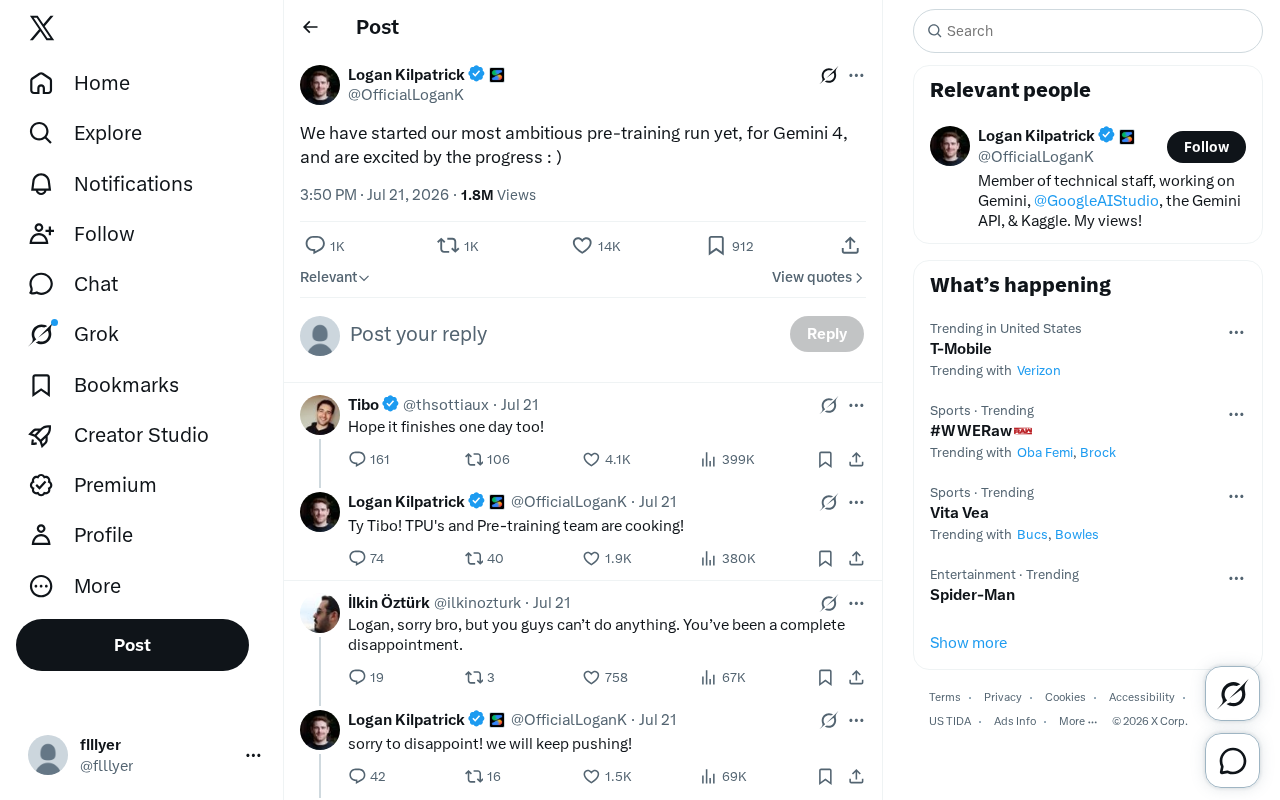
Google Launches Gemini 4 Pre-training: Its Most Ambitious AI Model Training Yet
Google DeepMind announces Gemini 4 pre-training has begun, calling it their most ambitious training yet. A deep dive into its technical direction, compute scale, multimodal breakthroughs, and competitive impact.
Read more →

·2 min
Google Chrome Officially Lands on ARM64 Linux with Built-in Widevine DRM Support
Google officially releases Chrome for ARM64 Linux with built-in Widevine DRM, enabling HD streaming on Netflix, Disney+ and more for ARM device users.
Read more →

·3 min
Dear ImGui Deep Dive: Why This Immediate Mode GUI Library Has Won Over C++ Developers
Deep dive into Dear ImGui's immediate mode GUI design, technical features, and use cases. Covers immediate vs retained mode, backend support, game engine integration, and ecosystem extensions.
Read more →

·3 min
Cloudflare Blocks Anti-Scraping Proxies: IP Reputation Is the Real Culprit
Analysis of why FlareSolverr and Byparr fail against Cloudflare. The real issue isn't CAPTCHA solving — it's IP reputation. Learn about VPN pitfalls, static IP risks, and practical solutions.
Read more →

·3 min
Cursor + Claude in Action: Building a Python Student Management System from Scratch with AI
A step-by-step guide to building a Python student management system from scratch using the AI editor Cursor with Claude. Covers Agent, Ask, and Manual modes, model selection, and the full workflow.
Read more →

·3 min
Hermes Agent in Practice: A Self-Evolving AI Agent Framework
Hermes Agent is a mature AI Agent framework with built-in Claude Code and Codex coding capabilities, supporting 200+ models, multi-platform deployment, and WeChat integration. Its layered memory and self-evolution features enable low-Token automated task execution.
Read more →

·3 min
AI Agent in Action: Building a Local Netlist Analysis Plugin for JLCEDA from Scratch
How a Bilibili creator used AI Agent, MCP, and Playwright to build a JLCEDA local netlist analysis plugin from scratch—covering features, setup, and the full Agent-driven dev process.
Read more →

·3 min
Installed Codex But Don't Know What to Build? Find Real Needs with the "Friction Point" Mindset
Installed Codex or Claude Code but don't know what to build? This real-world browser extension case reveals the core methodology of the AI coding era: start from your own and others' "friction points" to find projects worth doing.
Read more →

·3 min
Got Codex but Don't Know What to Build? Use 'Friction Point Thinking' to Find Real Needs
Installed Codex or Claude Code but don't know what to build? This hands-on browser extension case reveals the core methodology of the AI coding era: start from your own and others' 'friction points' to find worthwhile projects.
Read more →

·7 min
Claude Code Practical Tutorial: A Complete Beginner's Guide to Automating Your Entire Workflow
No coding required! This guide breaks down the complete Claude workflow: custom Projects, batch SEO content, one-sentence tool building with Artifacts, and Claude Code terminal ops—with real traffic-growth cases.
Read more →

·3 min
Automating Chrome Extension Development with AI Coding Agents: Antigravity & DevTools MCP Complete Workflow
A complete workflow from Google I/O: use Antigravity, Modern Web Guidance, and Chrome DevTools MCP to build Chrome extensions automatically — from prompt to publish.
Read more →

·4 min
WebMCP in Practice: A Complete Guide to Making Your Website AI Agent-Ready
A deep dive into the WebMCP proposal: how AI agents read websites, how to expose structured tools via imperative and declarative APIs, and how to audit agentic readiness with Lighthouse.
Read more →

·2 min
Chrome DevTools for Agents: The Closed-Loop Debugging Powerhouse for AI Coding Agents
Chrome DevTools for Agents, unveiled at Google I/O, gives AI coding agents a closed feedback loop with Lighthouse audits, user input simulation, and device emulation.
Read more →

·3 min
Complete Guide to Subscribing to Claude in China Without Getting Banned: Three Approaches Compared
Worried about getting your Claude account banned in China? This guide breaks down Anthropic's ban logic and compares three safe approaches: third-party subscriptions, official API, and relay services.
Read more →

·3 min
AI Testing End-to-End in Practice: A Complete Guide from Test Case Generation to Agent Automation
A deep dive into AI testing workflows: API capture, test case generation, Agent orchestration, and automated execution. Learn the two core challenges — incomplete information and mandatory human review.
Read more →

·3 min
Privacy Risks in Claude Code? Use Docker Sandboxes to Fully Isolate Your AI Coding Tools
Claude Code found to contain user monitoring logic, raising AI tool privacy concerns. Learn how to isolate Claude Code, Codex & Copilot with Docker Sandboxes — full setup and escape testing included.
Read more →

·6 min
A Deep Dive into OpenAI Codex: How AI Engineers Are Reimagining Software Development with Agents
OpenAI Codex is redefining how AI engineers work: from code completion to autonomous Agents, from single-threaded to parallel Value Maxing. A deep dive into the Codex App architecture, open ecosystem, and Manager of Agents practice.
Read more →