#cross-tool collaboration
45 related articles

·2 min
Troopr AI Scrum Master: Auto-Generating Standup Reports from Jira/GitHub Data
Troopr AI Scrum Master auto-reads Jira, GitHub, and Slack data to generate daily standup reports, flags progress anomalies, and continuously learns team collaboration patterns.
Read more →

·3 min
Kiro Crew: An Open-Source Agentic Development Workspace with Persistent Memory
Kiro Crew is an open-source agentic development workspace that solves AI coding assistants' cold start problem through persistent memory, multi-agent collaboration, and purpose-built Apps.
Read more →

·3 min
Atlaso: Giving All Your AI Tools One Shared Memory, Ending Repetitive Explanations
Atlaso is a cross-AI memory layer that lets Claude Code, Cursor, Codex, and ChatGPT share one unified context, eliminating repetitive explanations for developers.
Read more →

·3 min
Agent Skills in Practice: Making AI Coding Assistants Automatically Follow Team Coding Standards
Explore how Agent Skills inject team coding standards into Claude Code and Codex, enabling consistent code style and reducing review rework in AI-assisted development.
Read more →

·2 min
compound-engineering-plugin: A Unified Plugin Layer for Cross-AI Coding Tool Collaboration
Deep dive into compound-engineering-plugin: how it enables Claude Code, Codex, Cursor and other AI coding tools to collaborate under unified standards, achieving compound accumulation of engineering knowledge.
Read more →

·3 min
GitHub Daily · August 4th: Uber Open-Sources AI Agent Security Framework, Enterprise-Grade Agent Protection Takes Center Stage
Uber open-sources ADR, an enterprise AI Agent security framework gaining 140 stars in one day. Plus webpack, Deno, Angular, Tailwind CSS hold steady.
Read more →

·2 min
Inventory: Locally Search All Your AI Conversation History
Inventory is a local-first AI conversation search tool that unifies search across Cursor, Claude Code, Zed, Codex, and Kiro. No signups, no cloud, one-time purchase.
Read more →

·2 min
tablo: A Desktop Cat Widget That Monitors Your AI Coding Assistants
tablo is a desktop monitoring widget for AI coding assistants, tracking Claude Code and Codex sessions with real-time context progress bars and tool approval alerts.
Read more →

·3 min
localskills.sh: A Unified Management Platform for Cross-Tool AI Skills and MCP – Full Review
localskills.sh is a team-level platform for managing AI Skills, Rules, and MCP servers across Cursor, Claude Code, and Windsurf with a single install command.
Read more →

·3 min
localskills.sh: A Unified Management Platform for Cross-Tool AI Skills and MCP — Review
localskills.sh is a team-level AI skill and MCP server management platform that unifies distribution and reuse of AI Skills and Rules across Cursor, Claude Code, Windsurf, and more with a single install command.
Read more →

·1 min
The Challenge of Managing 50 AI Skills: Achieving Smart Auto-Invocation with the MCP Protocol
When your AI skill library grows to 50, repeated installs, difficult searches, and memory overload become core pain points. This article introduces an MCP-based unified management tool.
Read more →

·7 min
Claude Code in Action: Building an Embedded Tetris Game with AI in 3 Hours
A hands-on case study: using Claude Code and the LVGL graphics library to build a Tetris game running on an embedded dev board from scratch in under 3 hours.
Read more →
·7 min
Claude Code in Action: Building an Embedded Tetris Game with AI in Under 3 Hours
A hands-on case: using Claude Code and the LVGL graphics library to build a Tetris game running on an embedded board from scratch in under 3 hours.
Read more →

·2 min
Call Codex Directly Inside Claude Code: A Dual-AI Cross-Validation Workflow
Codex Plugin for Claude Code lets developers invoke Codex reviews directly inside Claude Code. Supports code review, proposal review, background task delegation, and context handoff for a dual-AI workflow.
Read more →
·2 min
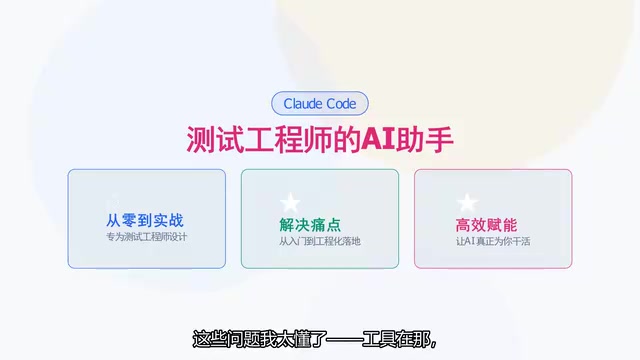
Claude Code for QA Engineers: A Practical Handbook from Basics to Engineering-Level Implementation
A practical Claude Code handbook built for QA engineers — covering environment setup, spec-driven development, Skill encapsulation, MCP integration, and AI test sub-agents across 10 core modules.
Read more →

·2 min
AI Agent Development Roadmap: A Four-Stage Guide from Zero to Production
A four-stage AI Agent development roadmap: from core theory and ReAct paradigm to multi-agent collaboration and production deployment. Covers DeepSeek, Coze, Dify, and more.
Read more →

·3 min
AI Coding Agents in Practice: An Efficient Configuration Guide for Cursor and Codex
How to configure Cursor, Codex, Devin, and other AI coding agents for context management, code quality, and cross-tool collaboration. Practical tips on rule files, TDD, and structured context storage.
Read more →

·3 min
Multi-Repo Microservice Development: The Workspace-Level Configuration Gap in AI Agents
Explore why AI agent tools (Codex, Claude Code, Gemini) lack workspace-level config for multi-repo microservice dev, and discover practical solutions like symlinks, custom paths, and cascading config.
Read more →

·3 min
In-Depth Review of GPT 5.6 Soul: Sub-Agent Systems, Government Review, and Competitor Comparison
In-depth analysis of GPT 5.6 Soul: multi-sub-agent parallel architecture, Ultra Mode coding in practice, the controversy behind its 91.9% Terminal Bench score, and the trend of frontier AI entering government review.
Read more →

·6 min
Spec-Driven Development in Practice: The New AI Coding Paradigm from Andrew Ng × JetBrains
Andrew Ng partners with JetBrains to launch a Spec-Driven Development course, teaching how to direct AI coding agents via spec files to boost intent fidelity and build maintainable production apps.
Read more →