#embedding layer
1497 related articles

·3 min
nanoGPT Speedrun Techniques: How Delayed Untying Solves the Sparse Gradient Problem in Embedding Layers
Deep dive into the Delayed Untying technique in nanoGPT speedruns: why tying embed and lm_head weights early then untying later solves both sparse gradients and limited expressiveness.
Read more →
·3 min
Qwen3-VL Multimodal Fine-Tuning in Practice: Architecture Deep Dive and Complete LoRA Fine-Tuning Guide
Deep dive into Qwen3-VL vision-language model architecture, covering Vision Encoder alignment, LLM backbone principles, and complete LoRA fine-tuning workflow from setup to training and testing.
Read more →

·3 min
Harness Multi-Agent Framework: A Deep Dive into Planner→Builder→Evaluator Three-Agent Collaboration
Deep dive into the Harness multi-agent framework's three-agent paradigm (Planner, Builder, Evaluator), covering Agent Loop design, circular invocation prevention, Sandbox isolation, and A2A vs SubAgent selection strategies.
Read more →

·4 min
AI Agent Learning Roadmap: A Four-Stage Guide from Zero to Production
A complete AI Agent learning roadmap covering four stages—foundations, core frameworks, hands-on projects, and advanced mastery—to help beginners build production-ready agents in six months.
Read more →

·1 min
Stateless Databases: A Detailed Guide to Lightweight Memory Solutions for AI Agents
An in-depth analysis of stateless agent memory database design principles, exploring how lightweight solutions solve AI Agent memory management challenges.
Read more →

·4 min
Why Scaling LLMs Can't Achieve True Agentic Autonomy
Explore why scaling LLMs alone can't produce true agentic autonomy, and how three-tier embodied AI, efference copies, and offline sleep cycles offer a path beyond Scaling Laws toward AGI.
Read more →

·4 min
Machine Learning Roadmap: A Complete 85-Day Plan from Zero to Mastery
A structured 85-day machine learning roadmap covering regression, classification, unsupervised learning, neural networks, reinforcement learning, NLP, Transformers, and more with detailed time planning.
Read more →

·4 min
Transitioning to AI Agent Development: A Complete Three-Stage Learning Path for Programmers
Why do programmers keep failing at AI Agent development? This guide breaks down a 3-stage learning path: ReAct & Tool Calling fundamentals, LangChain engineering, and production-grade project delivery.
Read more →

·4 min
AI Large Language Model Learning Roadmap for Beginners: From Transformer Principles to Project Practice
A complete learning roadmap for beginners to systematically study AI large language models, covering Transformer principles, Prompt Engineering, RAG, Agent, fine-tuning, and enterprise projects.
Read more →

·3 min
4 Major Pitfalls in AI Agent Development: Tool Descriptions, ReAct Reasoning, Context Loss & RAG Optimization Practical Guide
Deep dive into 4 common AI Agent pitfalls: tool descriptions, ReAct reasoning constraints, multi-step context loss, and RAG optimization with reusable solutions.
Read more →

·3 min
Screenify Studio: Using Natural Language to Drive AI-Automated Product Demo Recording
Screenify Studio is a Mac AI screen recording tool that lets you describe demo flows in natural language, then AI agents automatically record and add cinematic 3D effects for professional product demos.
Read more →

·4 min
Real-World Challenges and Strategies for Production-Grade RAG Systems
Deep dive into core challenges of production-grade RAG systems, covering retrieval quality, hybrid search, offline evaluation, production monitoring metrics, latency-cost trade-offs, and security controls.
Read more →

·3 min
Coze 3.0 Workflow in Practice: Build an Automated AI Agent in Three Steps
Learn to build AI Agents on Coze 3.0 in three steps: prompt engineering & API calls, RAG knowledge base construction, and multi-agent autonomous decision-making for low-code AI app development.
Read more →

·3 min
RAG Isn't as Complex as You Think: A Back-to-Basics Practical Guide
RAG's core logic is deceptively simple: retrieve relevant content, inject it into the prompt, and let the model generate. Learn why developers overcomplicate RAG and how to ship fast with a minimal approach.
Read more →
·3 min
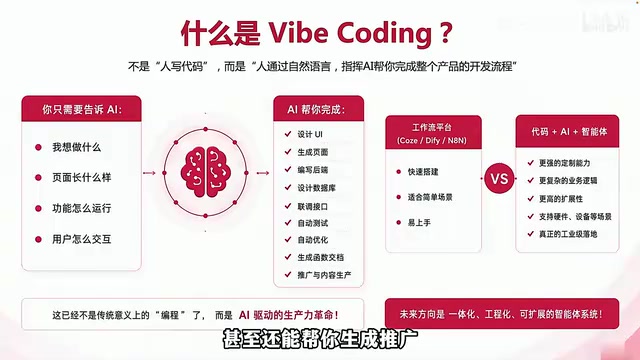
Vibe Coding Practical Guide: AI Full-Stack Development for Building a One-Person Company
A deep dive into Vibe Coding: from requirements analysis, UI design, multi-platform deployment to AI-automated operations. Master the full-stack AI development loop for one-person companies.
Read more →
·4 min
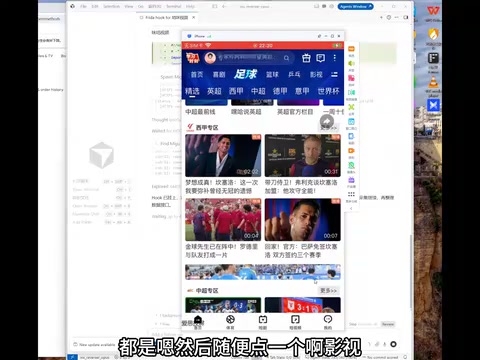
AI-Assisted iOS Reverse Engineering in Practice: Protocol Reconstruction with Cursor + MCP Toolchain
A detailed guide on AI-assisted iOS reverse engineering workflows, featuring Cursor with Frida MCP and IDA Pro MCP for protocol reconstruction, multi-model collaboration costs, and AI capability boundaries.
Read more →

·3 min
OpenAI Exposes Russian AI-Powered Influence Operations: Operational Patterns and Governance Challenges
OpenAI reveals findings on Russian covert AI influence operations. This article analyzes operational patterns, platform governance logic, and detection challenges posed by open-source models.
Read more →

·3 min
Scholé Scenarios: AI-Powered Scenario Simulations That Take Corporate Training from Knowing to Doing
Scholé Scenarios is an AI-driven scenario-based learning tool that simulates real customer interactions with adaptive learning to help sales and service teams bridge the gap between knowing and doing.
Read more →

·3 min
Getting Started with AI and Large Language Models from Scratch: A Complete Learning Roadmap
A complete roadmap for learning AI, machine learning, and LLMs from scratch—covering math foundations, Python, top courses, hands-on projects, and community resources for beginners.
Read more →

·3 min
Mochi: A Chrome Extension That Puts a Pixel Cat in Your Browser Tabs
Mochi is a minimalist Chrome extension that displays an animated cat on every tab. 20 cat designs, fully local, zero data collection, open source — quiet emotional companionship for your digital life.
Read more →