#front-end debugging
138 related articles

·4 min
OpenAI Sites: Turn Ideas into Published Websites Instantly — No Coding Required
OpenAI's new Sites tool lets anyone describe an idea and instantly generate a live, shareable website or lightweight app — no coding skills needed.
Read more →

·7 min
Flagship Model vs. Local 27B: Which Follows Code Instructions More Faithfully?
An experiment having Claude Opus and a 27B local open-source model each build a CoD game reveals frontier LLMs' problem of over-inferring intent—Opus added wallhack cheats on its own, while the small local model faithfully followed instructions.
Read more →

·4 min
GPT-5.6 Three-Model Benchmark: How Close Are Sol/Terra/Luna to Claude?
Hands-on benchmark of GPT-5.6's three models — Sol, Terra, and Luna — covering frontend, math, and long-horizon agentic tasks. Full scores, category breakdowns, and selection guidance vs. Fable 5 and Opus 4.8.
Read more →

·6 min
Playwright E2E Builder: Engineering AI-Driven Web Automation Testing
Playwright E2E Builder is an AI Skill installed in Cursor that transforms UI automation from throwaway scripts into sustainable engineering assets through a four-step workflow, with built-in locator health checks.
Read more →
·7 min
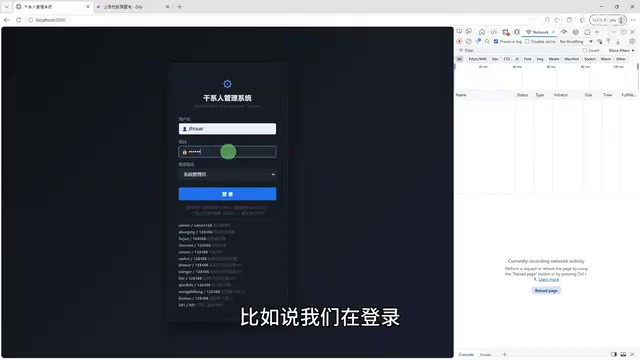
Dify Enterprise System Integration in Practice: Building a Project Management AI Copilot with Workflows
Using a project management system as an example, this article details how to use the Dify low-code platform to achieve AI-powered integration of enterprise internal systems through interface capture and workflow orchestration.
Read more →

·5 min
Embedded Linux vs. AI Agent Development: A Comprehensive Comparison of Salary, Job Availability, and Career Stability
Embedded Linux or AI Agent development? This in-depth comparison covers salary, job availability, and career stability to help developers pick the right path.
Read more →

·6 min
Doubao and Qwen Retire AI Agents: How Compute Costs Are Reshaping AI's Commercial Boundaries
Doubao and Qwen have retired their AI Agent features. The real reason isn't regulation—it's that companion-chat users don't pay, making compute costs unrecoverable. A deep dive into AI's cost dilemma.
Read more →

·7 min
Hidden Authentication Backdoor Exposed in Tenda Router Firmware: Multiple Versions Affected, Users Beware
Researchers found a hidden authentication backdoor in multiple Tenda router firmware versions, letting attackers bypass passwords to gain admin access. Learn the technical principles, impact, and protection tips.
Read more →

·3 min
Python for Absolute Beginners: A Complete Breakdown of a 10-Hour Systematic Course
Breaking down a 10-hour Python course for absolute beginners — covering syntax, OOP, functional programming, web scraping, and automation, with mind maps and exercises.
Read more →

·7 min
Single-Responsibility Component Design: Learning Abstraction and Reuse from message-scroller
Through the practical case of the message-scroller component, this article delves into applying the Single Responsibility Principle in front-end component design—how to abstract scrolling logic independently and balance cost with long-term returns.
Read more →

·8 min
Python Web Scraping for Beginners: How It Works, Core Workflow, and Legal Red Lines Explained
A plain-language guide to how Python web scrapers work: from HTTP requests and responses, HTML tag parsing, to the complete three-step data scraping workflow, with a focus on the three legal red lines and compliance advice.
Read more →

·7 min
Learning Python from Scratch: A Complete Guide to the Three-Stage Learning Path
Want to learn Python from scratch but don't know where to begin? This article breaks down three stages—basic syntax, advanced mastery, and hands-on practice—with real projects in crawling, automation, and data analysis to help you build programming thinking.
Read more →

·5 min
A Programmer's Guide to Large Language Models: The Complete Path from Prompts to Agents
A tailored large-model learning path for ordinary programmers: from prompt engineering, API calls, and LangChain, to RAG, Agents, fine-tuning, and enterprise deployment—six steps to build AI application skills fast.
Read more →

·4 min
AI Daily Briefing: $60B Cursor Acquisition, GLM-5.2 Open-Sourced, DeepSeek's $7B+ Funding Round
Today's AI headlines: Cursor acquired for $60B in all-stock deal; Zhipu GLM-5.2 open-sourced under MIT; DeepSeek raises $7B+ at $50B valuation; Anthropic reports 27% Agent coding value growth in 7 months.
Read more →

·7 min
Spring AI 2.0 in Practice: A Beginner's Guide for Java Developers Building AI Agents
A complete Spring AI 2.0 guide for Java developers covering unified API abstraction, RAG, tool calling, MCP protocol, and enterprise projects to build AI Agents.
Read more →

·3 min
Build a Smart World Cup Calendar with AI Agent in 6 Minutes — Auto-Push Schedules to WeChat
Build a smart 2026 World Cup calendar with AI Agent in 6 minutes — zero code, WeChat push notifications, smart match recommendations, and post-match summaries.
Read more →

·3 min
GitHub Daily · July 4th: The Agent Skills Ecosystem Explodes
GitHub Trending July 4: The AI Agent ecosystem explodes across specs, frameworks, and apps — from agentskills to Vibe-Trading, a full Agent tech stack emerges.
Read more →

·8 min
The Codex Orange Book: An Open-Source Full-Stack Practical Guide for AI Programming Beginners
The Codex Orange Book is an open-source unofficial guide with 2.5K+ GitHub Stars, covering installation, plugins, MCP extensions, and hands-on projects to help beginners master AI programming tools.
Read more →

·6 min
Is Claude Fable 5 Real? Exposing the AI Reseller Service Scam
Anthropic never released a Claude Fable 5 model. This article analyzes fake AI promotions, exposes wrapper service scam tactics, and provides tips for verifying AI claims.
Read more →

·3 min
Deep Dive into Claude Code: A Five-Dimension Comparison with Traditional AI Chat Tools
Deep analysis of Claude Code vs traditional AI chat tools across 5 dimensions: interaction, context, execution, memory, and tool integration, plus a Cursor comparison.
Read more →