#gradient model scheduling
104 related articles

·4 min
E2AM: An Open-Source Tool to Quantify AI Training Energy Consumption and Carbon Emissions in Two Lines of Code
E2AM is a Green AI open-source tool that monitors AI model training energy use, carbon emissions, and accuracy-per-joule metrics in just two lines of code. Supports PyTorch and Hugging Face, runs locally with no server needed.
Read more →

·5 min
GPT-5.6 Launches: Comprehensive Upgrades to ChatGPT Work, Sites, and Desktop Client
OpenAI releases the GPT-5.6 model family, launching enterprise-focused ChatGPT Work, one-click ChatGPT Sites, and a major desktop client upgrade, with coding now ahead of rivals. Meta, Google, and Kimi follow intensively.
Read more →

·3 min
Inside the ML Engineer Coding Assessment at Top US Tech Companies: What's Tested and How to Prepare
A firsthand account shared on Reddit reveals what a machine learning engineer online assessment (OA) at a top US tech company is really like. This article breaks down OA modules, role differences, and prep strategies for FAANG job seekers.
Read more →

·6 min
DeepSeek Builds Its Own AI Chips: The Strategic Logic and Challenges Behind Compute Independence
DeepSeek is entering AI chip development, targeting compute autonomy. This article analyzes its motivations, software-hardware synergy, chip R&D challenges, and impact on China's AI vertical integration.
Read more →

·7 min
GPT-5.6 and Grok 4.5 Launch Simultaneously, Meta Unveils Agent-Based Image Model
OpenAI GPT-5.6 expands its preview, xAI Grok 4.5 opens access at the same time, Meta releases the Agent-based Muse Image model and Muse Video model, while Apple and DeepSeek launch in-house AI inference chip programs. A quick look at the week's five biggest AI stories.
Read more →
·5 min
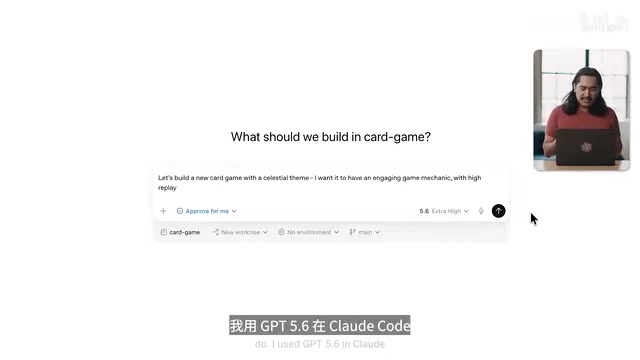
GPT-5.6 Released: Hands-On Analysis of Programmatic Tool Calling and Autonomous Agents
GPT-5.6 is officially released with core upgrades including programmatic tool calling, autonomous subagent delegation, and higher token information density. A hands-on card game build reveals its Agentic power.
Read more →

·5 min
AI Content Floods Social Media: Why Has LinkedIn Become Ground Zero?
Generative AI tools have flooded social media with AI-generated content, hitting LinkedIn hardest due to its professional nature. A deep dive into the causes, ecosystem impact, and solutions.
Read more →

·7 min
Practical RL Compute Optimization: Core Strategies to Boost CPU and GPU Utilization
An in-depth look at why CPU and GPU utilization is low in RL training, covering vectorized environment parallelism, distributed Actor-Learner architectures, GPU-side simulation (Isaac Gym/Brax), and Ray RLlib practice.
Read more →

·5 min
Ollama Raises $65M Series B: 85% of Fortune 500 Have Already Deployed Local LLMs
Local LLM tool Ollama closes a $65M Series B, bringing total funding to $88M. With 9M developers and 85% of Fortune 500 having deployed internally, this deep dive explores why enterprises embrace local LLMs: compliance, Agent cost savings, and open-source ecosystem.
Read more →

·2 min
Fine-Tuning PaliGemma 2 for Custom Object Detection: A Practical Guide from General to Specialized
Learn how to fine-tune Google's open-source PaliGemma 2 VLM for custom object detection. Covers model architecture, data formatting, fine-tuning strategies, and real-world value.
Read more →

·7 min
50 AI Research Job Applications to FAANG, 0 Replies? Unpacking the Truth Behind the Job Search Struggle
An AI research engineer with 3 years of experience sent 50 applications to FAANG with zero replies. This article breaks down the hidden barriers of top-tech AI roles, the truth about LinkedIn ghost jobs, and the MLE vs. Research Engineer divide.
Read more →

·5 min
Essential Math for AI/ML Research: Should Undergrads Choose the Specialist Sequence or the Major Track?
Aiming for AI/ML research? How should you pick undergrad math courses? This article breaks down linear algebra, probability & statistics, and optimization, weighing the specialist sequence vs. the Major track.
Read more →

·8 min
GPT-5.6 Hands-On: Farm Automation, Mathematical Breakthroughs, and End-to-End AI Execution
GPT-5.6 (Sol, Terra, Luna) hands-on testing: a Hokkaido farmer controls a greenhouse with AI, a NYC small business builds custom software, and a Polish mathematician breaks a 3-year problem. A deep dive into end-to-end autonomous execution.
Read more →

·7 min
Reverse-Engineering CUDA-checkpoint: The Technical Principles and Practice of Cracking GPU Cold Starts
An in-depth analysis of reverse-engineering Nvidia CUDA-checkpoint to accelerate GPU cold starts. Covers checkpoint/restore, Serverless GPU prospects, and VRAM snapshot challenges.
Read more →

·6 min
A Three-Month AI Agent Learning Roadmap: From Zero to Hands-On Agent Development
A systematic breakdown of the complete AI Agent learning roadmap, covering prompt engineering, the ReAct paradigm, memory mechanisms, and multi-agent collaboration, with hands-on project advice.
Read more →

·4 min
Reinforcement Learning for AI Agents: A Deep Dive into RLHF and Agentic RL
A deep dive into RL for AI agents: from RLHF to Agentic RL, covering PPO vs. GRPO, sparse rewards, tool-calling optimization, and verifiable rewards.
Read more →

·4 min
Unsloth v0.1.463-beta: Fixes Studio Crash and llama-server Permission Issue
Unsloth v0.1.463-beta fixes a Studio crash caused by access-denied errors during llama-server service discovery. Improves stability for multi-user servers and Windows environments.
Read more →

·7 min
Sakana Fugu vs GLM 5.2 Hands-On Test: Who Can Truly Challenge Top-Tier AI Models?
A head-to-head hands-on test of Sakana Fugu vs GLM 5.2 based on real Hermes agent workflows. Covering tool calling, frontend generation, and code improvement to reveal each model's true performance, speed, and value.
Read more →
·6 min
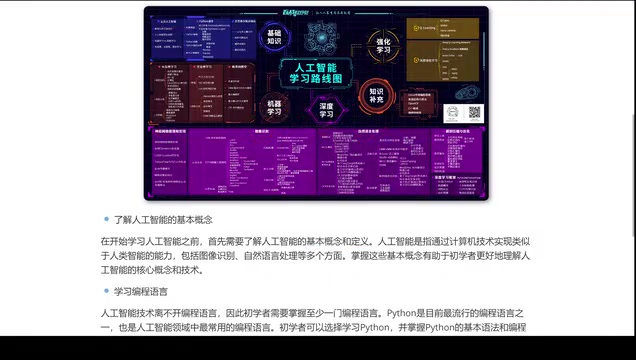
AI for Beginners: A Five-Step Practical Path That Skips the Math and Python Syntax Traps
Struggling with math and Python when learning AI from scratch? This article lays out a five-step entry path: grasp the concepts, learn Python lightly, master ML and deep learning principles, get hands-on with PyTorch, then deepen understanding through real projects.
Read more →

·6 min
Made by Google Event Confirmed: New Pixel Phones with AI Capabilities Coming Soon
Google confirms the Made by Google hardware event in NYC, unveiling next-gen Pixel phones with new Tensor chips and deep Gemini AI integration. On-device AI gets a major upgrade.
Read more →