#hierarchical stacking
25 related articles
 Tutorials
·2 min
CLAUDE.md Loading Mechanism Explained: Hierarchical Stacking Rules and Writing Methods
Deep dive into Claude Code's CLAUDE.md path loading logic, verifying hierarchical stacking through experiments, with three writing methods and practical tips for developers.
Read more →

·3 min
CNN Core Mechanisms Explained: From Convolution Principles to the Double Descent Phenomenon
Deep dive into CNN core mechanisms including local connectivity, weight sharing, pooling, receptive fields, Dropout regularization, and the still-unexplained Double Descent phenomenon in deep learning.
Read more →

·3 min
Building an AI Agent Memory Layer with Go's Standard Library: A Zero-Dependency Minimalist Approach
A deep dive into building an AI agent memory layer using only Go's standard library, covering vector similarity, memory storage/retrieval, and concurrency safety in a zero-dependency approach.
Read more →

·3 min
ACAI Architecture Explained: How Modular Cognitive Pipelines Solve LLM Hallucination and Context Corruption
Deep dive into the ACAI (Adaptive Cognitive AI) modular architecture that solves LLM hallucination and context window rot through layered cognitive pipelines, semantic memory graphs, and logical verification.
Read more →

·2 min
Google Lyria 3.5 Deep Dive: Four Core Upgrades in AI Music Generation
Google releases Lyria 3.5 music generation model with major upgrades in musicality, lyrics structural awareness, vocal emotion, and creative control—moving AI music toward professional creation tools.
Read more →

·4 min
Spring AI 1.0 Practical Guide: A Java Developer's Fast Track to Building AI Applications
Spring AI 1.0 is here — Java developers can now build AI apps without switching to Python. This guide covers LLM integration, RAG, intelligent customer service, and Agent patterns for enterprise deployment.
Read more →

·3 min
Enterprise RAG Knowledge Isolation in Practice: Physical Isolation vs. Adaptive Soft Boundaries
A deep dive into two enterprise RAG knowledge isolation strategies: physical isolation vs. adaptive soft boundaries — covering metadata tagging, dynamic user-profile filtering, hybrid retrieval architecture, and data quality best practices.
Read more →

·3 min
ASE Control Panel: How STATE_SYNC Tokens Enable AI State Persistence
A deep dive into ASE's core mechanism — the STATE_SYNC checkpoint token — and how it transforms stateless LLMs into stateful AI systems for complex multi-turn workflows.
Read more →

·5 min
Advanced Machine Learning Reading List: How to Choose the Right Book Among These 4 Classics?
Torn between Géron, Chollet, and Raschka? This article breaks down 4 classic ML books for self-learners aiming at finetuning and small language models (SLM), helping you find the best advanced path.
Read more →

·7 min
Training Machine Learning Models from Scratch: A Complete Beginner's Guide
A complete walkthrough of training machine learning models from scratch—covering problem definition, data preprocessing, algorithm selection, hyperparameter tuning, and evaluation, with tool recommendations for beginners.
Read more →
·5 min
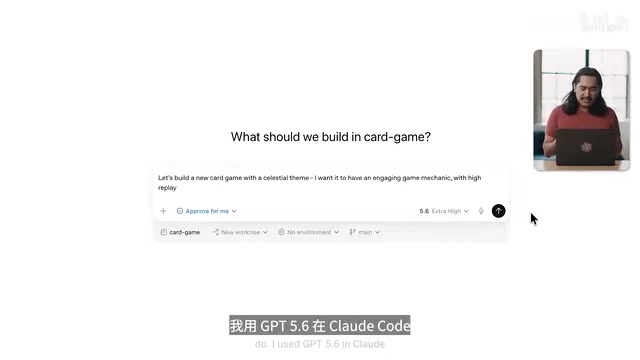
GPT-5.6 Released: Hands-On Analysis of Programmatic Tool Calling and Autonomous Agents
GPT-5.6 is officially released with core upgrades including programmatic tool calling, autonomous subagent delegation, and higher token information density. A hands-on card game build reveals its Agentic power.
Read more →

·3 min
AI Art Prompt Deconstruction: Multi-Style Fusion Techniques Behind "The Last Ember"
A deep dive into the prompt logic behind AI artwork "The Last Ember" — covering Art Nouveau meets Egyptian mural fusion, Midjourney parameter settings, and structured prompt methodology.
Read more →

·4 min
Nikon Launches World's First Publicly Available Wireless-Free Camera: A New Hardware-Level Data Security Solution
Nikon's first publicly sold Wireless-Free camera removes all wireless hardware at the chip level, delivering true air-gap data security. We break down the design logic, use cases, and the convenience vs. security trade-off.
Read more →

·6 min
Grok 4.5 Deep Dive: Coding on Par with Top Models, at a Fraction of the Cost
A senior developer's 24-hour deep test of Grok 4.5: a 1.5T-param MoE model at $2/M input tokens, with coding benchmarks rivaling GPT-5.5. Real performance, token efficiency, and limits explained.
Read more →

·7 min
Context Warp Drive: A Deep Dive into Deterministic Context Folding for AI Agents
An in-depth look at 'Deterministic Context Folding' from Context Warp Drive: solving AI agent context window management with reproducible, cacheable, debuggable context compression for production-grade agents.
Read more →

·3 min
DeepSeek Open-Sources DiSpark: Up to 85% Faster AI Inference Without Changing Hardware
DeepSeek and Peking University release DiSpark, an open-source framework that speeds up LLM inference by 60–85% using speculative decoding and hierarchical verification — no hardware changes or retraining required.
Read more →

·3 min
Why Claude Code Ditched RAG for Grep: The Engineering Logic Behind the Decision
Why did Claude Code abandon RAG for Grep? Breaking down the three root causes — undiagnosability, the multiplication effect, and index staleness — behind the shift to Agentic Search.
Read more →

·2 min
Claude Code Beginner's Guide: Building a General-Purpose Office AI System from Scratch
A complete guide to setting up Claude Code with VSCode and CC Switch for building a general-purpose office AI system — no programming required.
Read more →

·2 min
Cosmos Unified Agents Platform: A New Paradigm for AI Agent Collaboration Through Shared Context and Memory
Deep dive into how the Cosmos Unified Agents Platform solves multi-AI Agent collaboration challenges through shared context and memory mechanisms, and its positioning in enterprise multi-Agent orchestration.
Read more →
 Tech Frontiers
·2 min
AI Daily: Claude Autonomous Tasks Exceed 16 Hours, GPT 5.5 Proves Mathematical Theorems
May 10, 2025 AI roundup: Claude autonomous tasks exceed 16 hours, GPT 5.5 Pro aids Fields Medalist in math proof, Cloudflare cuts 20% of staff due to AI.
Read more →