#intelligent agent roadmap
138 related articles

·3 min
AI Agent Learning Roadmap: From Zero to Building Your Own Intelligent Agents
A structured AI Agent learning roadmap covering fundamentals (Agent principles, Prompt engineering), advanced topics (RAG, multi-agent collaboration), and three hands-on projects — ideal for beginners.
Read more →

·3 min
Learning AI Large Language Models: A Complete Roadmap from Beginner to Practitioner
A systematic breakdown of the AI LLM learning roadmap covering prompt engineering, AI Agent development, RAG knowledge bases, model fine-tuning, and hands-on projects for beginners.
Read more →

·3 min
How to Choose an AI Agent Platform for Your Team: 5 Evaluation Dimensions and a Decision Framework
Choose the right AI Agent platform by evaluating model flexibility, observability, tool integration, security compliance, and total cost. A complete decision framework to help technical leaders avoid vendor lock-in.
Read more →

·3 min
How to Choose an AI Agent Platform for Your Team: 5 Evaluation Dimensions & Decision Framework
Choose an AI Agent platform by evaluating model flexibility, observability, tool integration, security compliance, and total cost. A complete decision framework to avoid vendor lock-in.
Read more →

·3 min
A Beginner's Guide to AI Agents: Two Learning Paths for Developers and Practitioners
How to learn AI Agents from scratch? This guide covers two clear paths: developers go from Python to LLMs to open-source framework source code; practitioners use Claude Code or similar tools to get results fast.
Read more →

·5 min
The Complete Guide to AI Agent Development: A Four-Stage Progressive Roadmap
A systematic guide to AI Agent development across four stages: LLM fundamentals, ReAct paradigm, memory & tools, and multi-agent collaboration for developers.
Read more →

·2 min
A Complete Guide to Learning AI Agents from Scratch: From Beginner to Practice
A complete guide to learning AI Agents: from large model fundamentals and core technologies to hands-on projects. Systematically outlines beginner methods and exposes crash-course marketing traps.
Read more →

·1 min
Becoming an AI Agent Engineer: A Detailed 4-Week Hands-On Learning Roadmap
Want to become an AI Agent engineer? This article breaks down a 4-week roadmap: from core agent architecture and ReAct, to multi-agent collaboration and real projects.
Read more →

·2 min
Multi-Agent Collaborative Paper Writing System: End-to-End Automation with FastAPI + Vue 3
An in-depth look at an intelligent paper writing platform built on FastAPI + Vue 3, combining LLM, RAG, and multi-Agent collaboration for full-process automation—an excellent case study for AI developers.
Read more →

·6 min
The Three-Layer GTM Agent Architecture: Enabling AI to Truly Recognize Buyer Intent and Identity
An in-depth analysis of the three-layer GTM Agent architecture—the Signal, Buyer Intelligence, and Action layers—revealing how context graphs identify anonymous visitors and capture purchase intent.
Read more →
·4 min
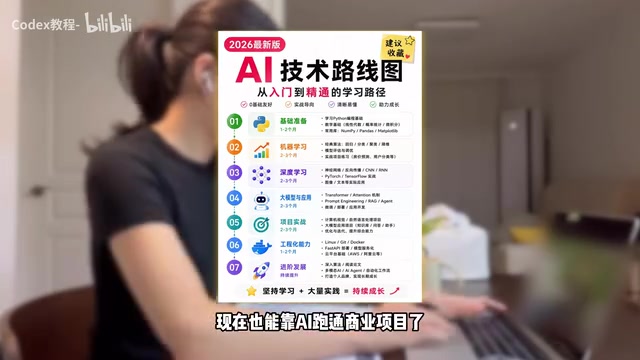
Making $3,000/Month Freelancing with Codex? A Rational Look at AI Coding Side Hustles
Can AI coding tools really earn you $3K/month with zero experience? We break down the marketing hype around Codex freelancing, examine the 4-week roadmap, and reveal what AI-assisted coding can realistically offer.
Read more →

·8 min
LangChain Crash Course: A Complete Roadmap from Zero to Agent Development
A systematic roadmap from LangChain and LangGraph to multi-agent development, covering RAG, Tool Calling, MCP, and more, helping developers break into AI app development.
Read more →

·7 min
Alibaba Open-Sources 2.4T Qwen Model as Chinese AI Sweeps the Global Competitive Landscape
Alibaba open-sources a 2.4 trillion parameter Qwen model and launches the Qwen Token Plan. Chinese models surge, Kimi K3 tops global rankings, and China's AI is reshaping the global competitive landscape.
Read more →

·2 min
Dify Beginner's Guide: Building Enterprise-Grade AI Apps on an Open-Source Platform
A comprehensive guide to Dify, the open-source AI application platform: who it's for, core advantages, Dify vs. Coze comparison, and a step-by-step learning path.
Read more →

·3 min
Frontend Developers Transitioning to AI: A Complete Three-Phase Minimalist Roadmap
A structured 3-phase roadmap for frontend developers transitioning to AI: master Transformer fundamentals, build RAG & Agent skills, then advance to model fine-tuning.
Read more →

·2 min
Building a RAG Knowledge Base with Dify: A Zero-Code Guide from Basics to Enterprise Practice
Learn how to build a RAG knowledge base with zero code using Dify's visual platform. Compare Dify vs Coze for private deployment, and master the Dify+Qwen+RAG stack.
Read more →

·3 min
Java Developers Pivoting to AI: Why RAG Knowledge Bases Are the Best Entry Point
Traditional Java roles are shrinking while AI demand surges. Learn the three paths into AI for developers, and why RAG knowledge bases are the highest-ROI entry point for Java engineers.
Read more →

·5 min
AI Coding Getting Worse With Every Edit? Skills v1.1 Reveals the Real Cause and Solution
AI code getting messier with edits? The root cause isn't weak model capability but a lack of context and process. A deep dive into Matt Pocock's Skills v1.1: grilling, vertical-slice tickets, TDD, and WebFinder.
Read more →
GitHub Daily · July 19: The Dual Advan…
·3 min
GitHub Daily · July 19: The Dual Advance of Heterogeneous Inference and Agent Toolchains
GitHub Trending July 19: ktransformers tops the list with heterogeneous inference optimization, while jcode, cua, and AstrBot signal a maturing Agent ecosystem.
Read more →

·2 min
AI Agent Development Roadmap: A Four-Stage Guide from Zero to Production
A four-stage AI Agent development roadmap: from core theory and ReAct paradigm to multi-agent collaboration and production deployment. Covers DeepSeek, Coze, Dify, and more.
Read more →