#interview strategies
231 related articles

·1 min
Advanced AI/ML System Design Interview Prep Guide: From Architectural Thinking to Practical Strategies
In-depth guide to Senior+ AI/ML system design interviews covering data pipelines, training, inference, monitoring, and practical prep strategies with top resources.
Read more →

·3 min
How to Prepare for Technical Interviews: Practical Strategies for Tackling Open-Ended System Design Questions
Anxious about open-ended system design questions in tech interviews? Learn what interviewers really evaluate, plus practical strategies including structured frameworks, the Feynman Technique, and mock practice.
Read more →

·3 min
NLP/ML PhD Job Search: Paid Resource Recommendations and Preparation Strategies for Research Scientist Interviews
A guide to paid resources for NLP/ML PhD students preparing for Research Scientist interviews, covering coding, ML fundamentals, system design, and mock interviews with budget allocation strategies.
Read more →

·1 min
Post-Mortem on a Microsoft Interview Failure: Common Reasons for Technical Interview Failures and Preparation Strategies
Analysis of a real Microsoft interview failure: common technical interview pitfalls including algorithm pressure, poor communication, and shallow system design, plus practical preparation strategies.
Read more →

·3 min
Citi Generative AI Developer Final Interview Guide: Key Topics and Preparation Strategies
Preparing for Citi's Junior Generative AI Application Developer final interview? This guide breaks down technical topics, behavioral questions, financial industry considerations, and efficient short-term prep strategies for LLM, RAG, and system design.
Read more →
 Tutorials
·2 min
Vibe Coding Interview Tips for Campus AI Product Manager Recruitment: Key Assessment Areas & Response Strategies
A systematic guide to Vibe Coding interview questions for campus AI PM recruitment: three assessment dimensions, error correction strategies, and advanced quality control tips.
Read more →
 Tutorials
·1 min
Software Testing Job Search Guide: Resume Strategies, Interview Tips & AI-Powered Testing in Practice
A complete guide to software testing job searches, covering resume strategies, interview tips, salary-based skill requirements, and AI-powered testing trends.
Read more →
 Tutorials
·1 min
AI Agent Interview Focus Comparison: ByteDance vs. Tencent vs. Alibaba — Differences in Approach & Preparation Strategies
Deep comparison of AI Agent interview focuses at ByteDance, Tencent, and Alibaba: ByteDance drills ReAct implementation & RLHF details, Tencent emphasizes MCP protocols & memory systems, Alibaba focuses on multi-Agent architecture & business deployment.
Read more →

·4 min
From Backend to AI Agent Engineer: A Practical Path That Survived Big Tech P7 Interviews
How can a backend engineer with 6 years of experience transition to AI Agent engineering and pass big tech P7 interviews? A practical guide covering engineering stability, semantic caching, Anthropic's ecosystem, and MCP protocol.
Read more →

·4 min
From Backend to Agent Engineer: What P7 Interviews Really Test
How can a 6-year backend dev transition to AI Agent engineer? Deep dive into P7 interview essentials: validation, semantic cache, state machines, and MCP.
Read more →

·4 min
One Person Built a $7M Recording App with AI: A Complete Breakdown of Wave
Jason, a 40-something non-coder, used AI alone to build the recording app Wave — $7M revenue, 30K paying users in 3 years. A full breakdown of his 4-step AI monetization workflow.
Read more →

·3 min
AI Slop PRs Are Drowning Open Source Projects, and Maintainers Are Burning Out
A flood of AI-generated low-quality PRs is overwhelming open source projects. This article analyzes the AI slop phenomenon, its harm to the ecosystem, and community countermeasures.
Read more →

·3 min
Harness Multi-Agent Framework: A Deep Dive into Planner→Builder→Evaluator Three-Agent Collaboration
Deep dive into the Harness multi-agent framework's three-agent paradigm (Planner, Builder, Evaluator), covering Agent Loop design, circular invocation prevention, Sandbox isolation, and A2A vs SubAgent selection strategies.
Read more →

·1 min
Don't Buy the "Tech Is Dead" Lies: Java, Web Dev, and DSA Are Alive and Well
Debunking claims like "Spring Boot is dead" and "Web dev is dead." Job market data proves these technologies thrive. Learn how AI reshapes—not replaces—developers.
Read more →

·4 min
Real-World Challenges and Strategies for Production-Grade RAG Systems
Deep dive into core challenges of production-grade RAG systems, covering retrieval quality, hybrid search, offline evaluation, production monitoring metrics, latency-cost trade-offs, and security controls.
Read more →

·3 min
A 4-Year Engineering Study Plan: The Path from Zero to Landing Your First Offer
A systematic 4-year engineering study plan covering foundation building, specialization, interview prep, and job hunting to help students build an actionable technical growth path.
Read more →
·2 min
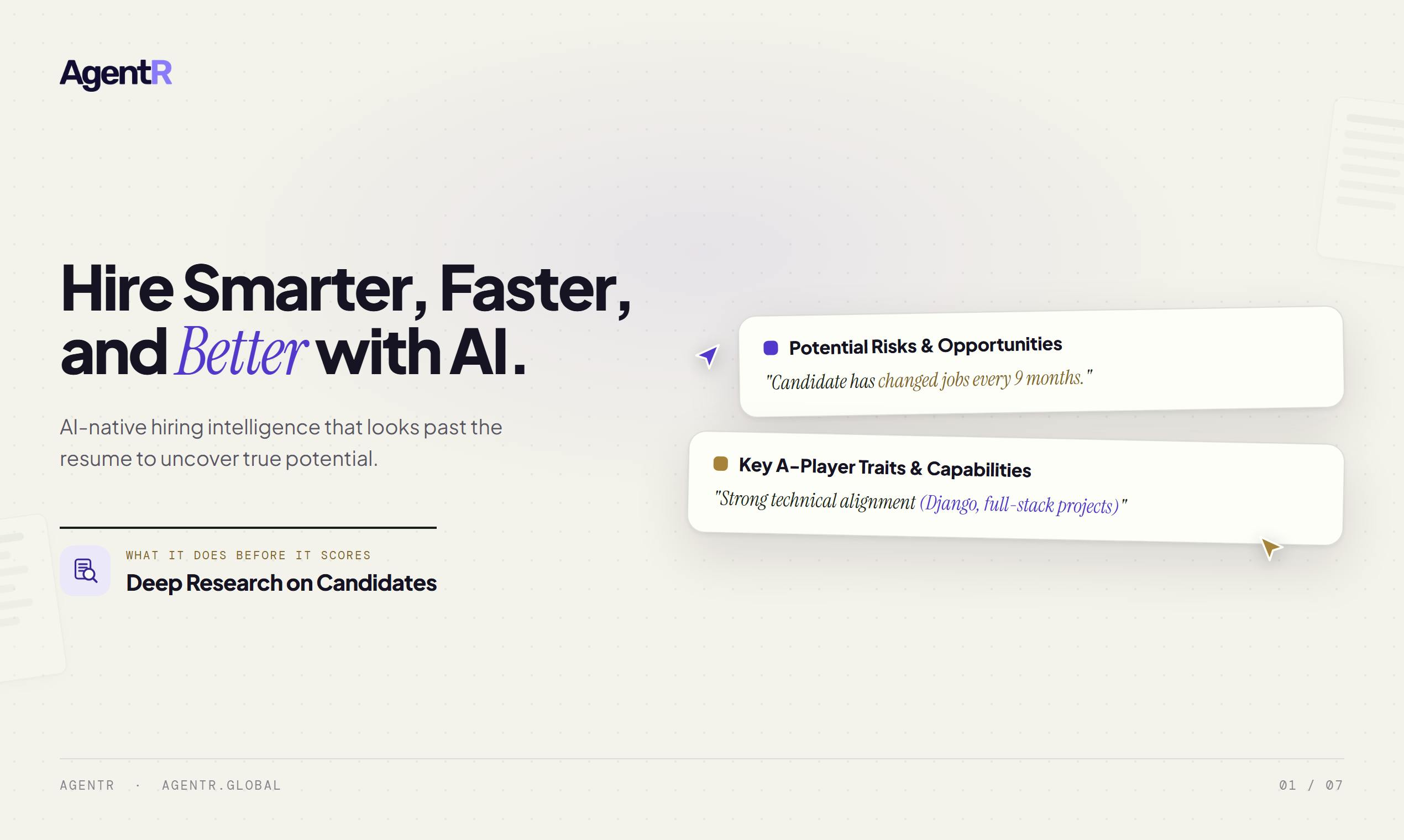
AgentR 3.0: A Hiring Evaluation Agent Designed for the AI Cheating Era
AgentR 3.0 is a hiring evaluation AI Agent for the AI cheating era, using structured, adaptive, cheat-proof autonomous interviews to replace resume screening with evidence-driven assessment.
Read more →

·3 min
Do AI/ML Job Seekers Really Need to Grind LeetCode? The True Weight of Algorithms vs. AI Skills
Should AI/ML engineers grind LeetCode? This article analyzes DSA's real weight across roles and offers phased prep strategies to pass algorithm interviews efficiently.
Read more →

·3 min
Practical Roadmap for Backend Engineers Transitioning to AI Agent Engineers: Four Steps to Landing a High-Paying LLM Position
A practical 4-step roadmap for backend engineers to transition into AI Agent roles: from LLM API calls and tool orchestration to production-grade Agent systems.
Read more →

·2 min
Multi-Agent Architecture Hands-On Experience: The New Hard Requirement for AI Engineer Job Seekers
Based on 1,700+ student data and 625 interview debriefs, learn how multi-Agent architecture has become a key screening criterion for AI positions and what interviewers really evaluate.
Read more →