#local AI server
2621 related articles
·3 min
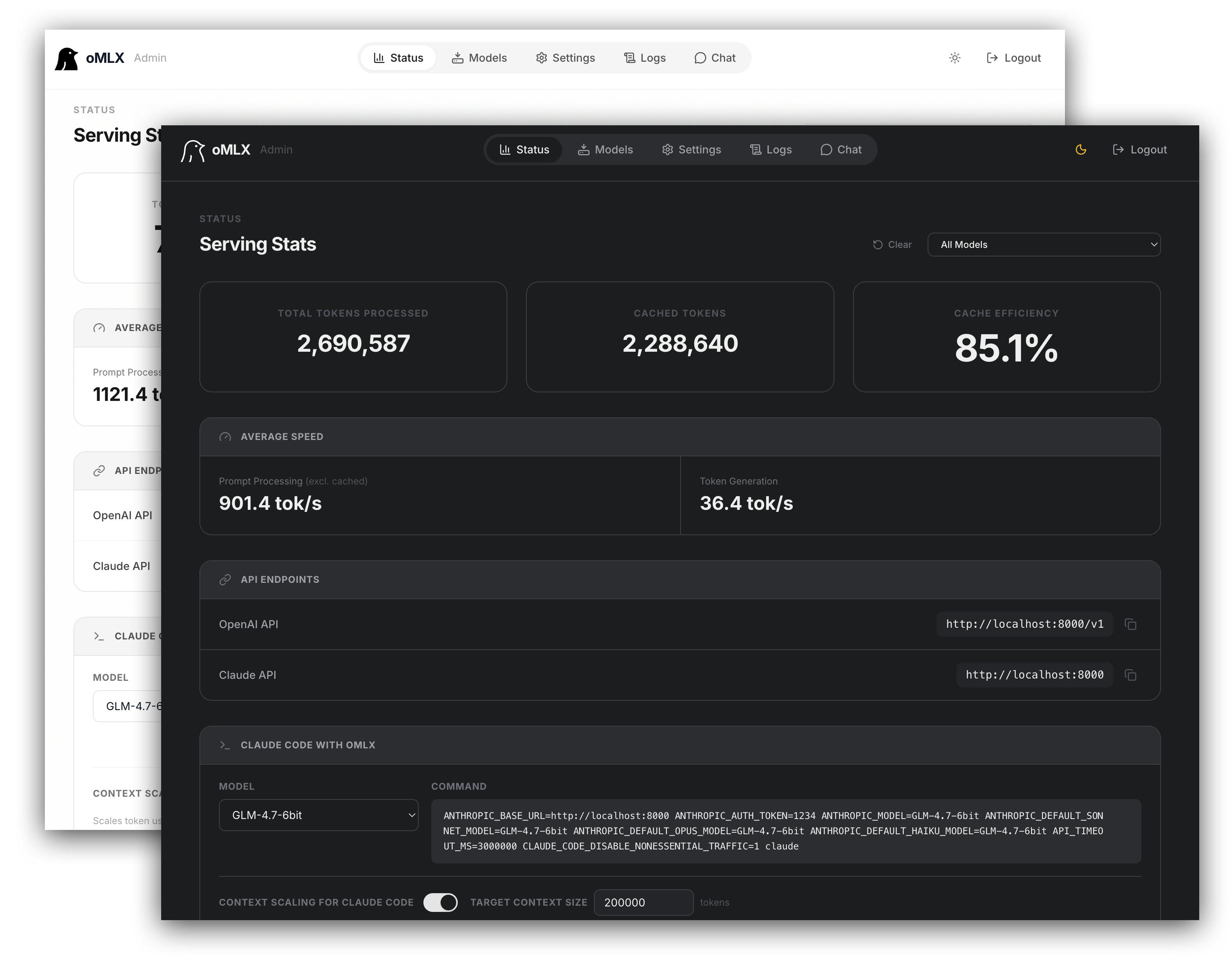
oMLX: Turn Your Mac into a Local LLM Server with AI Agent Responses 18x Faster
oMLX is an open-source tool that turns your Mac into a local LLM server, cutting AI agent response times from 90s to 5s using continuous batching and tiered KV caching. Supports OpenAI and Anthropic APIs.
Read more →

·2 min
GitHub Daily · August 31: Local AI Servers and Training LLMs from Scratch
GitHub Trending Aug 31: minimind trains a 64M-param LLM in 2 hours; ODS turns any PC into a local AI server; plus OSINT tools and game enhancers.
Read more →
 Industry Insights
·2 min
Cloud AI Agent Architecture Design: Far More Than Moving Local Agents to a Server
Building cloud AI Agents requires entirely new architectural thinking. This article analyzes three core infrastructure components—durable execution platforms, execution frameworks, and dev environment tools—to help teams avoid common pitfalls when migrating from local to cloud.
Read more →

·3 min
Piper Agent + Qwen Hands-On: Auto-Generating a Playable Game with AI in 3 Minutes
Hands-on test of Piper Agent with Qwen 3.6 A3B model, auto-generating a playable game in 3 minutes. Deep dive into how Agent frameworks and MoE small models collaborate for AI-driven development.
Read more →
·4 min
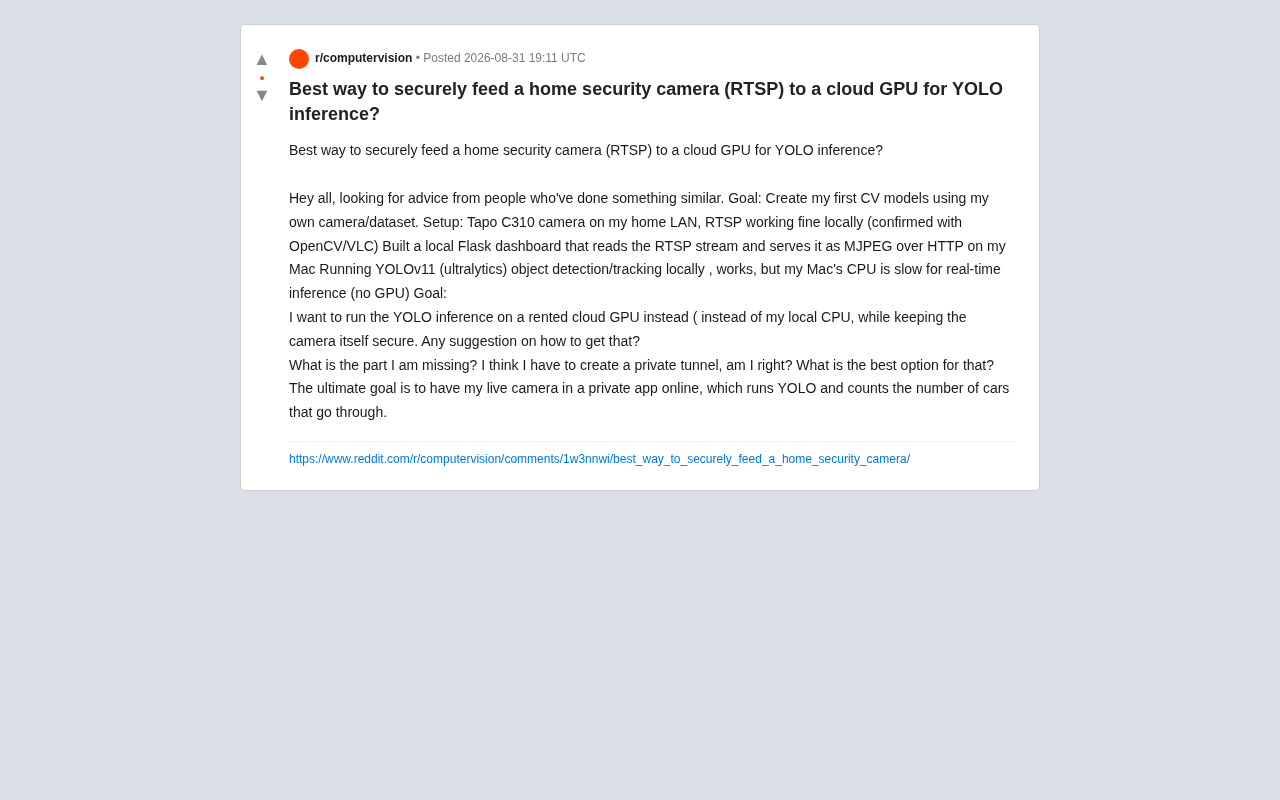
Connecting Home Cameras to Cloud GPUs for YOLO: A Security Architecture & Practical Guide
How to securely connect home cameras to cloud GPUs running YOLO. Covers RTSP security tunnels, Tailscale networking, edge preprocessing, cloud GPU selection, and cost optimization.
Read more →

·2 min
Holeberry: An Open-Source macOS Menu Bar Tool for One-Click Pi-hole Management
Holeberry is a free, open-source macOS menu bar app for Pi-hole. Manage dual instances, one-click unblock browser tabs, timed disable, and browse blocked queries.
Read more →

·3 min
Semantica: Graph-Native Context Infrastructure That Gives AI Agents True Contextual Understanding
Deep dive into Semantica, an open-source graph-native AI context infrastructure. Learn how knowledge graphs replace traditional RAG to improve agent context understanding and decision traceability.
Read more →

·3 min
Qwen 3.8 Flash Next Hands-On: Single-GPU Deployment That Outperforms DeepSeek V4?
Hands-on review of Qwen 3.8 Flash Next: Ngram architecture explained, single 96GB GPU deployment, eight-benchmark comparison vs DeepSeek V4 Flash, plus API pricing analysis.
Read more →

·4 min
In-Depth Guide to Apple's AI Evaluation & LLM Systems Interview
In-depth guide to Apple AI Evaluation and LLM Systems interviews, covering ML fundamentals, evaluation framework design, coding, and system design dimensions.
Read more →

·2 min
GitNexus: Replacing Vector Retrieval with Code Knowledge Graphs, Cutting AI Coding Costs by 51%
GitNexus is an open-source code knowledge graph kernel that replaces vector embeddings with deterministic graphs for coding AI Agents, cutting costs by 51% in official benchmarks. Supports MCP protocol for plug-and-play integration.
Read more →

·4 min
Can GPT Generate a AAA Game with One Click? A Deep Dive into the Real Boundaries of AI Game Development
Can GPT-7 one-shot a AAA game better than Star Citizen? This article analyzes AI's real capabilities in game development and why one-click AAA generation remains fantasy.
Read more →

·3 min
Practical Guide to Building an AI Visibility Detection Tool with Claude Code
Learn how to build an AI visibility detection tool with Claude Code and SERP API to monitor brand mentions in Google AI Overview and AI Mode results.
Read more →

·4 min
Agent Skills in Practice: A Complete Tutorial on Building an AI Skill System with OpenCode
Learn the key differences between Agent Skills and MCP. Step-by-step tutorial on configuring OpenCode's official skills library for on-demand AI capabilities like PDF parsing.
Read more →

·3 min
Savvy: An AI Assistant That Whispers Prompts During Meetings, a Local-First Solution Built on Your Private Documents
Savvy is a local-first macOS AI meeting assistant that whispers real-time prompts based on your private documents, with source-traceable cards, three-trigger interaction, and MIT open-source license.
Read more →

·3 min
Orca: An Open-Source ADE (Agent Development Environment) for Parallel AI Programming
Orca is an open-source ADE supporting parallel AI coding agents. With 42K+ GitHub Stars, it offers desktop, mobile, and VPS deployment with BYO subscription.
Read more →

·3 min
Apogee: A Privacy-First Browser Summarization Extension Rebuilt with Local AI After Mozilla Killed Orbit
After Mozilla killed Orbit, an indie developer rebuilt a fully local AI browser summarization extension called Apogee using Ollama, WebGPU, and Transformers.js—no user data ever leaves your device.
Read more →

·4 min
The Vicious Cycle of the AI Slop Machine: How Low-Quality Content Feeds and Reinforces Itself
Deep analysis of the AI slop vicious cycle: from mass content production to model collapse, revealing how the Slop Machine self-reinforces through traffic incentives and training data contamination.
Read more →
·4 min
Free Claude Code: Real-World Testing of the 48K-Star Open Source Agent — Saves Money, But Don't Expect a Free Replacement
Deep dive into Free Claude Code (FCC), a 48K-star open-source project that routes Claude Code requests to free or cheaper models via proxy. Covers setup, tiered routing, real coding tests, and cost savings.
Read more →

·2 min
Claude Code Weekly Limit Cut by 17%: How Should Developers Respond?
Claude Code recently cut its weekly usage limit by ~17%, sparking developer debate. This article analyzes the reasons, real-world impact, and strategies to adapt.
Read more →

·3 min
WorkBuddy Hands-On Guide: How This Domestic Codex Alternative Can Actually Do Your Work
WorkBuddy is a domestic AI Agent tool, often called the Chinese alternative to Codex. This article compares it with Doubao, covering file ops, office integrations, and plugin deployment.
Read more →