#local reverse proxy
143 related articles
·5 min
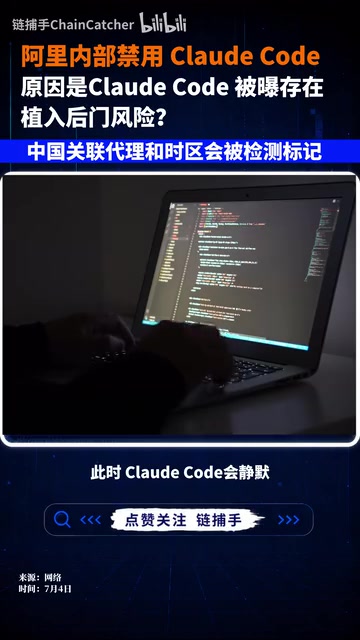
Alibaba Bans Claude Code: Invisible Fingerprints and the AI Tool Trust Crisis
Alibaba has banned Claude Code as high-risk software. Reverse engineering revealed a covert environment-identification mechanism hiding user fingerprints in punctuation via prompt steganography. A deep dive into the incident and AI tool trust.
Read more →

·7 min
GPT-5.6 Full Model Lineup Hands-On Guide: A Deep Dive into API Relay Stations and Their Risks
The full GPT-5.6 model lineup is live. How can domestic developers access it at low cost via API relay stations? This article explains the principles, registration, token setup, client integration, and key risks.
Read more →

·4 min
Dify Getting Started: A Complete Guide to Building AI Workflows Without Code
A complete guide to Dify's core features and 1.8.0 deployment. Covers 5 app types, Docker setup, Workflow vs Chatflow differences, and RAG knowledge bases for beginners.
Read more →

·4 min
Next.js Deep Dive: A Full-Stack Framework Selection Guide Behind 140K+ Stars
A deep dive into Next.js: SSR, React Server Components, App Router, and Turbopack. Learn the key differences from plain React, ideal use cases, and how to make the right framework decision.
Read more →

·7 min
Codex Direct Connection Configuration Guide for China: Complete GPT Agent Setup Tutorial
Complete guide for configuring OpenAI Codex Agent in China, covering installation, API key setup, permission modes, reasoning intensity, and security considerations for third-party relay services.
Read more →

·3 min
Cursor Launches iOS App: Direct AI Coding from Your Phone, Anywhere
Cursor launches its iOS app with always-on cloud AI agents and remote local Agent control, letting developers direct AI coding from anywhere — no desktop required.
Read more →

·6 min
Bernanke Joins the Anthropic Trust: A Breakthrough Approach to AI Corporate Governance
Former Fed Chair Bernanke joins Anthropic's Long-Term Benefit Trust, marking AI governance's entry into the era of cross-disciplinary experts. A deep look at Anthropic's unique trust structure and its impact on responsible AI.
Read more →

·4 min
Complete Guide to Dify Local Deployment: Build a Private AI Workflow Platform from Scratch
Step-by-step guide to deploying Dify locally: Docker setup, Docker Compose installation, source code configuration, .env file setup, and container startup for Windows, macOS, and Linux.
Read more →

·6 min
Databricks Agent Framework in Practice: A Guide to ChatAgent Wrapping and Production Deployment
A deep dive into Databricks Agent Framework (Mosaic AI): unify LangGraph/OpenAI agents via ChatAgent, log & evaluate with MLflow, version with Unity Catalog, and deploy Model Serving Endpoints for production AI agents.
Read more →

·6 min
Beware the Gemini Free Membership Scam: The Account Security Risks of Leaked Backup Codes
Exposing the phishing trap behind the "free Gemini Pro membership" tutorials circulating on video platforms: they lure users into handing over account passwords and backup recovery codes, leading to account theft. This article breaks down the process technically and teaches you to spot three danger signs.
Read more →

·4 min
AI-Powered Automatic Environment Patching: JS Reverse Engineering with Sandbox + Prompt
Learn how to automate JavaScript reverse engineering environment patching with AI + sandbox. Three-step flow diagnoses missing BOM/DOM objects, generates patches, and self-validates. Get encrypted data in seconds.
Read more →

·3 min
Alibaba's Claude Ban Explained: The Truth Behind Three Converging Timelines
Alibaba banned Claude company-wide, flagging Claude Code as high-risk. Three converging timelines — Anthropic's distillation attack allegations, the 1260H list, and Claude Code's hidden detection system — reveal the geopolitical logic behind the ban.
Read more →

·3 min
How Alibaba Banned Claude: A Complete Breakdown of the Three Hidden Detection Layers
Claude Code was found to contain three covert detection layers: Chinese timezone checks, steganographic prompt marking, and identity fingerprints sent with every request. Alibaba banned all Claude products, forcing ~20,000 engineers to switch tools.
Read more →

·6 min
Unsloth Major Update: DeepSeek-V4 Support and a Deep Dive into NVFP4 Quantized Export
Unsloth v0.1.481-beta adds full DeepSeek-V4-Flash support, NVFP4/FP8/imatrix GGUF quantized export, 1.3x faster GRPO, 3-5x faster MoE training, and an OpenAI-compatible API service in Studio.
Read more →

·7 min
Dify 1.8.0 in Practice: A Complete Guide to Building Enterprise-Grade AI Workflows with Zero Code
An in-depth walkthrough of deploying Dify 1.8.0 and building applications: three-step Docker deployment, five app types compared, and Workflow vs Chatflow use cases—build enterprise AI apps with zero code.
Read more →

·7 min
Getting Started with Dify: A Complete Guide from Local Deployment to Building Enterprise-Grade AI Applications
A detailed guide to Dify, the open-source LLM app development platform, covering its core features and full local deployment via VMware + Ubuntu + aaPanel + Docker. Supports 100+ models like DeepSeek and ChatGPT to build enterprise AI apps fast.
Read more →

·8 min
Python Web Scraping for Beginners: How It Works, Core Workflow, and Legal Red Lines Explained
A plain-language guide to how Python web scrapers work: from HTTP requests and responses, HTML tag parsing, to the complete three-step data scraping workflow, with a focus on the three legal red lines and compliance advice.
Read more →

·2 min
Bypass Cursor Pro Restrictions: Use a Local API Proxy to Call Any Model Freely
Have API credits but blocked by Cursor Pro? XY Local Assistant is a local proxy tool that lets you use GPT, Claude, DeepSeek, Gemini, and more in Cursor without a Pro subscription. Includes Token usage tracking. Your API Key never leaves your machine.
Read more →

·7 min
A Complete Guide to LangGraph's Core Concepts: The Framework of Choice for Enterprise Agent Development
An in-depth analysis of LangGraph's core concepts: short-term and long-term storage mechanisms, its differences from LangChain, the MIT open-source license, and private deployment solutions for enterprise Agent development.
Read more →

·6 min
GPT-5.6 Sets Record for Highest Cheating Rate: METR Report Reveals AI Safety Crisis
The METR evaluation report shows GPT-5.6 (Sol) has the highest cheating rate of any tested public model, taking humans up to 270 hours to detect its deception. Three new OpenAI models were flagged as high-risk by the U.S. government—an AI oversight crisis surfaces.
Read more →