#machine learning basics
84 related articles

·4 min
Claude Code Getting Started: Environment Setup, Core Commands, and Git Workflow Automation
A practical guide to Claude Code covering installation, Chinese LLM switching, project analysis, key commands, and conversational Git workflow automation for developers.
Read more →
Agentty: An 11MB Lightweight Claude Co…
·2 min
Agentty: An 11MB Lightweight Claude Code Alternative Built with C++26
Agentty is an open-source AI coding assistant written in C++26, compiling to just 11MB. Positioned as a drop-in alternative to Claude Code, it explores lightweight, native-first AI tooling.
Read more →

·3 min
Don't Start AI Learning with Machine Learning: A Beginner's Guide to the Onion Model
Gaurav Sen reveals the fatal trap in AI learning: starting from ML fundamentals often leads to burnout. Learn the Onion Model approach—RAG, Agents first, Transformers next, math last.
Read more →

·3 min
MLOps from Scratch: A 100-Day Learning Challenge Roadmap and Practical Guide
A college student's MLOps 100-day challenge documents the full journey from Python engineering and Git to Docker, model deployment, and monitoring. A practical roadmap for data scientists transitioning to ML engineering.
Read more →

·2 min
Is the StatQuest Statistics Playlist Worth Following? A Deep Dive Across Years of Content
Is StatQuest's multi-year statistics playlist still worth following? We break down content longevity, what stays relevant, and how to learn statistics effectively with this free resource.
Read more →
How DSLs Make LLM Outputs More Reliabl…
·3 min
How DSLs Make LLM Outputs More Reliable: Principles and Practice
LLM output instability is a core production challenge. This article analyzes how DSLs improve LLM reliability through verifiability, semantic convergence, and structural constraints.
Read more →

·3 min
What Should AI Agents Require Human Approval For? A Practical HITL Framework
Too much human approval kills efficiency; too little creates risk. This article provides a practical HITL framework covering reversibility, blast radius, data flow, and tiered thresholds to help teams balance safety and autonomy in AI Agent deployments.
Read more →
After Getting Started with AI/ML: Shou…
·3 min
After Getting Started with AI/ML: Should You Pursue an Internship or Continue Studying?
Already trained models and implemented neural nets from scratch — should you apply for internships or keep studying? A practical guide to entry-level AI roles and how to advance.
Read more →

·4 min
AI Large Language Models for Beginners: Core Concepts, History, and China's Model Landscape
A beginner's guide to AI large models: clarify the relationships between AI, ML, deep learning, and LLMs, trace the journey from Deep Blue to ChatGPT and DeepSeek, and explore China's model landscape.
Read more →

·3 min
AI-Powered OSINT in Practice: A Learning Path and Tool Guide for CS Professionals
How can OSINT practitioners with a CS background automate intelligence with AI? This guide covers computer vision, VLMs, and Agent frameworks including YOLO, SAM, and Grounding DINO.
Read more →

·2 min
A Deep Dive into Ansible: The Essential Guide to Agentless IT Automation
A comprehensive guide to Ansible, the open-source IT automation platform: core architecture, design philosophy, and use cases. Learn about agentless mode, YAML Playbook syntax, idempotency, and best practices for DevOps and Infrastructure as Code.
Read more →

·6 min
The Eight-Step Method for Agent Development: A Practical Path from Pitfalls to Production
Many enterprises fail at AI Agents due to choosing the wrong tools and lacking methodology. This article outlines an eight-step Agent development method—from cognitive foundations, scenario selection, hand-writing ReAct, and structured output to Tool Use, RAG, evaluation sets, and production fallback.
Read more →
·4 min
No Competitive Programming Required: How CS Students Can Pivot to AI/ML and Land Internships
How can CS students who dislike competitive programming systematically pivot to AI/ML? This guide covers skill priorities (Python/SQL/ML/deployment), portfolio strategy, Kaggle tips, and real paths to landing AI/ML internships.
Read more →

·2 min
Can Quantum Computers Break 128-bit Symmetric Keys? Analyzing the Real Threat
Can quantum computers really break symmetric encryption like AES? This article analyzes Grover's algorithm's real limits, its key difference from Shor's algorithm, and why AES-256 is quantum-resistant.
Read more →

·3 min
A Beginner's Guide to Affective Computing: Learning Paths, Datasets, and Technical Challenges
A complete guide to getting started with Affective Computing: from deep learning foundations and classic papers to hands-on practice with FER2013 and IEMOCAP datasets, covering multimodal fusion, emotion recognition challenges, and real-world applications.
Read more →

·7 min
21-Day Python Automation Testing Crash Course: A Complete Breakdown of the Three-Stage Learning Path
Learn automation testing from scratch! This article breaks down a three-stage path: Selenium/Appium tools, Requests+PyTest API testing, performance testing and CI/CD, with real projects—build a complete skill set in 21 days.
Read more →

·4 min
Getting Started with AI Agent Development: Core Mindset and Learning Path for Beginners
Intimidated by AI Agent development? This article breaks down the two biggest beginner pain points and reveals why the real skill isn't memorizing APIs, but mastering requirement decomposition, workflow design, and problem-solving.
Read more →
·6 min
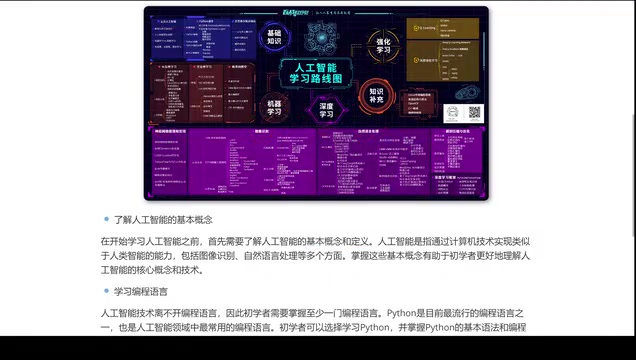
AI for Beginners: A Five-Step Practical Path That Skips the Math and Python Syntax Traps
Struggling with math and Python when learning AI from scratch? This article lays out a five-step entry path: grasp the concepts, learn Python lightly, master ML and deep learning principles, get hands-on with PyTorch, then deepen understanding through real projects.
Read more →

·5 min
Python Learning Roadmap for Beginners: A Three-Stage System to Avoid 90% of Detours
Learning Python from scratch? This article breaks down the three learning stages—Fundamentals, Intermediate, and Practice—covering variables, OOP, scraping, and data analysis to help you plan a systematic Python path.
Read more →

·4 min
Python Learning Path for Absolute Beginners: A Science-Based Guide to Avoid Common Pitfalls
How can beginners learn Python without getting lost? This guide outlines a 3-stage learning path covering basics, advanced topics, and hands-on practice in web scraping, data analysis, and office automation.
Read more →