#open-source AI ecosystem
4269 related articles

·4 min
Cross-Platform Maintenance for Open-Source Apps: Ecosystem Friction Between iOS and Android, and Engineering Solutions
An analysis of open-source app challenges on iOS vs Android — Apple's 7-day signing limit, $99 annual fee, closed distribution — with Kotlin Multiplatform engineering solutions.
Read more →

·3 min
NVIDIA's Rumored Acquisition of Hugging Face: The Monopoly Crisis Facing the Open-Source AI Ecosystem
NVIDIA's rumored acquisition of Hugging Face raises concerns about open-source AI. This article analyzes the risks of a compute monopolist controlling the model distribution platform.
Read more →

·3 min
ROS Establishes Physical AI Special Interest Group: Open-Source Robotics Ecosystem Embraces Embodied Intelligence
OSRA officially establishes a Physical AI SIG to integrate physical AI capabilities into the ROS ecosystem. Explore its goals, roadmap, and impact on robotics developers.
Read more →

·4 min
The Local AI Inflection Point: Edge Deployment, Multi-Model Collaboration, and the Open-Source Ecosystem
AI Engineer Summit deep dive: Local AI hits a real inflection point, driven by privacy and cost. Multi-model collaboration goes mainstream, NVIDIA + ExoLabs achieve 10x gains, open-source ecosystem accelerates.
Read more →
Inkling Open-Weights Model: A New Expl…
·2 min
Inkling Open-Weights Model: A New Exploration in the Open-Source AI Ecosystem
Inkling open-weights model released. Explore the key difference between open-weights and fully open-source AI, Inkling's positioning, and how to choose the right open-source LLM for production.
Read more →

·2 min
Open-Source Repairable Printers: Breaking Closed Ecosystems and Ending E-Waste
An open-source repairable printer is challenging the closed ecosystems of traditional manufacturers. Explore its repairability design, open firmware advantages, and relevance to the Right to Repair movement and e-waste reduction.
Read more →
 Tech Frontiers
·3 min
Hugging Face Open-Source Agent Ecosystem Explained: From Local Deployment to AI-Automated Training
Deep dive into Hugging Face's open-source Agent ecosystem: open models matching closed-source performance, local deployment options, Skills for conversational model training, and MCP integration.
Read more →

·3 min
Apogee: A Privacy-First Browser Summarization Extension Rebuilt with Local AI After Mozilla Killed Orbit
After Mozilla killed Orbit, an indie developer rebuilt a fully local AI browser summarization extension called Apogee using Ollama, WebGPU, and Transformers.js—no user data ever leaves your device.
Read more →

·2 min
Gemini 3.8 Flash Leaked in Internal Testing: Google Iterating Flash Models Every Two Weeks
Reddit leaks reveal Google internally testing Gemini 3.8 Flash Preview, just two weeks after 3.7 Flash. Explore the competitive logic, developer impact, and risks.
Read more →

·4 min
The Vicious Cycle of the AI Slop Machine: How Low-Quality Content Feeds and Reinforces Itself
Deep analysis of the AI slop vicious cycle: from mass content production to model collapse, revealing how the Slop Machine self-reinforces through traffic incentives and training data contamination.
Read more →

·4 min
From Backend to AI Agent Engineer: A Practical Path That Survived Big Tech P7 Interviews
How can a backend engineer with 6 years of experience transition to AI Agent engineering and pass big tech P7 interviews? A practical guide covering engineering stability, semantic caching, Anthropic's ecosystem, and MCP protocol.
Read more →
·4 min
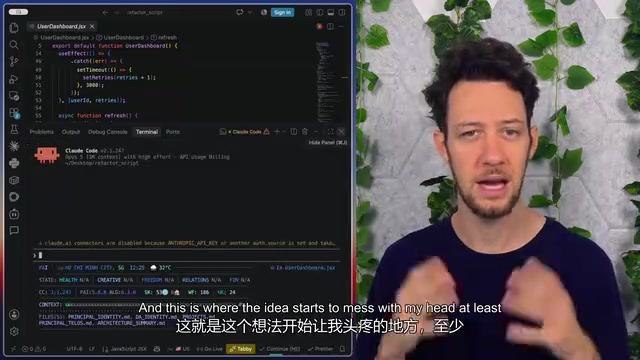
Free Claude Code: Real-World Testing of the 48K-Star Open Source Agent — Saves Money, But Don't Expect a Free Replacement
Deep dive into Free Claude Code (FCC), a 48K-star open-source project that routes Claude Code requests to free or cheaper models via proxy. Covers setup, tiered routing, real coding tests, and cost savings.
Read more →

·2 min
Claude Code Weekly Limit Cut by 17%: How Should Developers Respond?
Claude Code recently cut its weekly usage limit by ~17%, sparking developer debate. This article analyzes the reasons, real-world impact, and strategies to adapt.
Read more →

·3 min
Stop Overthinking: Break the Mental Drain Cycle with Action
Why do tech professionals overthink? This article explores choice overload, perfectionism, and info anxiety, offering practical methods like time-boxing to break analysis paralysis with action.
Read more →

·4 min
Cursor Plan Upgrade Guide: Usage Rules and Value Analysis for the $60 Tier
In-depth analysis of Cursor Pro vs. $60 plan usage differences, including token consumption calculations, own-model vs. API quota splits, and Grok model costs to help developers make informed upgrade decisions.
Read more →

·4 min
AI Agent Development in Practice: A Complete Breakdown from Framework Selection to Production Deployment
A systematic breakdown of the complete AI Agent development workflow covering framework selection, tool invocation, data processing, and deployment to help developers build production-ready agents.
Read more →
·3 min
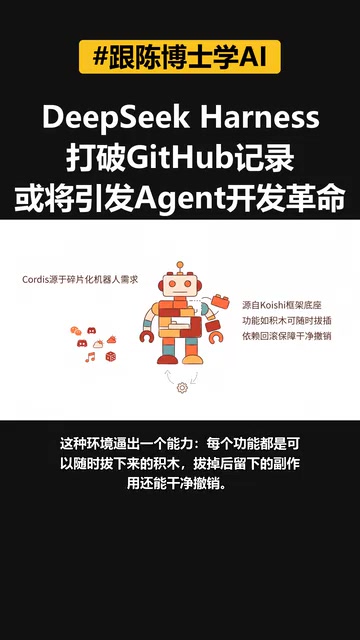
DeepSeek Harness and the Codis Architecture Explained: Agent Development Enters the Plugin Era
DeepSeek Harness broke GitHub Star velocity records on launch. Its Codis architecture turns Agent development from reinventing the wheel into plugin-based assembly, drastically lowering the barrier for vertical domain Agents.
Read more →

·3 min
WorkBuddy Hands-On Guide: How This Domestic Codex Alternative Can Actually Do Your Work
WorkBuddy is a domestic AI Agent tool, often called the Chinese alternative to Codex. This article compares it with Doubao, covering file ops, office integrations, and plugin deployment.
Read more →

·3 min
Breaking Through the Reproducibility Crisis: Replacing Re-execution with Evidence Chains to Verify Code Results
Exploring the reproducibility crisis in computational science: why rerun verification is failing, and how provenance tracking and cryptographic commitments let authors prove code results without reviewers rerunning.
Read more →

·3 min
Getting Started with Vibe Coding: The Core Logic and Methods of Programming with an AI Mindset
A deep dive into Vibe Coding's core logic — from prompt engineering to AI programming practice. Master requirement decomposition, multi-tool workflows, and code debugging.
Read more →