#parallel sub-agents
215 related articles

·4 min
GPT-5.6 & OpenAI Super App Deep Dive: Loop Engineering as the New Paradigm Replacing Prompt Engineering
Deep dive into GPT-5.6 (Sol/Terra/Luna) and OpenAI's Super App: Loop Engineering, Parallel Agents, and Computer Use — unpacking the shift from prompt to loop engineering with real test cases and a startup framework.
Read more →
·2 min
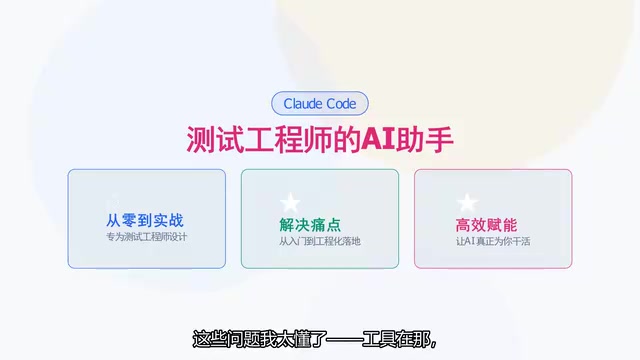
Claude Code for QA Engineers: A Practical Handbook from Basics to Engineering-Level Implementation
A practical Claude Code handbook built for QA engineers — covering environment setup, spec-driven development, Skill encapsulation, MCP integration, and AI test sub-agents across 10 core modules.
Read more →

·3 min
OpenClaw Multi-Agent AI Programming Workflow in Practice: From Coder to Manager
Deep dive into OpenClaw multi-agent AI programming workflows: context layering, CMUX parallel terminal management, work trees, and manager-perspective debiasing for scalable AI dev automation.
Read more →

·5 min
AI Coding Getting Worse With Every Edit? Skills v1.1 Reveals the Real Cause and Solution
AI code getting messier with edits? The root cause isn't weak model capability but a lack of context and process. A deep dive into Matt Pocock's Skills v1.1: grilling, vertical-slice tickets, TDD, and WebFinder.
Read more →

·2 min
23K Stars on GitHub: The Hackathon Champion's Ultimate Claude Code Configuration Guide
A Claude Code open-source config with 278 skills and 67 sub-agents helps developers ship a full MVP in 8 hours. Covers security scanning, silent failure detection, and experience migration. Free under MIT license, compatible with Cursor and Codex.
Read more →

·3 min
GPT-5.6 Practical Guide: 7 Tips to Save Tokens and Boost Efficiency
7 practical GPT-5.6 optimization tips for Codex: control context windows, choose thinking modes, limit sub-agents, and trim agents.md to save tokens and cut costs.
Read more →

·2 min
LangGraph Multi-Agent Architecture in Practice: From Core Components to Production Deployment
A deep dive into LangGraph multi-agent architecture — covering hierarchical, network, and pipeline patterns with three hands-on projects using LangGraph 0.3.
Read more →

·3 min
Codex Practical Guide: A Complete Roadmap from Beginner to Advanced AI Programming
Master Codex AI programming assistant with this complete guide: CLI setup, slash commands, agents.md governance, MCP protocol, multi-agent systems, and enterprise plugin development.
Read more →

·3 min
AirOps in Practice: Building Enterprise-Grade AI Agents with the Claude Agent SDK
How AirOps replaced traditional workflow builders with the Claude Agent SDK to build an AI agent platform for content marketers — covering three architectural iterations, harness engineering, and sub-agent context management.
Read more →

·2 min
GPT-5.6 Soul In-Depth Review: Can Multi-Agent Programming Mode Reshape the AI Development Tools Landscape?
GPT-5.6 Soul review: Super Mode hits 91.9% on TerminalBench. We break down multi-agent scheduling, benchmark controversies, and real-world dev tool comparisons.
Read more →

·3 min
The Truth About Codex Ultra Mode: It's Not a Reasoning Level
Deep dive into OpenAI Codex's Ultra mode: it's not a reasoning level but a system prompt switcher. Learn why Ultra burns tokens, the V1/V2 agent system issues, and how Claude Code Workflows gets it right.
Read more →

·3 min
Deep Dive into ChatGPT Ultra's Parallel Sub-Agent Architecture: Parameters, Configuration, and Best Practices
A deep dive into ChatGPT Ultra mode's parallel sub-agent architecture, covering concurrency limits, delegation depth, token optimization, and configuration best practices for GPT-5.6.
Read more →

·3 min
Meta Muse Spark 1.1 Deep Dive: The Platform Ambitions Behind Meta's First Closed-Source Model
Meta Muse Spark 1.1 deep dive: native multimodal architecture, platform tools, social data retrieval, e-commerce vision — Meta's first closed-source API model benchmarks against Anthropic Sonnet.
Read more →
·3 min
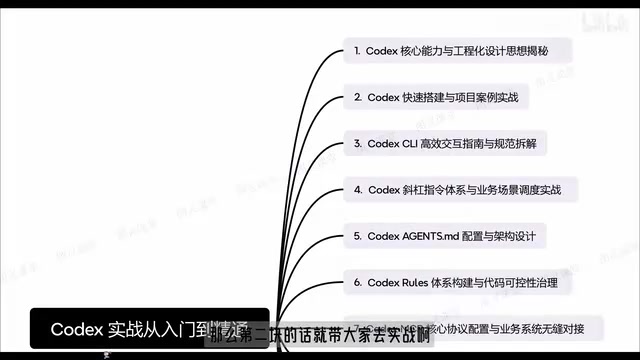
The Complete OpenAI Codex Practical Guide: From Installation to Enterprise Deployment
A complete guide to OpenAI Codex: CLI setup, slash commands, AGENTS.md, MCP integration, multi-agent collaboration, and a RAG customer service project walkthrough.
Read more →

·3 min
GPT-5.6 Proves 50-Year Math Conjecture in One Hour — AI Independently Cracks a Scientific Problem
GPT-5.6 Sol Ultra proved the 50-year-old Cycle Double Cover Conjecture in one hour for under $500. Plus: Apple sues OpenAI, Google open-sources Gemma 4, and Zhipu AI targets AGI.
Read more →

·4 min
No-Code Guide to Claude Code: Building Your Personal AI Automation OS
No coding needed: master Claude Code workflows with folder structure, sub-agents, third-party connectors, and scheduled routines to build your own AI automation OS.
Read more →

·3 min
Can GPT-5.6 Prove a 50-Year Graph Theory Conjecture? The Boundaries and Verification of AI Mathematical Reasoning
GPT-5.6 Soul Ultra claims to prove the 50-year-old Cycle Double Cover Conjecture in under an hour using 64 parallel agents. We examine the technical path, missing peer review, and formal verification gaps.
Read more →

·2 min
GPT-5.6 Used 64 Sub-Agents to Tackle a Graph Theory Conjecture — How Far Are We from a Real Proof?
GPT-5.6 Soul Ultra used 64 parallel sub-agents to generate a proof draft for the Cycle Double Cover Conjecture in one hour. We break down the multi-agent pipeline and explain what's still missing before this counts as a real mathematical result.
Read more →

·2 min
AI Cracks a 50-Year Graph Theory Conjecture in One Hour: The Art of Asking Questions Is Becoming the Core Skill of the AI Era
OpenAI's new model reportedly proved the Cycle Double Cover Conjecture in under an hour using 64 parallel sub-agents. The real lesson? In the AI era, knowing how to ask the right questions matters more than knowing how to calculate.
Read more →

·4 min
Six Layers of Defense: Engineering Reliable Structured Output from LLMs
LLM JSON output unstable in your Agent? This guide covers 6 engineering layers: constrained decoding, validation retry, fake tool calls, Logit Masking, Schema contracts, and anti-pattern locking.
Read more →