#scikit-learn
89 related articles

·3 min
K-means vs Random Forest: How to Choose the Right Algorithm from First Principles
A machine learning exam question pitting K-means against Random Forest sparks debate. Learn the core difference between supervised and unsupervised learning, and how to choose the right algorithm for mixed-feature tasks.
Read more →

·5 min
A Deep Dive into Cloud Coding Agents: How Users in China Can Choose Wisely
What exactly is the Cloud Coding Agent Silicon Valley is hyping? This article breaks down the core concept across three axes—where it runs, who watches, where tasks start—and gives users in China practical advice on local alternatives.
Read more →

·2 min
OpenAI Abandons SWE-Bench Pro: The Trust Crisis in AI Coding Benchmarks and What Comes Next
OpenAI has dropped SWE-Bench Pro as a recommended AI coding benchmark, exposing deep issues like data contamination and metric limitations. We explore the trust crisis and where evaluation is headed.
Read more →

·5 min
Agentic MapReduce: The Key Architecture for AI Agents to Achieve Distributed Reasoning Across Entire Codebases
Cognition's Agentic MapReduce architecture combines classic distributed computing with autonomous agents to break LLM context window limits, enabling multi-Agent parallel reasoning across entire codebases.
Read more →

·7 min
Previewing the AI Engineer Summit: Industry Signals of AI Engineering Reaching Maturity
An exclusive look at the AI Engineer Summit dress rehearsals, decoding the paradigm shift from research to production. A deep dive into AI Engineer challenges, RAG, agent systems, and AI engineering as a distinct discipline.
Read more →
·6 min
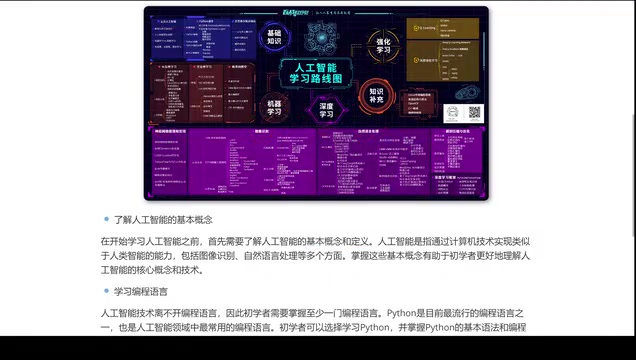
AI for Beginners: A Five-Step Practical Path That Skips the Math and Python Syntax Traps
Struggling with math and Python when learning AI from scratch? This article lays out a five-step entry path: grasp the concepts, learn Python lightly, master ML and deep learning principles, get hands-on with PyTorch, then deepen understanding through real projects.
Read more →

·5 min
Python Learning Roadmap for Beginners: A Three-Stage System to Avoid 90% of Detours
Learning Python from scratch? This article breaks down the three learning stages—Fundamentals, Intermediate, and Practice—covering variables, OOP, scraping, and data analysis to help you plan a systematic Python path.
Read more →

·4 min
Python Learning Path for Absolute Beginners: A Science-Based Guide to Avoid Common Pitfalls
How can beginners learn Python without getting lost? This guide outlines a 3-stage learning path covering basics, advanced topics, and hands-on practice in web scraping, data analysis, and office automation.
Read more →

·7 min
Learning Python from Scratch: A Complete Guide to the Three-Stage Learning Path
Want to learn Python from scratch but don't know where to begin? This article breaks down three stages—basic syntax, advanced mastery, and hands-on practice—with real projects in crawling, automation, and data analysis to help you build programming thinking.
Read more →

·4 min
Claude Code Getting Started Guide: Core Advantages and Selection Recommendations for AI Coding Assistants
Claude Code is Anthropic's local AI coding assistant featuring full project context, auto error correction, and high-accuracy code generation. Compare it with Cursor, Trae, and Codex.
Read more →

·5 min
Claude Sonnet 5 Integrated with Devin: Enhanced Coding Performance with 30% Lower Quota Consumption
Anthropic's Claude Sonnet 5 launches on Devin Desktop and CLI, delivering frontier-level coding performance while reducing quota consumption by ~30% compared to the previous generation.
Read more →

·3 min
AI + Python Reimagines Empirical Research: From Stata to Fully Automated Paper Generation
A PKU-Stanford trainer breaks down how Python surpasses Stata and R, how AI-driven Skills and Paper Workflow automate empirical research from data to LaTeX paper drafts.
Read more →

·2 min
Getting Started with LLMs: A Complete Roadmap from Zero to Practice
How to learn LLMs from scratch? This guide covers personalized learning paths for 3 types of learners, hardware tips (16GB RAM is enough), Python prep, and cloud GPU options.
Read more →
·3 min
A Complete Guide to Learning Python from Scratch: From Basics to Web Scraping Projects
A systematic Python learning path for beginners covering syntax, OOP, web scraping, office automation, and data analysis, with methodology tips and resources.
Read more →

·3 min
Python Self-Study Roadmap: A Three-Phase Learning Method from Zero to Hands-On Projects
A detailed Python self-study roadmap in three phases: fundamentals, OOP & intermediate skills, and hands-on projects including web scraping and office automation.
Read more →

·3 min
Why Should Ordinary People Learn Python in the AI Era? The Path from User to Master
Why should ordinary people learn Python in the AI era? Discover Python's value in calling LLM APIs, automating data tasks, and building AI apps to evolve from AI user to AI master.
Read more →
·3 min
Learn Python from Scratch: A Three-Phase Systematic Learning Path and Practical Guide
How to efficiently learn Python from scratch? This guide covers a three-phase learning path—fundamentals, intermediate, and practical—including environment setup, OOP, web scraping, office automation, and data analysis.
Read more →

·3 min
Python Excel Automation in Practice: Data Filtering and Categorization with Pandas
Learn how to use Python Pandas to automate Excel data filtering and categorization. Core code is just 6-8 lines — handle massive datasets effortlessly.
Read more →

·2 min
Claude 4.6 vs GPT-5.1 vs DeepSeek-R1: A Hands-On Comparison of Coding Capabilities
In-depth comparison of Claude Sonnet 4.6, GPT-5.1 Codex, and DeepSeek-R1 across API pricing, specs, and SWE-Bench Verified scores to help developers pick the best AI coding assistant.
Read more →

·3 min
Nexent Open-Source Platform: Zero-Code Auto-Generation of Production-Grade AI Agents
Deep dive into Nexent's open-source platform for zero-code production-grade AI Agent generation, covering Harness Engineering, built-in controls, use cases, and comparisons with AutoGen and CrewAI.
Read more →