#tokenizer
164 related articles

·3 min
Training a 100M-Parameter Model for Under $50: A Complete Record of Building SmoLLM from Scratch
An ML engineer trained SmoLLM, a 109M-parameter LLaMA-style model from scratch for under $50. Full breakdown of architecture, training pitfalls, instruction tuning, and real-world performance.
Read more →

·6 min
A Beginner's Guide to Claude Code: Why Is It More Powerful Than Cursor and Trae?
Claude Code is Anthropic's local AI programming assistant that reads your entire codebase, auto-debugs, and delivers far higher accuracy than Cursor and Trae. Here's why it's the strongest AI coding tool today.
Read more →

·3 min
Why Transformer Dominates AI Foundation Models: A Deep Dive into Its Three Core Advantages
Why do ChatGPT and Gemini both use Transformer? This deep dive explains how self-attention solves RNN's serial inefficiency and CNN's local limitations across three key dimensions.
Read more →

·5 min
Practical AI Cost Optimization: A Deep Dive into Intelligent Routing and Context Compaction
AI bills keep soaring? This article breaks down two core cost-reduction strategies: intelligent routing via an LLM Gateway, and context compaction to cut Token usage—no major refactoring needed.
Read more →

·6 min
Jacobian-Lens in Practice: Manually Reshaping LLM Behavior with J-Space
After Anthropic released Jacobian-Lens, a developer reversed it from an interpretability tool into a behavior editor, manually tuning J-Space to reshape LLM outputs. An in-depth look at the tech, representation engineering, and AI safety risks.
Read more →

·4 min
Claude Sonnet 5 In-Depth Review: Impressive Performance, but Hidden Traps in the Pricing Strategy
A full review of Claude Sonnet 5: major agentic gains, benchmarks near Opus 4.8, but a Tokenizer switch inflates real costs, nearly erasing the price gap with Opus. We break down the pricing traps.
Read more →

·6 min
A Deep Dive into the vLLM Inference Framework: Core Principles of Throughput Optimization and Interview Guide
An in-depth analysis of the vLLM inference framework's core principles: from the meaning of throughput (tokens/s), to the bottlenecks of autoregressive generation, to KV Cache, PagedAttention, and continuous batching.
Read more →

·7 min
GPT-5.6 Full Model Lineup Hands-On Guide: A Deep Dive into API Relay Stations and Their Risks
The full GPT-5.6 model lineup is live. How can domestic developers access it at low cost via API relay stations? This article explains the principles, registration, token setup, client integration, and key risks.
Read more →
·5 min
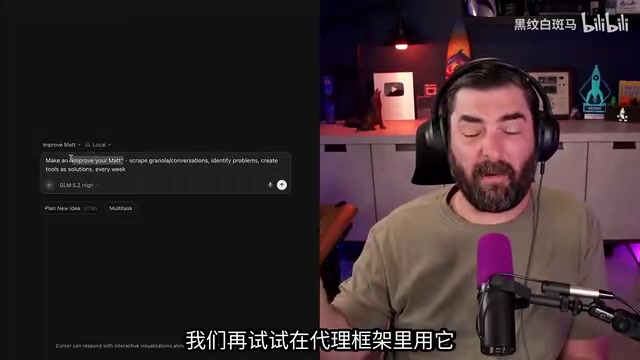
GLM-5.2 Hands-On Review: A 753B-Parameter Open Model That Beats GPT and Claude on Value
In-depth hands-on review of Zhipu AI's flagship GLM-5.2: a 1M-token context window and API pricing just one-fifth of GPT/Claude. Covers website building, Chrome extensions, 3D game cloning, and agentic workflows.
Read more →

·4 min
Complete Guide: Connecting Claude Code to DeepSeek — Local Setup + VS Code Integration
A step-by-step guide to installing Claude Code locally on Windows and swapping its underlying model for the DeepSeek API—enabling low-cost AI coding with no VPN required. Covers Node.js setup, Claude Code config, and getting a DeepSeek API Key.
Read more →

·6 min
Why Is Qwen3 27B So Slow on a 4090? A Hands-On Guide to Local Inference Performance Optimization
RTX 4090 taking over 400 seconds to run Qwen3 27B inference? This article analyzes the core causes—VRAM overflow and CPU offloading drag—and offers targeted fixes.
Read more →

·2 min
Claude Sonnet 4 Returns to Cursor: Tops CursorBench, But at the Highest Cost Per Task
Claude Sonnet 4 returns to Cursor, topping CursorBench while carrying the highest cost per task. A deep dive into performance vs. cost trade-offs for AI coding tools.
Read more →

·5 min
Why Did Ollama Rise So Fast? Decoding the Success of a Local LLM Tool
How did Ollama grow from a niche open-source project into developers' default choice for running local LLMs? This article breaks down its rise across product design, technical strategy, and ecosystem building.
Read more →

·5 min
DeepSeek Boosts Inference Speed by 85%: How Speculative Decoding Is Reshaping the AI Speed Race
DeepSeek and Peking University's DS Spark paper boosts AI inference speed by up to 85% via confidence scheduling and semi-autoregressive speculative decoding — no model or GPU changes.
Read more →

·3 min
GPT-5.6 Revealed: What a 54% Token Efficiency Boost in Agentic Coding Actually Means
Sam Altman revealed GPT-5.6 boosts token efficiency 54% in agentic coding — meaning near-halved API costs, longer work chains, and faster responses. A deep dive into the technical implications for developers.
Read more →

·6 min
DINOv2 vs SigLIP: Why the Huge Gap in k-NN Classification? A Guide to Avoiding Vision Encoder Selection Pitfalls
Experiments show DINOv2 Giant scores just 41% on k-NN classification, while SigLIP2 reaches 92%. This article dives into the embedding-space differences between contrastive and self-supervised learning to guide vision encoder selection.
Read more →
·7 min
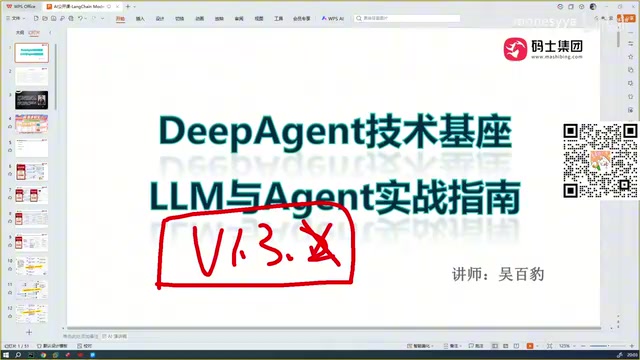
Getting Started with LangChain 1.3: Core Concepts of LLMs and Agents
An in-depth breakdown of LangChain 1.3's core concepts, covering the three major limitations of LLMs, Agent architecture, memory management, and a complete learning path. Master LangChain and LangGraph to quickly build AI development skills.
Read more →

·7 min
GLM-5.2 Released: Open-Source Coding Capability Approaches Closed-Source Flagships for the First Time
GLM-5.2 tops open-weight models in coding with a 74.4 Frontiers-WE score, beating GPT-5.5. Its MIT license enables local deployment, and the gap with closed-source flagships is closing fast.
Read more →

·6 min
AMD Ryzen AI Halo Dev Kit: A $4,000 Local LLM Powerhouse Taking on Apple and NVIDIA
AMD officially unveils the Ryzen AI Halo local AI dev kit, priced around $4,000 with 128GB unified memory, capable of running 70B LLMs locally. An in-depth look at its specs, pricing, and market competition.
Read more →

·7 min
Getting Started with OpenAI LLM Development: A Practical Guide to Model Selection, Token Pricing, and API Usage
A systematic guide to the three cores of OpenAI LLM app development: GPT-4/GPT-3.5 model selection, token billing and cost-saving tips, and practical use of the Models, Completion, and Chat Completion APIs.
Read more →