#voice input programming
195 related articles

·3 min
Open Weight Models: The Strategic Game Between AI Democratization and American Competitiveness
Explore how open weight models achieve both global AI democratization and maintain U.S. competitiveness. Learn the differences between open weight, open source, and closed models, and their strategic impact.
Read more →

·4 min
Pure Vibecoding Builds a 130+ Card Multiplayer CCG: Full AI Tech Stack Breakdown
An indie dev built a 130+ card multiplayer CCG entirely through vibecoding with Claude Code, GPT, and ElevenLabs. Full AI tech stack breakdown and analysis of vibecoding's capabilities and limits.
Read more →

·3 min
Kimi K3 Reaches 2.5T Parameters, MiniMax M3 Pro Brewing Simultaneously: China's LLM Arms Race Escalates
Kimi K3 adopts new architecture with 2.5T parameters and 1M token context. MiniMax M3 Pro targets 2.7-3T. OpenAI surpasses 7M users, HY-OCR 1.5 achieves SOTA, Amap launches world model.
Read more →

·5 min
July 24 AI Daily Brief: Flux 3 Multimodal Release, Kimi K3 Lags in Testing, Qwen Tops TTS Rankings
July 24 AI news: Black Forest Labs launches Flux 3 multimodal model, Kimi K3 lags in US-UK gov tests, Alibaba Qwen tops TTS rankings, Etched raises $300M, AMD unveils MI430X.
Read more →

·5 min
Open-Source STEM Education Robot: Smart Ball-Fetching Interaction Powered by Edge AI Object Detection
An open-source STEM education robot using Edge Impulse edge AI for local object detection, teaching kids computer vision and ML through an engaging ball-fetching game with anthropomorphic design.
Read more →

·5 min
A Beginner's Guide to Prompt Engineering: From One-Off Instructions to a Systematic Methodology
A beginner's guide to prompt engineering covering the four functions of prompts, the key differences from prompt engineering, a six-step systematic workflow, and critical technical and practical limitations.
Read more →
·3 min
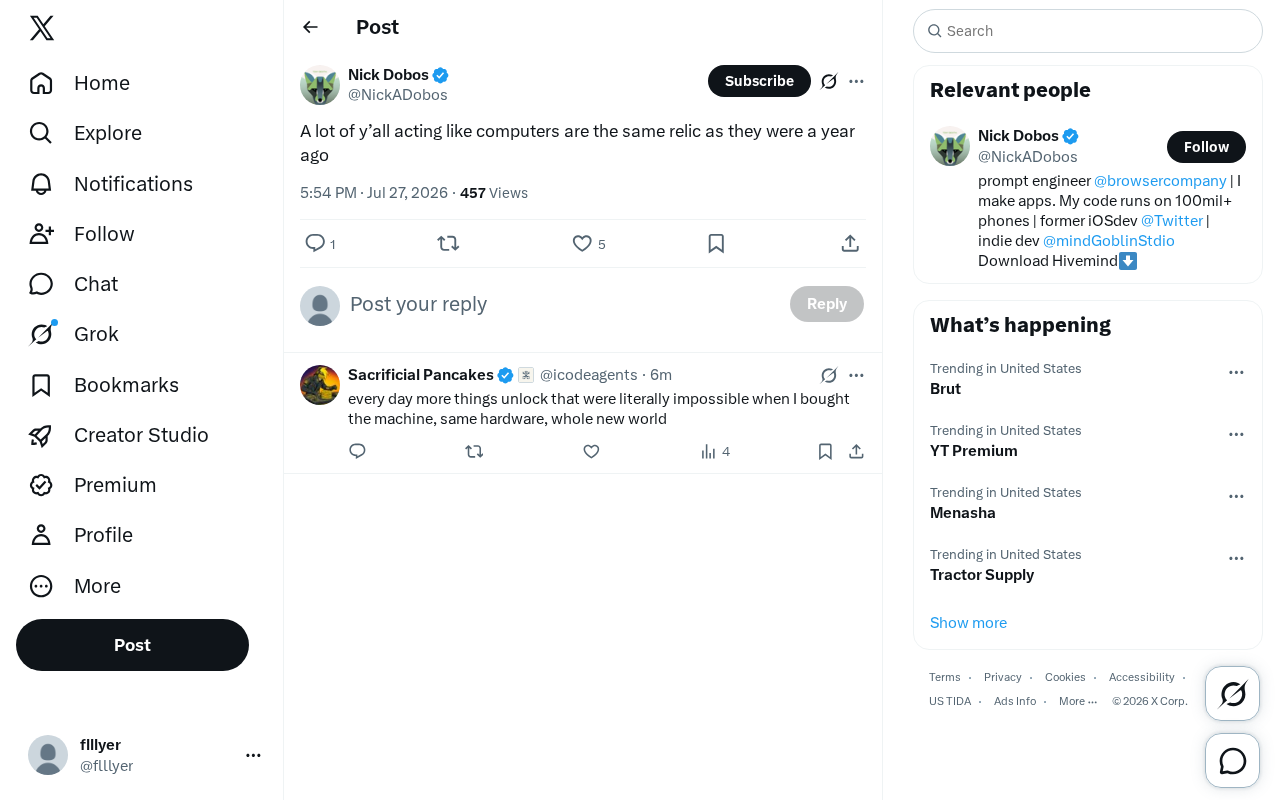
The Computer Is Being Redefined in the AI Era — Has Your Understanding Kept Up?
Generative AI is profoundly redefining the personal computer — from passive tool to intelligent collaborator. This article examines the core shifts of the AI PC era and the productivity gap created by cognitive lag.
Read more →
·3 min
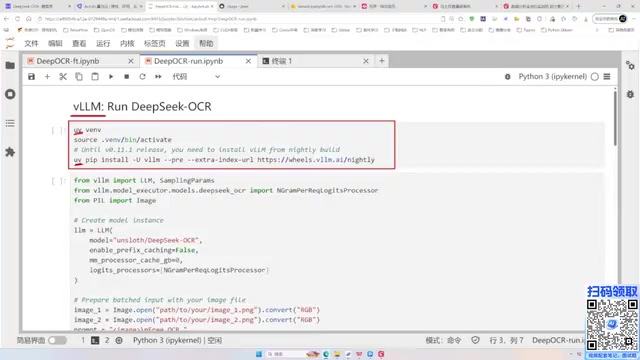
DeepSeek-OCR Deployment & Fine-Tuning in Practice: From vLLM Inference to Unsloth Fine-Tuning
Complete guide to DeepSeek-OCR from vLLM inference deployment and Unsloth model loading to fine-tuning, covering cloud server setup, GPU selection, and code examples — all on a single 4090 GPU.
Read more →
·3 min
Computers Are Being Redefined in the AI Era — Has Your Understanding Kept Up?
Generative AI is profoundly redefining personal computers — from passive tools to intelligent collaborators, from deterministic computation to probabilistic reasoning. Explore the core shifts of the AI PC era.
Read more →

·2 min
Codex Voice Mode Hidden Trick: Tap the Circle to Instantly Show Subtitles
Discover a hidden trick in Codex iOS voice mode: tap the central circle to show subtitles, solving pain points like unclear code names and hard-to-distinguish technical content in voice interactions.
Read more →

·3 min
Major Codex Voice Mode Upgrade: How Voice Programming Is Changing Development Workflows
OpenAI Codex Voice Mode gets a major upgrade with always-on background operation and uninterrupted voice programming. Explore the new workflow, ambient coding agents, and what voice programming means for developers.
Read more →

·2 min
Deep Dive into the OpenClaw Multi-Agent Framework: From Dify Workflows to Autonomous AI Execution
An in-depth analysis of the OpenClaw multi-agent framework: its TypeScript single-process gateway design, inter-agent scheduling, advantages over Dify workflows, and the three evolutions of AI execution.
Read more →

·4 min
Building an AI-Automated Topic Selection System: A Practical Guide to the Three-Dimension Method
Learn how Bilibili creator JK built an AI-automated topic selection system using Codex and Feishu — covering the three-dimension method: practice, trending topics, and benchmarking.
Read more →

·3 min
Qwen3.8 Deep Dive: How Does a 2.4 Trillion Parameter MoE Model Claim Second Place?
Alibaba's Qwen3.8 challenges larger models with a 2.4T-parameter MoE architecture, claiming second only to Gemini. A deep dive into MoE mechanics, continuous updates, two-speed release strategy, and real local deployment requirements.
Read more →

·7 min
AI Daily: T-Head Open-Sources SAIL Software Stack at WAIC, Flurry of Large Model Releases
T-Head open-sources AI software stack T-Head SAIL at WAIC to lower the barrier for domestic chip development; Kimi K3 tops the WebDev leaderboard; Qwen 3.8 Max Preview cuts prices aggressively; Moonshot prepares a Hong Kong IPO; and Oracle switches its data center to a fuel cell microgrid.
Read more →

·3 min
Opal: A Designer Built an AI Pet Assistant on Raspberry Pi Using OpenClaw
Microsoft designer Tua Nguyen built Opal, an AI rabbit assistant on Raspberry Pi using OpenClaw — capable of browsing the web, finding recipes, and operating GitHub.
Read more →

·3 min
Codex in Action: A Complete Guide to Building a WeChat Mini Program with AI — No Coding Experience Required
A complete walkthrough of building and launching a WeChat Mini Program using OpenAI Codex and ChatGPT — from AI prototyping to ICP filing. MVP delivered in 5 days, no coding required.
Read more →

·2 min
Daedalus: A Deep Dive into the Ollama-Based Local AI Engineering Runtime
Daedalus is an open-source local AI engineering runtime built on Ollama, covering architecture, debugging, and security. Zero token costs, full privacy, integrates with Claude Code and OpenCode.
Read more →

·4 min
Vibe Coding for Beginners: 4 Pitfalls Every Non-Coder Must Avoid
New to Vibe Coding? Avoid these 4 beginner traps: unclear AI boundaries, oversized goals, wrong role mindset, and C drive overflow. Real tips for non-coders.
Read more →

·4 min
AI-Powered Automated Testing: Using Pytest + MCP to Tackle Non-Determinism
Deep dive into AI-era automated testing: using Pytest + Playwright + MCP for stable automation, constraining code conventions with Skills, avoiding non-determinism and high token costs. Includes real debugging war stories.
Read more →