#xAI Grok
162 related articles

·6 min
GPT-5.6 Sol Hands-On: How Multi-Agent Parallelism Is Reshaping AI Coding Workflows
Based on Fireship's review, an in-depth look at GPT-5.6 Sol's Ultra Mode multi-agent parallelism, its 91.9% Terminal Bench score, and how it differs from Claude Fable in cost, speed, and precision.
Read more →

·5 min
GPT-5.6 In-Depth Review: Crushing Competitors on Value, But Its Jailbreak Vulnerabilities Can't Be Ignored
OpenAI's GPT-5.6 Soul, Terra & Luna are priced at one-third of Claude, leading Anthropic Fable on many benchmarks. We analyze its value, reasoning, and jailbreak risks.
Read more →

·4 min
The Death of Codex: How OpenAI Buried Developers' Favorite Coding Brand With Its Own Hands
OpenAI merged Codex into ChatGPT, killing a developer-beloved AI coding brand. A deep dive into the gains and losses of this brand consolidation.
Read more →

·5 min
In-Depth Comparison of AI Image Generation Tools: How to Choose Between Flux, Midjourney, and Gemini?
A comprehensive comparison of mainstream AI image generation tools: Flux, Midjourney, Grok, Gemini, and Stable Diffusion. Dissecting their pros and cons across quality, freedom, and usability to help you find the right AI drawing solution.
Read more →

·7 min
GPT-5.6 and Grok 4.5 Launch Simultaneously, Meta Unveils Agent-Based Image Model
OpenAI GPT-5.6 expands its preview, xAI Grok 4.5 opens access at the same time, Meta releases the Agent-based Muse Image model and Muse Video model, while Apple and DeepSeek launch in-house AI inference chip programs. A quick look at the week's five biggest AI stories.
Read more →

·4 min
GPT-5.6 Launches: Flagship Model Sol Personally Trains Smaller Models, Recursive AI Self-Improvement Becomes Reality
OpenAI releases the GPT-5.6 series (Sol/Terra/Luna), with flagship Sol directly handling smaller model Luna's post-training—marking recursive AI self-improvement in practice. A deep dive into performance, cost, ChatGPT Work, and computer use design leaps.
Read more →

·6 min
Grok 4.5 Coding Benchmark: A Deep Dive into Performance, Speed, and Cost
xAI releases Grok 4.5, purpose-built for coding agents. 80 TPS speed, $2/M input tokens, SWE Bench Pro score of 64.7, and 4.2x better token efficiency than Opus 4.8. A deep hands-on review.
Read more →

·6 min
Grok 4.5 Hands-On: A Faster, Cheaper Coding Dark Horse — Can It Replace Opus and GPT?
In-depth Grok 4.5 hands-on review: priced at a fraction of Opus 4.8, twice the token efficiency of peers, and coding ability in the top tier. A real-project breakdown of its strengths, highlights, and shortcomings.
Read more →

·4 min
GPT-5.6 Sol vs Grok 4.5: Same $20 Subscription — Which One Is Actually Worth It?
GPT-5.6 Sol or Grok 4.5 — both at $20/month, but which delivers more value? We break down use cases, intelligence benchmarks, and ecosystem tradeoffs to help you decide.
Read more →

·6 min
GPT Live Full-Duplex, Grok 4.5 Coding, Seedream 5.0 Images: AI Accelerates Across Three Tracks Simultaneously
OpenAI's GPT Live full-duplex voice model, Grok 4.5 coding model with Cursor, and ByteDance's Seedream 5.0 Pro image generation launched together. A deep dive into three AI releases.
Read more →

·2 min
OpenAI's Four-Front Offensive: A Deep Dive into GPT-5.6, Codex, Voice AI, and Work Agent
OpenAI launches GPT-5.6, ChatGPT Work, upgraded Codex super-app, and GPT Live voice AI — a deep dive into all four products and their impact on the AI landscape.
Read more →

·2 min
Three AI Giants Tested: Seedream 5.0, GPT-Live, and Grok 4.5 — A Comprehensive Breakdown
ByteDance Seedream 5.0 Pro, OpenAI GPT-Live, and xAI Grok 4.5 — three major AI releases dissected with hands-on testing across image generation, voice interaction, and coding agents.
Read more →

·6 min
Cursor Meets Grok 4.5: A Hands-On Test of an AI Coding Assistant That's 5x Faster with Cleaner Output
A developer deeply tests Grok 4.5 High Fast in Cursor, finding it rivals Claude Opus in quality but runs 5x faster with cleaner, filler-free output. Full hands-on review and analysis.
Read more →
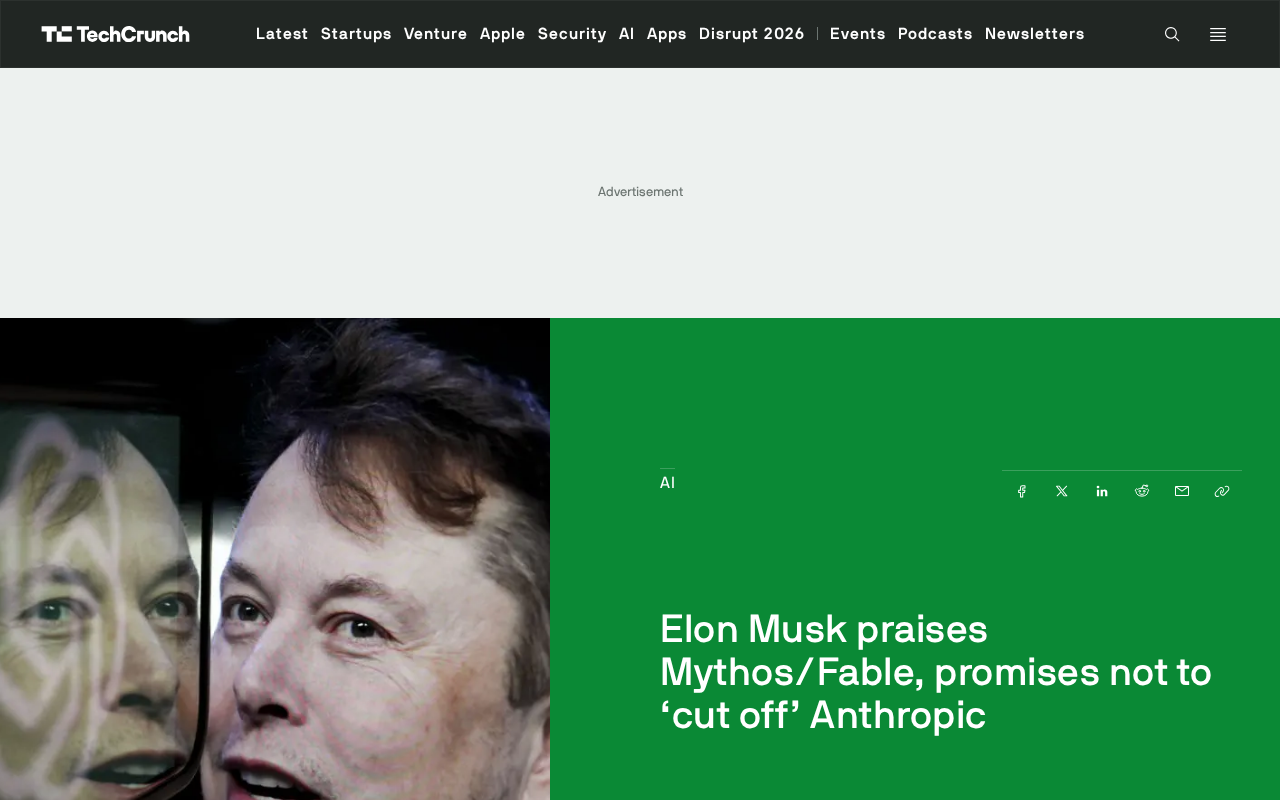
·3 min
Musk Pledges Not to Cut Off Anthropic: The Trust Game in AI Cloud Infrastructure
Musk publicly pledges not to cut off Anthropic's compute access. We break down the $40B stakes, AI infrastructure coopetition, and how companies manage trust risk in a compute-concentrated era.
Read more →

·4 min
EFF Writes to FTC: X Platform Allegedly Violates Privacy Consent Order, Raising Serious User Data Protection Concerns
EFF formally writes to the FTC alleging X (formerly Twitter) violated its privacy consent order. Mass layoffs, AI data misuse, and weakened FTC enforcement raise serious user privacy concerns.
Read more →

·4 min
Grok vs GPT vs Claude: Which AI is the Best Coding Assistant?
Grok 4.5, GPT-5.5, and Claude go head-to-head on the same coding tasks. A deep comparison of code quality, UI design, and engineering standards to help you choose the right AI coding assistant.
Read more →

·6 min
Grok 4.5 Deep Dive: Coding on Par with Top Models, at a Fraction of the Cost
A senior developer's 24-hour deep test of Grok 4.5: a 1.5T-param MoE model at $2/M input tokens, with coding benchmarks rivaling GPT-5.5. Real performance, token efficiency, and limits explained.
Read more →

·6 min
GPT-5.6 Three-Model Launch: Soul/Terra/Luna Tiered Strategy and the AI National Security Game
OpenAI previews the GPT-5.6 series — Soul, Terra, and Luna — with a massive 1.5M-token context. In-depth analysis of coding leaps, the Fable 5 national security game, the heating U.S.-China AI race, and workflow economics.
Read more →

·7 min
GPT-5.6 Hands-On: A Complete Breakdown of the Three New Models — Soul, Terra, and Luna
OpenAI unveils the GPT-5.6 family — Soul, Terra, and Luna. Flagship Soul offers a 500K-token context and built a Pokémon RPG in 31 minutes. Plus Fable 5, GLM 5.5, and Grok 4.5 updates.
Read more →

·4 min
AI Weekly: Top Coding Model Returns, Google's New Flash Checkpoint, and the Video Generation Race
This week in AI: Anthropic's flagship coding model returns globally with new safety classifiers, Google tests a new Gemini Flash checkpoint, video generation heats up, and Figure AI robots enter BMW factories.
Read more →