#AI coding tool
4299 related articles

·3 min
Claude Code in Practice: How AI Coding Tools Can Protect Your Secret Keys
When AI coding assistants have full filesystem access, are your API keys and cloud credentials safe? Deep dive into secret leakage risks and practical defenses.
Read more →

·3 min
Vibe Coding in Practice: A Comprehensive Review and Selection Guide for 6 AI Coding Tools
In-depth comparison of 6 Vibe Coding tools — Claude Code, Trae, Zhipu, Cursor, and more — covering setup cost, Chinese support, pricing, and code quality.
Read more →
The Hidden Costs of AI Coding Tools: A…
·2 min
The Hidden Costs of AI Coding Tools: A Deep Dive into Claude Code's 33k Token Overhead
Claude Code consumes up to 33,000 tokens per request before reading your prompt, vs. 7,000 for OpenCode. We break down why this 5x gap matters for cost, latency, and context windows.
Read more →

·2 min
Getting Started with Claude Code: A Complete AI Coding Tool Comparison & Practical Guide
A deep dive into Claude Code's core strengths: full project context reading, auto error fixing, and agentic coding. Compare Copilot, Cursor, Trae, and Codex to find the right AI coding tool for you.
Read more →

·4 min
Claude Code vs. Codex vs. Cursor: A Deep Comparison of Three AI Coding Tools
Claude Code, Codex, or Cursor? This in-depth comparison covers each tool's positioning, ideal users, and how to combine them for maximum productivity in your AI coding workflow.
Read more →
Cursor Data Revealed: The Real Picture…
·1 min
Cursor Data Revealed: The Real Picture of AI Coding Tool Usage and Three Key Findings
Cursor's latest usage data reveals three key AI coding phenomena: power users produce 10x the code of median users, input token costs far exceed output, and nearly half of AI code changes go unreviewed.
Read more →

·3 min
AI Compute Prices Surge Across the Board + Rise of Two Domestic Coding Tools: The Wave of Self-Reliance Arrives
The U.S. imposes its strictest-ever export controls on top AI models, while Zhipu AI and Moonshot launch self-developed coding tools the same day—amid rising GPU and cloud compute prices. A deep dive into three trends driving cost rationality and tech autonomy.
Read more →

·4 min
In-Depth Comparison of 4 AI Coding Tools: Cursor, Claude Code, Codex, and Opencode — Which Is Worth Buying?
A real-world review of subscribing to Cursor, Claude Code, Codex, and Opencode simultaneously. Compare quotas, model capability, and value to find your ideal AI coding subscription.
Read more →

·3 min
Alibaba Bans Claude Code Company-Wide: Data Security Concerns Around AI Coding Tools
Alibaba has banned employees from using Claude Code company-wide, shifting sharply from encouragement to prohibition. An in-depth look at data security risks, privacy compliance dilemmas, and the domestic AI alternative trend.
Read more →

·4 min
AI Coding Tool Data Leakage Risks: A Security Guide for Protecting Quantitative Strategies
AI coding tools carry cloud data transmission risks, exposing quantitative trading strategies to leakage. This article analyzes AI tool data security and offers protection strategies.
Read more →

·6 min
Alibaba Bans Claude Code: The Battle Over AI Coding Tool Security and Data Sovereignty
Alibaba bans Claude Code over security risks, sparking tech community debate. An in-depth analysis of data leakage risks with cloud AI coding tools and the rise of local AI deployment.
Read more →
·5 min
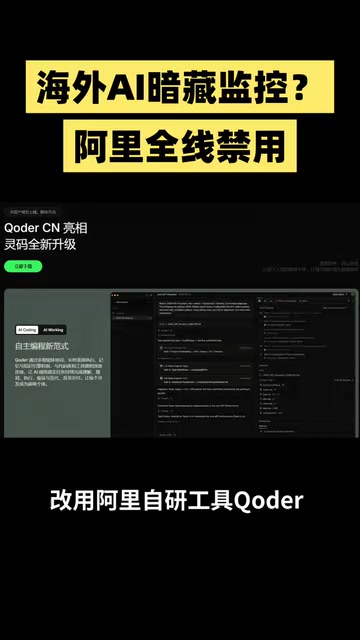
Deep Analysis of the Alibaba-Claude Ban: The Battle for Autonomous Control of AI Coding Tools
Alibaba bans all Anthropic products including Claude Code, while ByteDance and Tencent switch to in-house tools. A deep dive into the security logic and industry trends behind China's push for autonomous AI coding tools.
Read more →

·7 min
Complete Guide to Installing and Deploying Claude Code: Configure Your AI Coding Tool from Scratch
A detailed walkthrough of the full Claude Code installation process: environment setup, npm installation, proxy configuration for networks in China, API integration, and CC Switch provider management—helping beginners quickly get started with this AI coding tool.
Read more →

·4 min
BingoCode: An Open-Source AI Coding Tool for Offline Deployment — A Claude Code Alternative
BingoCode is an MIT-licensed open-source AI coding tool supporting offline intranet deployment, compatible with DeepSeek, Claude, OpenAI, and Gemini. Pure CLI design, four-step setup, high cache hit rates for lower costs — ideal for security-conscious teams.
Read more →

·4 min
AI Coding Tool Security Governance: How Policy Enforcement Guardrails Ensure Enterprise Compliance
As Claude Code, Cursor, and Codex enter enterprises at scale, policy enforcement guardrails are becoming critical. A deep dive into AI coding tool security governance, cross-platform compliance, and enforcement mechanisms.
Read more →

·7 min
Demystifying Claude Code's Harness in 60 Lines of Python: The Core of AI Coding Tool Performance Differences
The same model scores 77% in Claude Code but jumps to 93% in Cursor—the only variable is the Harness. This article dissects how AI coding tools work in 60 lines of Python.
Read more →

·4 min
AI Coding Security: A CLI Tool Designed to Block Vulnerable Dependencies for Agents
AI coding assistants (Copilot/Cursor/Claude Code) frequently introduce vulnerable dependencies and hallucinate package names. This post analyzes an Agent-native CLI security tool and the shift-left security philosophy for AI-era supply chains.
Read more →

·2 min
Chrome DevTools MCP: Giving AI Coding Assistants True Browser Vision
Google Chrome's official chrome-devtools-mcp uses MCP to expose DevTools capabilities to AI coding assistants like Claude and Cursor, enabling screenshots, console reading, and network analysis.
Read more →

·6 min
video-use: The Open-Source Tool That Lets AI Coding Agents Auto-Edit Videos
video-use from the browser-use team lets AI coding Agents auto-edit videos via natural language. 13K+ GitHub stars, batch processing, silence removal, FFmpeg integration.
Read more →

·6 min
Alibaba Bans Claude Code: The Enterprise Security Red Line for AI Coding Tools
In-depth analysis of Alibaba's comprehensive internal ban on Claude Code: from the hidden-marker controversy and Anthropic's regional-restriction stance to five core questions of enterprise AI coding tool security admission.
Read more →