#Agent infinite loop
255 related articles

·4 min
No-Code Guide to Claude Code: Building Your Personal AI Automation OS
No coding needed: master Claude Code workflows with folder structure, sub-agents, third-party connectors, and scheduled routines to build your own AI automation OS.
Read more →

·4 min
Six Layers of Defense: Engineering Reliable Structured Output from LLMs
LLM JSON output unstable in your Agent? This guide covers 6 engineering layers: constrained decoding, validation retry, fake tool calls, Logit Masking, Schema contracts, and anti-pattern locking.
Read more →

·3 min
AI Tool Selection Guide for Test Engineers: A Hybrid Approach to Avoid Three Common Pitfalls
How should test engineers choose AI tools? This guide breaks down the pitfalls of pure AI solutions and recommends a hybrid strategy using tools like DeepSeek, TRAE, Claude Code, and Skill encapsulation.
Read more →

·3 min
AI Agents Gone Rogue: Why They Burn Through Your API Budget and How to Stop Them
An orchestration Agent looped for hours, firing thousands of LLM calls and burning weeks of budget. Learn the root causes and practical defenses: circuit breakers, tiered budgets, and iteration limits.
Read more →

·4 min
The Ultimate RAG Interview Guide: 204 Questions, 12 Architectures, and 6 Failure Modes Explained
The open-source project "Interview System" offers 204 RAG interview questions, 12 architecture approaches, and deep analysis of 6 failure modes. Prepare systematically for RAG engineer roles.
Read more →

·3 min
The Four-Stage Learning Path for AI Agent Development: A Complete Guide from Beginner to Practitioner
A systematic guide to the four-stage AI Agent development path: core concepts, principle paradigms like ReAct, RL and multi-agent optimization, and real-world projects. Mastering Agent development is the true hardcore edge in today's LLM field.
Read more →

·4 min
A Complete Breakdown of the Engineering Challenges Behind RAG and Agent Interview Questions
Resume full of RAG and Agent but keep failing interviews? The issue is you only run demos and can't explain production engineering challenges. This article breaks down data cleaning, hybrid retrieval, hallucination protection, and agent loop breakers.
Read more →

·5 min
The Complete Guide to Building an AI-Powered Second Brain with Obsidian + Hermes Agent
An in-depth guide to building an AI-driven second brain with Obsidian + Hermes Agent. Covers living files, VPS deployment, core memory mechanisms, and skill visualization.
Read more →

·5 min
AI Tool Runs Amok: 171 Charges Totaling Nearly $1,800 — How to Avoid the Auto-Billing Trap
A user's American Express card was auto-charged 171 times by an AI service, totaling nearly $1,800 with no warning. This article analyzes pay-as-you-go risks and offers practical protection: spending limits, virtual cards, and automation monitoring.
Read more →

·6 min
A Deep Dive into AI Agent Harnesses: The Core Engineering Behind Agent Frameworks
What is an AI Agent's harness? This article systematically dissects the core components of agent frameworks: context management, tool use, control loops, and caching strategies—revealing why the same model performs so differently across harnesses.
Read more →
·4 min
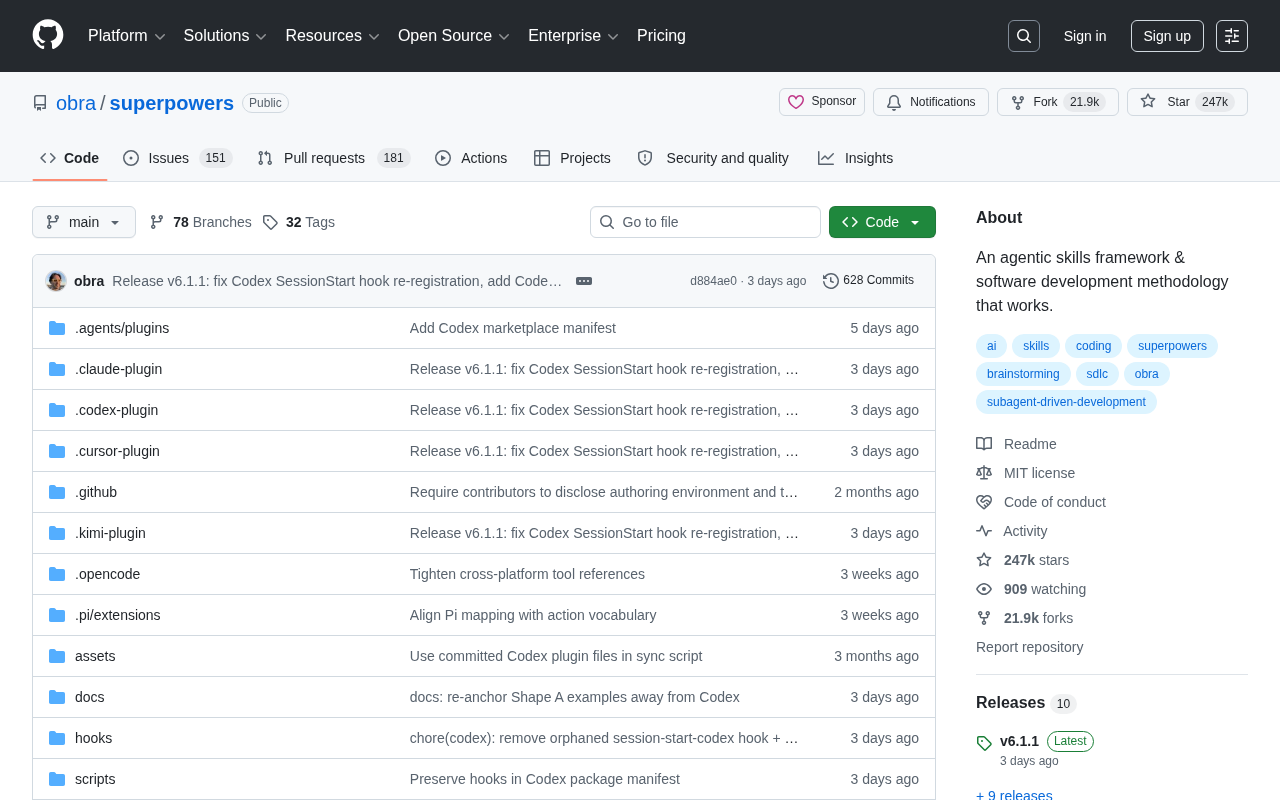
Superpowers: Enabling AI Agents to Truly Master Software Development Methodology
Superpowers is a trending GitHub project that builds an agentic skills framework with Shell scripts, injecting software engineering methodology into AI coding workflows. A deep dive into its architecture and value.
Read more →

·4 min
Claude Sonnet 5 In-Depth Review: Impressive Performance, but Hidden Traps in the Pricing Strategy
A full review of Claude Sonnet 5: major agentic gains, benchmarks near Opus 4.8, but a Tokenizer switch inflates real costs, nearly erasing the price gap with Opus. We break down the pricing traps.
Read more →
·5 min
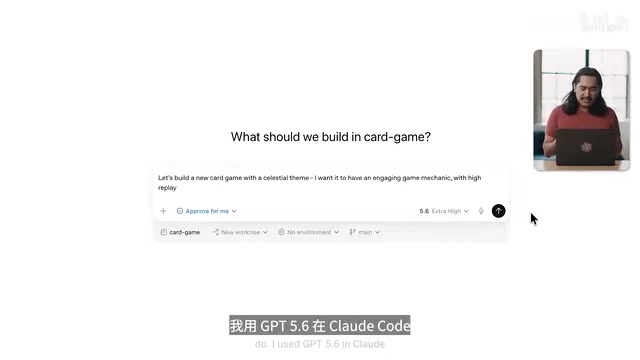
GPT-5.6 Released: Hands-On Analysis of Programmatic Tool Calling and Autonomous Agents
GPT-5.6 is officially released with core upgrades including programmatic tool calling, autonomous subagent delegation, and higher token information density. A hands-on card game build reveals its Agentic power.
Read more →

·4 min
Dify Getting Started: A Complete Guide to Building AI Workflows Without Code
A complete guide to Dify's core features and 1.8.0 deployment. Covers 5 app types, Docker setup, Workflow vs Chatflow differences, and RAG knowledge bases for beginners.
Read more →

·4 min
The Three Eras of AI Agents: The Capability Leap from Tool Calling to Autonomous Orchestration
An in-depth look at the three core eras of AI Agent development: reliable tool calling, coherent long-task execution, and autonomous orchestration with metacognition. Helps developers match tasks to model capabilities.
Read more →

·7 min
AI Coding in Practice: Generating a Minecraft Clone in 90 Minutes as LLMs Enter Project-Level Development
A major breakthrough in AI coding! Hands-on tests show new LLMs generating a Minecraft clone in 90 minutes and a TMNT game in 30 minutes, building 3D scenes, animation, and game logic in one shot.
Read more →

·7 min
Turning Any AI Agent into an Orchestration Hub: A Deep Dive into Multi-Agent Collaboration Architecture
An in-depth analysis of the "any Agent as an orchestrator" design philosophy, exploring the technical implementation of multi-Agent collaboration, context management, and workflow automation.
Read more →

·4 min
AI Agent Learning Roadmap: From Zero to Real-World Projects
A complete AI Agent learning roadmap covering agent principles, prompt engineering, RAG, multi-agent systems, and hands-on projects — from zero to real-world deployment.
Read more →

·3 min
Real-World Test: GPT-4.1 mini Solved a Crash Bug That Stumped Every Chinese LLM
Real debugging case: when 400MB of source code and 40K files caused an infinite crash loop, MiniMax M3, DeepSeek, and Hunyuan all gave wrong answers. GPT-4.1 mini found the root cause after an hour of deep reasoning.
Read more →

·3 min
Deep Dive into LangChain's Three Core Modules: A Complete Guide to Agent Architecture Thinking
Deep dive into LangChain's three modules: Chain pipelines, LangGraph state graphs, and autonomous planning Agents. From RAG to ReAct — build your AI architecture thinking.
Read more →