#Claude Code localization
158 related articles

·3 min
Sidenote: Annotate Rendered Pages Directly, Let LLM Auto-Generate Git Commits
Sidenote is an open-source tool that lets you annotate rendered static blog pages in natural language, with an LLM auto-locating source files and generating Git diffs.
Read more →

·4 min
Beware of AI Fake Marketing: Is the 'GPT-5.6 Release' a Scam?
A viral Bilibili video claiming the 'GPT-5.6 SOAR/TERRA/LURAL release' is full of fake model names, forged benchmarks, and risky third-party sites. We debunk it and show how to spot AI hype traps.
Read more →

·6 min
Alibaba Bans Claude Code: The Battle Over AI Coding Tool Security and Data Sovereignty
Alibaba bans Claude Code over security risks, sparking tech community debate. An in-depth analysis of data leakage risks with cloud AI coding tools and the rise of local AI deployment.
Read more →

·6 min
Andrew Ng × Anthropic: A Hands-On Claude Code Tutorial and Core Methodology
Andrew Ng partners with Anthropic to launch a hands-on Claude Code course, revealing its simple architecture, local security edge, and core context methodology across three cases: RAG chatbot, Jupyter analysis, and Figma-to-frontend.
Read more →

·4 min
Complete Guide: Connecting Claude Code to DeepSeek — Local Setup + VS Code Integration
A step-by-step guide to installing Claude Code locally on Windows and swapping its underlying model for the DeepSeek API—enabling low-cost AI coding with no VPN required. Covers Node.js setup, Claude Code config, and getting a DeepSeek API Key.
Read more →

·7 min
Base44 in Practice: How Claude Code Powered Rapid Scaling from 1 to 80 People
How Base44's product team scaled from a single founding engineer to an 80-person team with Claude Code. Covers AI-assisted onboarding, code review, user evaluation, and QA automation.
Read more →

·6 min
GPT-5.6 Now Widely Available: The Era of Three-Tier Models and Multi-Agent Orchestration Arrives
OpenAI releases GPT-5.6 (SOUL/TERRA/LUNA), with Ultra mode running four agents in parallel; Meta launches Muse Spark 1.1 with million-token context; ChatGPT desktop unifies Chat, Work, and Codex.
Read more →

·4 min
Tencent Open-Sources Agent Memory: A Fully Local AI Long-Term Memory Solution with Zero External Dependencies
Tencent Cloud open-sources TencentDB Agent Memory — a fully local AI Agent memory system with a 4-tier progressive pipeline, zero external API dependencies, and 8,100+ GitHub Stars. Ideal for finance, healthcare, and privacy-sensitive use cases.
Read more →

·2 min
Claude Sonnet 4 Returns to Cursor: Tops CursorBench, But at the Highest Cost Per Task
Claude Sonnet 4 returns to Cursor, topping CursorBench while carrying the highest cost per task. A deep dive into performance vs. cost trade-offs for AI coding tools.
Read more →

·5 min
A Deep Dive into Cloud Coding Agents: How Users in China Can Choose Wisely
What exactly is the Cloud Coding Agent Silicon Valley is hyping? This article breaks down the core concept across three axes—where it runs, who watches, where tasks start—and gives users in China practical advice on local alternatives.
Read more →

·4 min
Kun: An Open-Source AI Coding Agent Deeply Optimized for DeepSeek
Kun is an open-source AI coding agent optimized for DeepSeek and domestic users, with nearly 5,000 GitHub stars. Features include requirements drafting, inline diffs, cost visualization, and mobile monitoring. Real-world cache hit rates reached 97%, keeping costs extremely low.
Read more →

·5 min
28 Enterprise-Grade AI Agent Projects: A Complete Guide That Even Beginners Can Deploy
A collection of 28 fully reproducible enterprise-grade AI Agent projects covering code debugging, financial analysis, customer service, and multi-agent collaboration—deployable even for beginners.
Read more →

·6 min
Getting Started with Coze Agents: Core Concepts, Platform Positioning, and a Practical Implementation Guide
A systematic guide to Coze's core positioning, its differences from Dify/n8n, and its full capability system covering agents, workflows, and multi-agent modes—helping beginners get started fast.
Read more →

·5 min
Agentic MapReduce: The Key Architecture for AI Agents to Achieve Distributed Reasoning Across Entire Codebases
Cognition's Agentic MapReduce architecture combines classic distributed computing with autonomous agents to break LLM context window limits, enabling multi-Agent parallel reasoning across entire codebases.
Read more →

·4 min
Grok vs GPT vs Claude: Which AI is the Best Coding Assistant?
Grok 4.5, GPT-5.5, and Claude go head-to-head on the same coding tasks. A deep comparison of code quality, UI design, and engineering standards to help you choose the right AI coding assistant.
Read more →

·7 min
Zero-Basis Learning Path for AI Agents: A Three-Stage Journey from Beginner to Deployment
A systematic zero-basis learning path for AI Agent development, covering Python and LLM fundamentals, five core capabilities like task planning and RAG, and LangChain hands-on practice.
Read more →

·7 min
Rowboat: An Open-Source, Local-First Alternative to Claude Desktop
Rowboat is an open-source, local-first AI desktop client positioned as a Claude Desktop alternative. Local data storage and fully transparent code help developers control privacy and workflows.
Read more →
·7 min
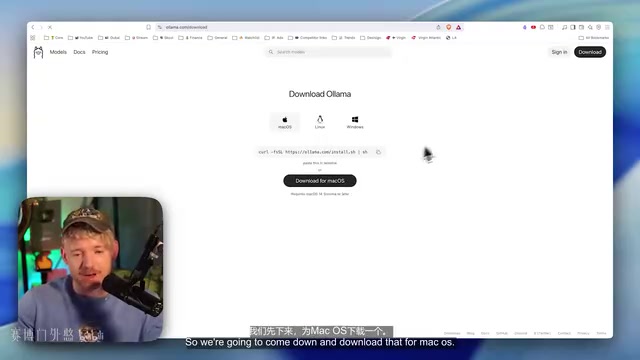
Ollama + Hermes Local AI Deployment: Building a 100% Private Personal AI Operating System
Build a fully private local AI system with Ollama + Hermes: zero cost, no rate limits, data stays local. Learn deployment steps, model selection tips, and private/cloud hybrid workflows.
Read more →

·6 min
video-use: The Open-Source Tool That Lets AI Coding Agents Auto-Edit Videos
video-use from the browser-use team lets AI coding Agents auto-edit videos via natural language. 13K+ GitHub stars, batch processing, silence removal, FFmpeg integration.
Read more →

·3 min
GLM 5.2 Deep Dive: The Open-Source Coding Model Breaking Into the Global Top Three
GLM 5.2 by Zhipu AI: fully open-source under MIT license, #3 globally on Code V3 with a 96-point S-tier rating, and a genuinely usable 1M-token context window.
Read more →