#Code Agent
5029 related articles

·3 min
Local Merge Queues: Solving Code Conflicts from Parallel AI Coding Agents
Deep dive into how local merge queues solve code conflict challenges when multiple AI coding agents work in parallel, covering merge queue principles and multi-agent development trends.
Read more →

·3 min
MiniMax Code vs Cursor: Analyzing the Design Advantage of Side-by-Side Code and Agent Layout
In-depth comparison of MiniMax Code and Cursor UI layouts. MiniMax Code's side-by-side code and Agent design reduces view switching and boosts code review efficiency. Choose the right AI coding tool.
Read more →

·3 min
MiniMax Code vs Cursor: Analyzing the Design Advantages of Side-by-Side Code and Agent Layout
In-depth comparison of MiniMax Code and Cursor's UI layouts. MiniMax Code's side-by-side code and Agent design reduces view switching for better code review efficiency, while Cursor's editor-centered approach suits deep coding.
Read more →

·3 min
GitHub Daily · July 28: From Claude Code Skill-ification to AI Agent Governance, the Toolchain Matures
GitHub Trending July 28: Microsoft's agent-governance-toolkit covers OWASP Agentic Top 10, book-to-skill gains 366 stars showing Claude Code skill ecosystem potential, plus browser-based 3D and GIS tools.
Read more →
·3 min
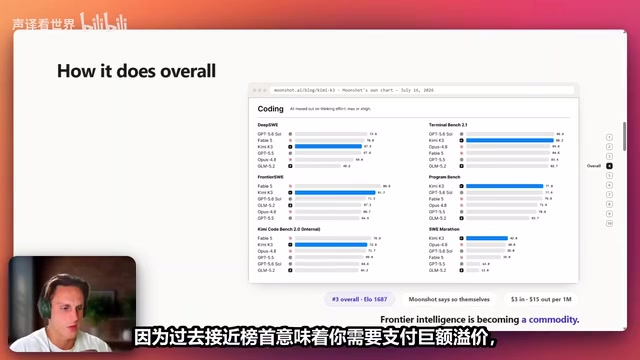
Kimi K3 Hands-On Tutorial: Claude Code Sub-Agent Configuration & GPT-5.6 Comparison Test
Complete guide to configuring Kimi K3 as a Claude Code sub-agent, including API setup, YFlow workflow building, and head-to-head comparison with GPT-5.6 and Claude Fable 5.
Read more →

·5 min
Running GPT-5.6 Inside Claude Code: Best Practices for Subagent Orchestration and System Prompts
Deep dive into running OpenAI GPT-5.6 inside Claude Code: comparing Codex vs Claude Code on subagent orchestration, workflow design, and system prompt quality, revealing how harness engineering determines model output.
Read more →

·2 min
Zero-Code Guide to Coze: A Complete Beginner's Guide to AI Agent Development
A detailed guide to ByteDance's Coze platform covering agent building, workflow orchestration, and knowledge base management to help beginners start AI app development with zero coding.
Read more →

·3 min
Getting Started with Codex: A Complete Guide to AI Agent Programming Tools
Compare Codex and Claude Code AI agent programming tools. Learn AI Agent concepts, tool selection, cost analysis, and GPT account setup in this complete beginner's guide.
Read more →
·2 min
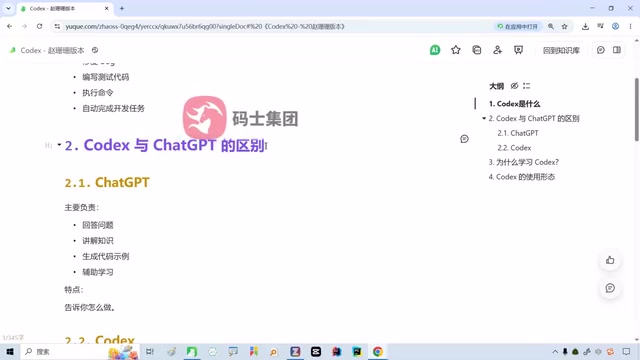
Codex Beginner's Guide: Understanding the Difference Between OpenAI's Coding Agent and ChatGPT
A detailed guide to OpenAI Codex coding agent: understand how it differs from ChatGPT, how AI agents autonomously generate, debug, and test code, and why developers need to learn this new paradigm.
Read more →
·2 min
Codex Beginner's Guide: Understanding the Difference Between OpenAI's Coding Agent and ChatGPT
A detailed guide to OpenAI's Codex coding agent: understand what it is, how it differs from ChatGPT, and why developers should master AI coding agents now.
Read more →

·3 min
Getting Started with Codex: The Right Way to Use AI Coding Agents
A detailed comparison of OpenAI Codex and Claude Code with hands-on testing. From AI agent concepts to account setup, helping developers quickly master AI coding agents.
Read more →

·3 min
Getting Started with Codex: A Beginner's Guide to AI Agentic Coding Tools
A detailed guide to getting started with Codex and Claude Code AI agentic coding tools, from environment setup to hands-on practice, helping beginners master AI programming assistants.
Read more →

·3 min
Getting Started with Codex: A Zero-to-Hero Guide to AI Agentic Coding Tools
A detailed guide to getting started with Codex and Claude Code—two leading AI agentic coding tools. From environment setup to hands-on practice, even beginners with no coding experience can master AI programming assistants.
Read more →

·2 min
OpenCode: The Complete Guide to the Open-Source Coding Agent Chosen by 8 Million Developers
OpenCode has become the world's most popular open-source coding agent—8M monthly active developers, 75+ model providers, and custom sub-agent routing. This deep dive covers its core features, config tips, and business model.
Read more →

·2 min
Getting Started with Claude Code: Why Terminal Agents Are the Top Choice for Enterprise AI Testing
What is the fundamental difference between terminal agents and device agents? This article breaks down Claude Code's core positioning, the key logic for enterprise AI testing selection, and the advantages of the Claude Code + DeepSeek combination.
Read more →

·2 min
Codex Hands-On Tutorial: Generating MG Animation with an AI Agent in One Sentence
Get started with the Codex AI Agent from scratch: project creation, plugin config (Computer Use/Remotion), Plan Mode vs Goal Mode, and a hands-on demo of generating an MG animation in one sentence.
Read more →

·2 min
Codex Hands-On Tutorial: Generate MG Animation with an AI Agent in One Sentence
Get started with Codex AI Agent from scratch: project creation, plugin setup (Computer Use/Remotion), Plan Mode vs Goal Mode, and a hands-on demo of generating MG animation in one sentence.
Read more →

·1 min
Agent Device: Let AI Verify Its Own App After Writing the Code
Agent Device is an open-source tool from CallStack that lets AI truly "understand" interfaces via structured accessibility snapshots, closing the loop of open, observe, operate, and verify across iOS, Android, and React Native.
Read more →

·1 min
Build AI Agents Without Code: A Complete Beginner's Guide to Coze
Coze by ByteDance is a no-code AI agent platform with visual workflows, 60+ plugins, knowledge bases & persistent memory. A complete beginner's guide.
Read more →

·4 min
OpenAI Merges Codex and ChatGPT: Deep Dive into Three New Models + Agent Workflows
OpenAI merges Codex and ChatGPT into a unified platform while launching three new models: SOUL, TERRA, and LUNA. Deep dive into Computer Use, loop workflows, multi-threading, and the Agent Native strategy.
Read more →