#Codex Computer Use
459 related articles

·4 min
GPT-5.6 Launches: Flagship Model Sol Personally Trains Smaller Models, Recursive AI Self-Improvement Becomes Reality
OpenAI releases the GPT-5.6 series (Sol/Terra/Luna), with flagship Sol directly handling smaller model Luna's post-training—marking recursive AI self-improvement in practice. A deep dive into performance, cost, ChatGPT Work, and computer use design leaps.
Read more →

·6 min
1X NEO Robotic Hand and GPT-5.6: A Full Breakdown of Dual Breakthroughs in Robot Hardware and Software
1X releases a new robotic hand for the NEO humanoid robot—25 DOF, force transparency, and tactile skin enabling data self-labeling. OpenAI launches the three-tier GPT-5.6, boosting coding and cost-efficiency. Hardware and AI brains evolve together, accelerating humanoid robot commercialization.
Read more →
Local Coding Agents in Practice: A Com…
·6 min
Local Coding Agents in Practice: A Complete Guide to Replacing Your Claude Subscription with Open-Source Models
An in-depth look at local coding agents—core concepts, advantages, and real challenges. Compare against Claude Code and learn to build a zero-subscription, private AI coding workflow with open-weight models.
Read more →

·3 min
Spending $200K to Test GPT-5.6: Have AI Coding Assistants Reached a Tipping Point?
Developer Theo spent ~$200K over 6 weeks testing GPT-5.6 across 67 projects — from 20-hour autonomous coding runs to fixing boot partitions and Rust rewrites.
Read more →

·5 min
ECC: An Agent Enhancement Framework for AI Coding Assistants — Five Core Capabilities Explained
ECC is an agent optimization framework for AI coding assistants like Claude Code, Cursor, and Codex, enhancing them with skills, memory, security, and research-first development capabilities.
Read more →

·2 min
OpenAI GPT-5.6 Released: Three Versions Compared — Full Breakdown of the All-in-One Super App
OpenAI releases GPT-5.6 in three tiers (SOUL/TERA/LUNA) and a unified ChatGPT desktop app with Chat, Work, and Codex modes. Learn how to choose the right version.
Read more →

·2 min
GPT-5.6 Released: How AI Agents Are Moving from the Screen into the Physical World
OpenAI releases the GPT-5.6 model family, focusing on real-world applications: from automating greenhouses and empowering small entrepreneurs, to Codex 5.6 helping a mathematician disprove a three-year problem. A deep dive into GPT-5.6's multi-agent architecture and end-to-end execution.
Read more →

·6 min
GPT-5.6 Now Widely Available: The Era of Three-Tier Models and Multi-Agent Orchestration Arrives
OpenAI releases GPT-5.6 (SOUL/TERRA/LUNA), with Ultra mode running four agents in parallel; Meta launches Muse Spark 1.1 with million-token context; ChatGPT desktop unifies Chat, Work, and Codex.
Read more →

·2 min
OpenAI's Four-Front Offensive: A Deep Dive into GPT-5.6, Codex, Voice AI, and Work Agent
OpenAI launches GPT-5.6, ChatGPT Work, upgraded Codex super-app, and GPT Live voice AI — a deep dive into all four products and their impact on the AI landscape.
Read more →

·2 min
GPT-5.6 Opens to All: Three-Tier Model Lineup + ChatGPT Work Agent Reimagines the Workflow
OpenAI launches GPT-5.6 with three tiers — Sol, Terra, Luna. Terra cuts price in half; Luna inputs at $1/M tokens. ChatGPT Work agent automates tasks end-to-end; Codex merges into a unified platform.
Read more →

·3 min
GPT-5.6 Launches: Three New Models and Codex Officially Merges into ChatGPT
OpenAI launches GPT-5.6 with three models — Soul, Tola, and Luna — delivering benchmark scores 13 points ahead of Anthropic at 1/16th the cost, while merging Codex into ChatGPT to shift from ChatBot to Agent.
Read more →

·3 min
GPT-5.6 Released: Sol, Terra, and Luna Reshape AI Programming and Office Automation
OpenAI launches GPT-5.6 with three models — Sol, Terra, and Luna — plus ChatGPT Work, a new desktop app, and Hosted Sites. Codex now autonomously trains models.
Read more →

·6 min
GPT-5.6 Hands-On Deep Dive: ChatGPT and Codex Merge, Full Analysis of the Sol Model
GPT-5.6 is officially released, merging ChatGPT and Codex into one app and launching the three-tier Sol, Terra, and Luna models. A detailed breakdown of 16 hands-on tests plus Worker mode and Codex dev upgrades.
Read more →

·6 min
GPT-5.6 Fully Available: A Deep Dive into the Sol/Terra/Luna Three-Tier Models and Four-Agent Parallelism
GPT-5.6 is now officially available to all users, launching the three-tier Sol, Terra, and Luna models with four-agent parallelism. An in-depth look at the official benchmarks, API pricing, safety, and Ultra mode.
Read more →

·8 min
GPT-5.6 Hands-On: Farm Automation, Mathematical Breakthroughs, and End-to-End AI Execution
GPT-5.6 (Sol, Terra, Luna) hands-on testing: a Hokkaido farmer controls a greenhouse with AI, a NYC small business builds custom software, and a Polish mathematician breaks a 3-year problem. A deep dive into end-to-end autonomous execution.
Read more →

·5 min
A Deep Dive into Cloud Coding Agents: How Users in China Can Choose Wisely
What exactly is the Cloud Coding Agent Silicon Valley is hyping? This article breaks down the core concept across three axes—where it runs, who watches, where tasks start—and gives users in China practical advice on local alternatives.
Read more →

·8 min
OpenAI Merges Codex with ChatGPT: A Deep Dive into the Unified Desktop App Overhaul
OpenAI officially merges its coding agent Codex with ChatGPT into a unified desktop app, adding new coding workflows, a Chrome extension, a built-in browser, and GPT-5.6-powered Computer Use capabilities.
Read more →

·4 min
The OpenAI Codex Product Philosophy: How AI Engineers Are Shifting from Writing Code to Managing Agents
OpenAI Codex isn't about replacing engineers—it's about empowering them. A deep dive into the AI Engineer conference talk: from code completion to long-horizon agents, Value Maxing, and managing agent teams.
Read more →

·7 min
ManagedAgents.sh: A Deep Dive into the Model-Agnostic Open-Source Managed Agent Platform
ManagedAgents.sh is a model-agnostic managed agent platform from OpenComputer, supporting Claude, Pi, and Codex runtimes with Slack and GitHub integration.
Read more →
·6 min
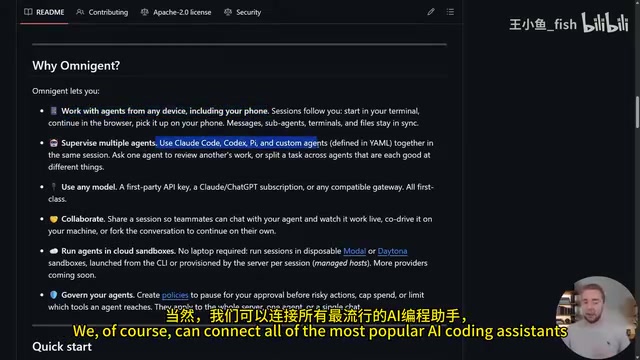
Omnigent Open-Sourced: A Meta-Harness for AI Coding Agents Built by Databricks
Databricks open-sources Omnigent, a Meta-Harness for orchestrating Claude Code, Codex, and more AI coding assistants together—with built-in guardrails, cross-model workflows, and real-time collaboration. Get started in 10 minutes.
Read more →