#Codex GitHub integration
644 related articles

·3 min
Vibe Coding for Beginners: Build Your First Project with AI from Scratch
What is Vibe Coding? Learn this new AI programming paradigm from scratch — no CS degree needed. Use Claude Code, Cursor, and more to build real projects by describing your ideas.
Read more →

·4 min
Vibe Coding vs. AI-Assisted Engineering: An In-Depth Look at Enterprise-Level Development
Can AI coding tools let non-developers replace programmers? This deep dive examines Vibe Coding's real limits, compares Claude Code vs. Codex, and reveals the methodology behind enterprise-grade AI-assisted software engineering.
Read more →

·2 min
Getting Started with Cursor: A Comprehensive Comparison of AI Coding Tools
A comprehensive comparison of Cursor, GitHub Copilot, Windsurf, Trae, and other top AI coding tools — helping developers and non-technical users choose the right AI programming assistant.
Read more →

·6 min
The Complete Codex Guide: From Beginner to Pro with the All-in-One AI Assistant
OpenAI Codex is more than a coding tool—it's an AI agent that writes code, makes slides, and operates browsers. This guide covers its four versions, permission modes, plugins, automation, and six best practices.
Read more →

·3 min
Codex, Claude Code, OpenHands, or Hermes: How to Choose the Right AI Agent
Comparing Codex, Claude Code, OpenHands, and Hermes? This guide breaks down each AI Agent's core purpose using a real-world scenario, with a selection checklist and three pitfalls to avoid.
Read more →

·6 min
GPT-5.6 Hands-On Deep Dive: Three-Tier Models + Ultra Multi-Agent, Codex Fully Evolved
OpenAI launches GPT-5.6 with three tiered models—Sol, Terra, and Luna—Ultra multi-agent parallel collaboration, Codex integrated into ChatGPT desktop, and an upgraded Computer Use.
Read more →

·2 min
Codex in Practice: AI-Powered Programming with Natural Language Instructions — No Coding Background Required
Learn how to use Codex for AI-powered programming with natural language prompts — from generating origami assets to building a gesture-interactive portfolio site. No coding required.
Read more →

·3 min
Coze Deep Dive: A Complete Guide to the Agent Building Platform vs. Dify
A deep dive into ByteDance's Coze platform: tool categories, positioning vs. Dify, skill store, multi-agent collaboration, and workflow building — your AI Agent selection guide.
Read more →

·5 min
The Complete Claude Code Guide: Installation, Core Features, and Advanced Workflows
An in-depth guide to Anthropic's Claude Code agentic coding tool, covering installation, pricing plans, model selection, token management, CLAUDE.md global memory, MCP integration, Subagents, and more.
Read more →
·2 min
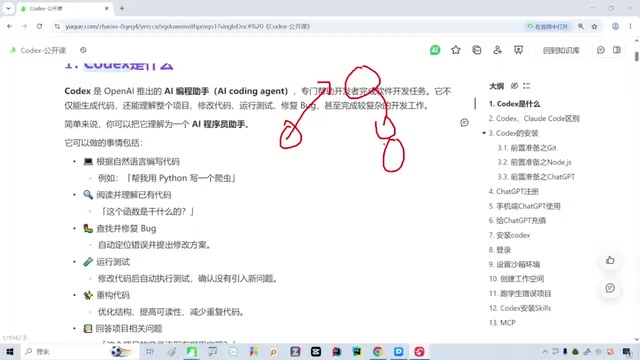
Codex Joins ChatGPT: A Beginner's Guide to AI Coding Agents
OpenAI integrates Codex into ChatGPT. Learn what AI coding agents can do, how Codex compares to Claude Code and Cursor, and how to get started today.
Read more →

·4 min
Codex Major Upgrade: GPT-5.6 Powers Full-Stack Development from Idea to Deployment
OpenAI Codex gets a major upgrade with GPT-5.6: extended reasoning, multi-agent parallelism, browser control, one-click Sites deployment, task orchestration, and mobile dev support.
Read more →

·3 min
GPT 5.6 Deep Dive Review: The Most Capable Model Yet — But Also the Most Confusing to Use?
GPT 5.6 brings major capability upgrades and new SOUL/TERRA/LUNA tiers — but also confusing entry points, hidden quota consumption, and a chat window crammed into a floating widget. A deep-dive review.
Read more →

·2 min
Daedalus: A Deep Dive into the Ollama-Based Local AI Engineering Runtime
Daedalus is an open-source local AI engineering runtime built on Ollama, covering architecture, debugging, and security. Zero token costs, full privacy, integrates with Claude Code and OpenCode.
Read more →

·2 min
Building a WeChat Mini Program from Scratch with Codex: A Complete Beginner's Guide to AI Programming
No coding experience? Learn how to build a WeChat Mini Program using Codex and AI. A complete beginner's guide covering App ID setup, prompt writing, debugging, and publishing.
Read more →

·4 min
Pi Agent Deep Dive: Four Core Advantages of a Minimalist Open-Source Framework
Pi is a minimalist open-source Agent framework with just 4 default tools and under 1,000 tokens in its system prompt, with 70K GitHub stars. Deep dive into its 4 core advantages vs. Claude Code and Codex.
Read more →
·3 min
Andrew Ng × Anthropic: A Practical Guide to Claude Code and Its Core Methodology
Andrew Ng and Anthropic's Claude Code course covers RAG development, data analysis, and Figma-to-frontend projects, with deep dives into context management, MCP tools, and CLAUDE.md architecture.
Read more →

·2 min
ChatGPT Codex Helps RingCentral Scale Customer Management by 13x
RingCentral's PMO team used ChatGPT and Codex to scale customer tracking from 6 to 80 accounts — a 13x increase. Learn how enterprise AI is reshaping knowledge management and execution for customer success teams.
Read more →

·3 min
Pi Agent Review: A Minimalist Coding Agent That's Lightweight, Efficient, and Highly Customizable
Pi Agent hands-on review: ~1,200 token overhead, no built-in system prompts, supports Codex/Grok and more. Compared to Claude Code and OpenCode, Pi Agent wins with minimalist design and full customizability.
Read more →

·2 min
23K Stars on GitHub: The Hackathon Champion's Ultimate Claude Code Configuration Guide
A Claude Code open-source config with 278 skills and 67 sub-agents helps developers ship a full MVP in 8 hours. Covers security scanning, silent failure detection, and experience migration. Free under MIT license, compatible with Cursor and Codex.
Read more →

·3 min
Coze Deep Dive: Multi-Agent Collaboration Platform Features & Usage Guide
A comprehensive guide to Coze by ByteDance: multi-agent collaboration, local tool integration, cross-platform sync, and credit system. Compare with Dify to get started fast.
Read more →