#Codex slow mode
211 related articles

·8 min
The Complete Guide to Agent Testing: Five Core Dimensions and Automation in Practice
An in-depth analysis of the five core dimensions of AI Agent testing: command safety, tool-calling accuracy, task planning, output consistency, and error self-repair. Master automated testing methods and the transition path for test engineers.
Read more →

·4 min
Making $3,000/Month Freelancing with Codex? A Rational Look at AI Coding Side Hustles
Can AI coding tools really earn you $3K/month with zero experience? We break down the marketing hype around Codex freelancing, examine the 4-week roadmap, and reveal what AI-assisted coding can realistically offer.
Read more →

·7 min
Alibaba Open-Sources 2.4T Qwen Model as Chinese AI Sweeps the Global Competitive Landscape
Alibaba open-sources a 2.4 trillion parameter Qwen model and launches the Qwen Token Plan. Chinese models surge, Kimi K3 tops global rankings, and China's AI is reshaping the global competitive landscape.
Read more →

·2 min
Codex vs Claude Code: An In-Depth Comparison and Selection Guide for AI Coding Tools
Cursor, Codex, or Claude Code — which AI coding tool is right for you? A deep-dive comparison across price, stability, and use cases, based on real frontend dev experience.
Read more →

·4 min
5 Tips to Cut Claude Opus 5 Costs by Up to 80%
Opus 5 moving to API billing? 5 proven tips to cut token costs by up to 80%: lower Effort Level, architect-executor split, Ponytail compression, Deep Research, and Advisor Mode — while outperforming Opus 4.8.
Read more →

·6 min
The Complete Codex Guide: From Beginner to Pro with the All-in-One AI Assistant
OpenAI Codex is more than a coding tool—it's an AI agent that writes code, makes slides, and operates browsers. This guide covers its four versions, permission modes, plugins, automation, and six best practices.
Read more →

·6 min
GPT-5.6 Hands-On Deep Dive: Three-Tier Models + Ultra Multi-Agent, Codex Fully Evolved
OpenAI launches GPT-5.6 with three tiered models—Sol, Terra, and Luna—Ultra multi-agent parallel collaboration, Codex integrated into ChatGPT desktop, and an upgraded Computer Use.
Read more →

·2 min
Codex in Practice: AI-Powered Programming with Natural Language Instructions — No Coding Background Required
Learn how to use Codex for AI-powered programming with natural language prompts — from generating origami assets to building a gesture-interactive portfolio site. No coding required.
Read more →

·2 min
Call Codex Directly Inside Claude Code: A Dual-AI Cross-Validation Workflow
Codex Plugin for Claude Code lets developers invoke Codex reviews directly inside Claude Code. Supports code review, proposal review, background task delegation, and context handoff for a dual-AI workflow.
Read more →

·2 min
Vibe Coding on a Budget: The Brain-vs-Hands Multi-Agent Strategy for Saving Tokens
Always burning through your AI coding quota? This guide breaks down a brain-vs-hands multi-agent strategy: use strong models only for planning, and cheap models like DeepSeek for execution.
Read more →

·3 min
GPT-5.6 Inference at 18x Speed: OpenAI's Compute Gamble and Business Logic
Why is OpenAI pushing its most powerful model to 750 tokens/s? A deep dive into GPU vs. Cerebras chip cost trade-offs, the $10B compute deal, and how speed, intelligence, and token efficiency are reshaping the AI landscape.
Read more →

·4 min
Vibe Coding for Beginners: 4 Pitfalls Every Non-Coder Must Avoid
New to Vibe Coding? Avoid these 4 beginner traps: unclear AI boundaries, oversized goals, wrong role mindset, and C drive overflow. Real tips for non-coders.
Read more →

·3 min
Codex vs Fable Head-to-Head: Letting AI Autonomously Discover Business Problems
Head-to-head test of Codex vs Fable AI Agents autonomously auditing a business with zero instructions. Codex executes reliably but self-limits; Fable shows deeper strategic vision. Includes optimal combo strategy and reusable automation skill framework.
Read more →

·2 min
Open-Source Multi-Platform Auto-Publishing Skill: How AI Is Freeing Content Creators from Repetitive Busywork
A Bilibili creator open-sourced a Codex-based multi-platform auto-publishing Skill with 95% stability. It auto-fills titles, tags, and thumbnails on Bilibili, Douyin, and more, then waits for user confirmation before publishing.
Read more →

·6 min
OpenAI vs Anthropic IPO Race: Who's Really Burning Cash? A Deep Dive Into AI Giants' Finances
OpenAI's adjusted operating margin hits -122%, Anthropic's profitability remains murky, and SpaceX claims a $22.7T AI market. A deep dive into three AI giants' real financials and the capital game behind the IPO race.
Read more →
·4 min
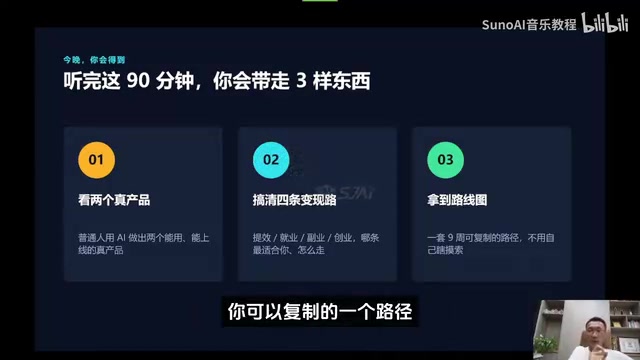
Codex Tutorial: Build Monetizable Products with AI Coding — No Experience Required
Step-by-step Codex tutorial: build a product finder tool and a flashcard mini program from scratch. Learn prompt techniques, requirements breakdown, and 4 monetization paths.
Read more →

·3 min
Codex Configuration Tutorials Examined: A Complete Risk Analysis of Third-Party API Keys
A deep analysis of popular Bilibili Codex "one-click setup" tutorials, covering third-party API key risks, unverified installer dangers, and the cost of "Full Allow" permissions — with safer alternatives.
Read more →

·2 min
GPT-5.6 Deep Dive: A Qualitative Leap in Coding and Frontend Capabilities
A 1-billion-token deep dive into GPT-5.6 Solar Max reveals qualitative leaps in coding stability, Skills compliance, and frontend design. Includes version selection guide.
Read more →

·3 min
OpenAI's Finance Chief in Action: How AI Shrinks Their Team to 20% the Size of Peers
OpenAI's finance head Stacy Fagioli reveals how her team uses ChatGPT, Codex, and Excel AI to run finance operations with just 20% of typical headcount — covering IR agents, LBO modeling, and ROI dashboards.
Read more →

·3 min
Codex on Both Fronts: A Complete Setup Guide for the Desktop and CLI AI Coding Clients
A complete guide to installing and configuring OpenAI Codex desktop and CLI clients, covering model settings, API relay integration, prompt caching, and real cost data for GPT-5.6 AI coding.
Read more →