#GPT-5.6 context window
128 related articles
·5 min
GPT-5.6 Released: Outperforms Rivals but Halted by Government—Cybersecurity Capabilities Trigger Regulatory Red Line
OpenAI releases GPT-5.6 (Sol/Terra/Luna), beating Anthropic on Terminal Bench at ~40% lower cost. But its cybersecurity capabilities hit danger thresholds, limiting access to trusted partners at government request.
Read more →

·7 min
GPT-5.6 and Grok 4.5 Launch Simultaneously, Meta Unveils Agent-Based Image Model
OpenAI GPT-5.6 expands its preview, xAI Grok 4.5 opens access at the same time, Meta releases the Agent-based Muse Image model and Muse Video model, while Apple and DeepSeek launch in-house AI inference chip programs. A quick look at the week's five biggest AI stories.
Read more →

·5 min
Hands-On Test of GPT-5.6's Three Models Sol/Terra/Luna: How Good Are Their Coding Skills?
OpenAI released three GPT-5.6 models—Sol, Terra, Luna—and merged ChatGPT with Codex to launch Work mode. This hands-on review tests coding, game dev, and PPT creation, revealing one-click deployment wins alongside aesthetic and efficiency flaws.
Read more →
·5 min
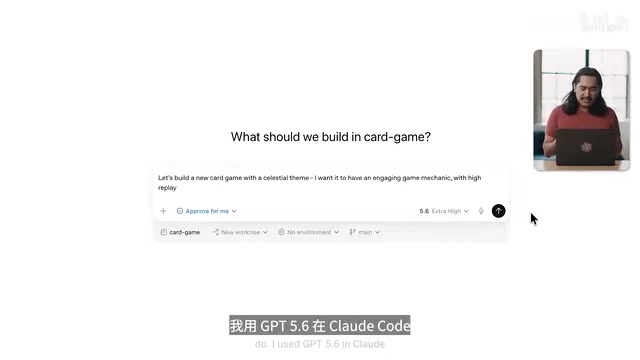
GPT-5.6 Released: Hands-On Analysis of Programmatic Tool Calling and Autonomous Agents
GPT-5.6 is officially released with core upgrades including programmatic tool calling, autonomous subagent delegation, and higher token information density. A hands-on card game build reveals its Agentic power.
Read more →
·5 min
GPT-5.6 Triple Launch: Understanding the Positioning and Key Differences of Sol, Terra, and Luna
OpenAI released three GPT-5.6 models—Sol, Terra, and Luna—covering everything from flagship reasoning to lightweight speed. A deep dive into their positioning, performance differences, pricing, and industry signals.
Read more →
Devin Integrates GPT-5.6: A Dual Break…
·2 min
Devin Integrates GPT-5.6: A Dual Breakthrough in Coding Agent Performance and Cost Efficiency
Devin integrates GPT-5.6, achieving top-tier coding agent performance and exceptional token cost efficiency. Explore how this reshapes the AI coding ecosystem.
Read more →

·2 min
GPT-5.6 Real-World Test: Nearly 1,000 Lines of Code, Done in One Shot
A Snorkel AI senior research scientist tested an early GPT-5.6 build on a ~1,000-line coding task — completed in one shot, no repeated prompting needed.
Read more →

·3 min
GPT-5.6 Deep Dive: SOL, TERRA & LUNA — Performance Benchmarks and Pricing Breakdown
OpenAI's GPT-5.6 series (SOL, TERRA, LUNA) benchmarked via PinBash: major gains in math and backend tasks, but frontend visuals remain a weakness. Full pricing and model selection guide.
Read more →

·3 min
Spending $200K to Test GPT-5.6: Have AI Coding Assistants Reached a Tipping Point?
Developer Theo spent ~$200K over 6 weeks testing GPT-5.6 across 67 projects — from 20-hour autonomous coding runs to fixing boot partitions and Rust rewrites.
Read more →

·7 min
GPT-5.6 Full Model Lineup Hands-On Guide: A Deep Dive into API Relay Stations and Their Risks
The full GPT-5.6 model lineup is live. How can domestic developers access it at low cost via API relay stations? This article explains the principles, registration, token setup, client integration, and key risks.
Read more →

·6 min
GPT-5.6 Officially Approved for Release: How National Security Review Is Reshaping the AI Launch Process
OpenAI's flagship GPT-5.6 was delayed by national security review before winning U.S. government approval. An in-depth look at the Sol, Terra, and Luna model lineup and the emerging AI regulatory regime.
Read more →

·2 min
OpenAI GPT-5.6 Released: Three Versions Compared — Full Breakdown of the All-in-One Super App
OpenAI releases GPT-5.6 in three tiers (SOUL/TERA/LUNA) and a unified ChatGPT desktop app with Chat, Work, and Codex modes. Learn how to choose the right version.
Read more →

·4 min
GPT-5.6 Sol vs Grok 4.5: Same $20 Subscription — Which One Is Actually Worth It?
GPT-5.6 Sol or Grok 4.5 — both at $20/month, but which delivers more value? We break down use cases, intelligence benchmarks, and ecosystem tradeoffs to help you decide.
Read more →

·2 min
GPT-5.6 Released: How AI Agents Are Moving from the Screen into the Physical World
OpenAI releases the GPT-5.6 model family, focusing on real-world applications: from automating greenhouses and empowering small entrepreneurs, to Codex 5.6 helping a mathematician disprove a three-year problem. A deep dive into GPT-5.6's multi-agent architecture and end-to-end execution.
Read more →

·6 min
GPT-5.6 Now Widely Available: The Era of Three-Tier Models and Multi-Agent Orchestration Arrives
OpenAI releases GPT-5.6 (SOUL/TERRA/LUNA), with Ultra mode running four agents in parallel; Meta launches Muse Spark 1.1 with million-token context; ChatGPT desktop unifies Chat, Work, and Codex.
Read more →

·2 min
GPT-5.6 Official Launch: What's the Difference Between the Sun, Earth, and Moon Versions?
OpenAI officially launches GPT-5.6 with three celestial-named versions: Sun, Earth, and Moon. Learn what sets them apart, the rollout schedule, and what to expect.
Read more →

·2 min
GPT-5.6 Opens to All: Three-Tier Model Lineup + ChatGPT Work Agent Reimagines the Workflow
OpenAI launches GPT-5.6 with three tiers — Sol, Terra, Luna. Terra cuts price in half; Luna inputs at $1/M tokens. ChatGPT Work agent automates tasks end-to-end; Codex merges into a unified platform.
Read more →

·3 min
GPT-5.6 Launches: Three New Models and Codex Officially Merges into ChatGPT
OpenAI launches GPT-5.6 with three models — Soul, Tola, and Luna — delivering benchmark scores 13 points ahead of Anthropic at 1/16th the cost, while merging Codex into ChatGPT to shift from ChatBot to Agent.
Read more →

·3 min
GPT-5.6 Released: Sol, Terra, and Luna Reshape AI Programming and Office Automation
OpenAI launches GPT-5.6 with three models — Sol, Terra, and Luna — plus ChatGPT Work, a new desktop app, and Hosted Sites. Codex now autonomously trains models.
Read more →

·6 min
GPT-5.6 Hands-On Deep Dive: ChatGPT and Codex Merge, Full Analysis of the Sol Model
GPT-5.6 is officially released, merging ChatGPT and Codex into one app and launching the three-tier Sol, Terra, and Luna models. A detailed breakdown of 16 hands-on tests plus Worker mode and Codex dev upgrades.
Read more →