#GPU offloading
65 related articles

·5 min
Ollama Performance Degrades After Connecting to OpenWebUI? A Complete Troubleshooting Guide
Complete guide to troubleshooting Ollama performance degradation with OpenWebUI, covering num_ctx truncation, sampling parameter differences, GPU resource contention, and system prompt interference.
Read more →

·4 min
Dify Local Deployment Guide: One-Click Private AI Platform with Docker
Step-by-step guide to deploying Dify AI platform locally with Docker. Covers Linux, Windows, macOS setup, docker compose launch, and first-time initialization in under 30 minutes.
Read more →

·3 min
InvokeAI In-Depth Review: Can It Replace SD WebUI and ComfyUI?
A hands-on InvokeAI review covering installation, VRAM optimization, infinite canvas, node workflows, and model management — with an objective comparison to SD WebUI and ComfyUI.
Read more →

·2 min
MiniMax M3 Local Deployment: 23B Active Parameters ≠ 23GB VRAM — A Complete Guide to MoE Architecture
MiniMax M3 is a 428B MoE model. Its 23B active parameters reflect per-token compute, not VRAM needs. Learn the MoE trade-offs, quantization options, and deployment paths to avoid the most common misconception.
Read more →

·2 min
Running Qwen 122B on 8GB VRAM: A Complete Guide to Quantized Local Deployment
A Bilibili creator ran Qwen 122B with 256K context on just 8GB VRAM + 64GB RAM using llama.cpp. Full breakdown of quantization, deployment params, performance, and cost-effective alternatives.
Read more →

·2 min
The Complete Optimization Guide for Local AI Image & Video Generation with 16GB VRAM
What can 16GB VRAM do? This guide covers FLUX, SDXL, Wan video models, ComfyUI workflows, GGUF quantization, and VRAM optimization to max out your RTX 16GB GPU.
Read more →

·3 min
Qwen3.5 Uncensored Version Local Deployment: Run a 35B Model on Just 6GB VRAM
Run Qwen3 35B-A3B uncensored locally on just 6GB VRAM using llama.cpp and GGUF quantization. Full deployment guide, code generation tests, and Agent integration walkthrough.
Read more →

·2 min
How Large a Local LLM Can You Run on a Laptop with 8GB VRAM? A Configuration Guide
Complete guide to running local LLMs on a laptop with 8GB VRAM: real usable memory, quantization estimation, Q4 7B/8B model recommendations, Ollama setup, GPU offloading, and agent development tips.
Read more →
JAX Host Offloading: A Practical Guide…
·2 min
JAX Host Offloading: A Practical Guide to Breaking Through LLM Training Memory Bottlenecks
Memory capacity is the core bottleneck in LLM training. This guide explores JAX-based host offloading — covering optimizer state offloading, activation strategies, PCIe bandwidth trade-offs, and how it complements activation recomputation.
Read more →

·5 min
The Five Unsolved Challenges of Production MLOps: A Deep Dive into GPU Scheduling, Fault-Tolerant Training, and Model Observability
A deep dive into the five genuinely tough challenges of production MLOps: fault-tolerant training on Spot instances, cross-team GPU scheduling, data reproducibility, model observability, and inference cost optimization.
Read more →

·4 min
AMD Ryzen AI Halo Hands-On: Can x86 Architecture Challenge NVIDIA's DGX Spark?
In-depth review of the AMD Ryzen AI Halo mini AI box: powered by the Ryzen AI Max Plus 395 (Strix Halo) chip with 128GB unified memory, priced at $4,000. Compared against NVIDIA's DGX Spark across token generation, prefill speed, and x86 advantages.
Read more →

·6 min
Why Is Qwen3 27B So Slow on a 4090? A Hands-On Guide to Local Inference Performance Optimization
RTX 4090 taking over 400 seconds to run Qwen3 27B inference? This article analyzes the core causes—VRAM overflow and CPU offloading drag—and offers targeted fixes.
Read more →

·5 min
Nothing Phone 4b In-Depth Review: The Ultimate Value Play at €330
Nothing Phone 4b review: 6.77-inch high-refresh AMOLED, 5200mAh battery, Snapdragon 6 Gen 4. What are the trade-offs at €330? An in-depth look at its screen, camera, performance, and software.
Read more →

·5 min
TensorRT Multi-Device Inference: Engineering Practices for Breaking Through Single-GPU Memory Bottlenecks
NVIDIA TensorRT now supports multi-device inference via pipeline and tensor parallelism, distributing large models across multiple GPUs to break through single-card memory limits.
Read more →

·6 min
Beware the Gemini Free Membership Scam: The Account Security Risks of Leaked Backup Codes
Exposing the phishing trap behind the "free Gemini Pro membership" tutorials circulating on video platforms: they lure users into handing over account passwords and backup recovery codes, leading to account theft. This article breaks down the process technically and teaches you to spot three danger signs.
Read more →

·3 min
Running LLMs Locally: The Illusion vs. the Real Value of Open-Weight Models
Open weight ≠ runnable locally. This article breaks down the hardware barriers, VRAM limits, electricity costs, and parallelism constraints of models like GLM 5.2 and DeepSeek — revealing where open-weight models truly add value: driving cloud competition, not home replication.
Read more →

·4 min
Unsloth v0.1.463-beta: Fixes Studio Crash and llama-server Permission Issue
Unsloth v0.1.463-beta fixes a Studio crash caused by access-denied errors during llama-server service discovery. Improves stability for multi-user servers and Windows environments.
Read more →

·6 min
Rising RAM Prices Push Up Gaming Laptop Costs? A Value-Focused Buying Guide
Rising RAM and storage prices have eroded gaming laptop value. This guide breaks down the causes, cost pass-through, and offers practical buying advice plus MSI value picks.
Read more →

·7 min
Why Does WhatsApp Drain So Much Battery? A Deep Dive into the Technical Causes and a Power-Saving Guide
An in-depth analysis of the core technical reasons behind WhatsApp's battery drain—covering persistent connection heartbeats, background tasks, media processing, E2E encryption, and iOS/Android differences—plus 4 practical power-saving tips.
Read more →
·7 min
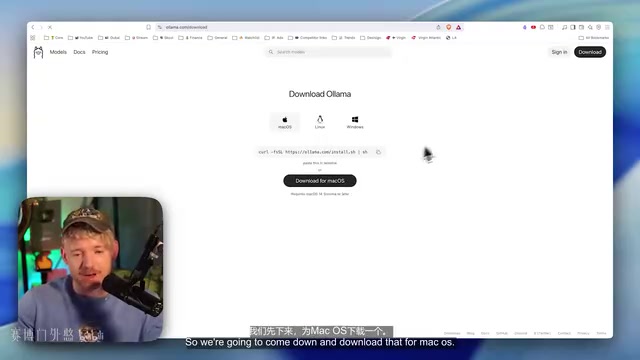
Ollama + Hermes Local AI Deployment: Building a 100% Private Personal AI Operating System
Build a fully private local AI system with Ollama + Hermes: zero cost, no rate limits, data stays local. Learn deployment steps, model selection tips, and private/cloud hybrid workflows.
Read more →