#M5 Max inference
1425 related articles

·2 min
Claude Code Weekly Limit Cut by 17%: How Should Developers Respond?
Claude Code recently cut its weekly usage limit by ~17%, sparking developer debate. This article analyzes the reasons, real-world impact, and strategies to adapt.
Read more →

·4 min
Cursor Plan Upgrade Guide: Usage Rules and Value Analysis for the $60 Tier
In-depth analysis of Cursor Pro vs. $60 plan usage differences, including token consumption calculations, own-model vs. API quota splits, and Grok model costs to help developers make informed upgrade decisions.
Read more →

·3 min
Local: A Privacy-First AI Tool That Runs Entirely on Your Mac — No Internet Required
Local is a free macOS app that runs AI entirely on your Mac — no accounts, no internet needed. It supports chat, coding agents, and meeting notes with up to 5.4x performance gains.
Read more →

·3 min
Vercel Open-Sources fx: A 6MB Zig-Powered Coding Agent Where Minimalist Design Makes Models Stronger
Vercel open-sources fx, a 6MB Zig-powered coding agent with near-instant startup. Supports local/cloud models, MCP protocol, and embeddable design.
Read more →

·4 min
Is Grokbot Worth Subscribing To? A Clear-Eyed Breakdown for Claude Code Users
Deep analysis of Grokbot's core appeal and fatal flaws: model lock-in, premium pricing, and false agent-chat needs. Why Claude Code and Codex users don't need it.
Read more →

·4 min
How to Do EDA with Real Depth: A Practical Guide from Mechanical Operations to Insight-Driven Analysis
EDA isn't done after running describe(). Learn how to go from checklist-style operations to hypothesis-driven deep analysis with a reusable thinking framework.
Read more →

·3 min
Deformable DETR's Convergence Speedup Not Working? A Parameter Scaling Experiment Reveals the Truth
Does Deformable DETR really accelerate convergence? A developer found the advantage vanishes at 2M parameters. We analyze why and offer practical advice.
Read more →

·4 min
Deep Dive into DeepSeek Harness: The 'Everything is a Plugin' AI Agent Framework
DeepSeek Harness is an open-source AI agent framework with an "everything is a plugin" modular architecture. Learn about its core design, four operating modes, V4 Pro model, and real-world use cases.
Read more →

·3 min
Is the Jetson Nano 4GB Still Worth Buying? A Guide to Avoiding Pitfalls in Edge AI Hardware Selection
Is the Jetson Nano 4GB still worth buying? This guide compares TOPS metrics, real-world FPS, and cost-effectiveness across Jetson Orin Nano, Raspberry Pi + Coral, and more for edge AI projects.
Read more →

·3 min
JetBrains Open-Sources go-modern-guidelines: Teaching AI to Write Modern Go Code
JetBrains open-sources go-modern-guidelines to help AI coding assistants generate modern Go code following best practices for generics, slog, error handling, and more.
Read more →

·3 min
Diffusion Language Models: Principles, Advantages, and Developer Practice Guide
A deep dive into Diffusion Language Models (DLMs): how they work, advantages over autoregressive models, continuous vs. discrete diffusion, training and inference pipelines, and developer practice guide.
Read more →

·3 min
Cursor vs OpenCode? A Deep Dive into AI Coding Tool Selection
Deep comparison of Cursor vs OpenCode: IDE-first vs Agent-first AI coding approaches, covering use cases, token costs, and collaboration to help developers choose.
Read more →

·3 min
Vessel: A Local LLM Observability Proxy for Request Capture and Cross-Model Replay Comparison
Vessel is a free, open-source local LLM observability proxy supporting Ollama, LM Studio, and more. Capture requests, track tokens, replay across models, with built-in MCP server and Web UI.
Read more →
·4 min
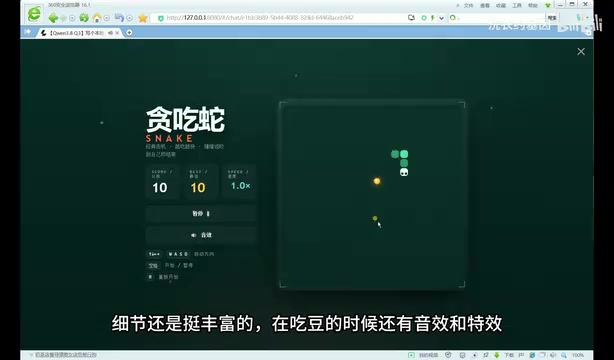
Running Qwen3 27B Locally on 16GB VRAM — Achieving PPT Freedom
Tested Qwen3 27B multimodal model locally on 16GB VRAM RTX 4070Ti Super with Q3 quantization, achieving 70 T/s inference and completing a 16-page editable PPT Agent task.
Read more →
·3 min
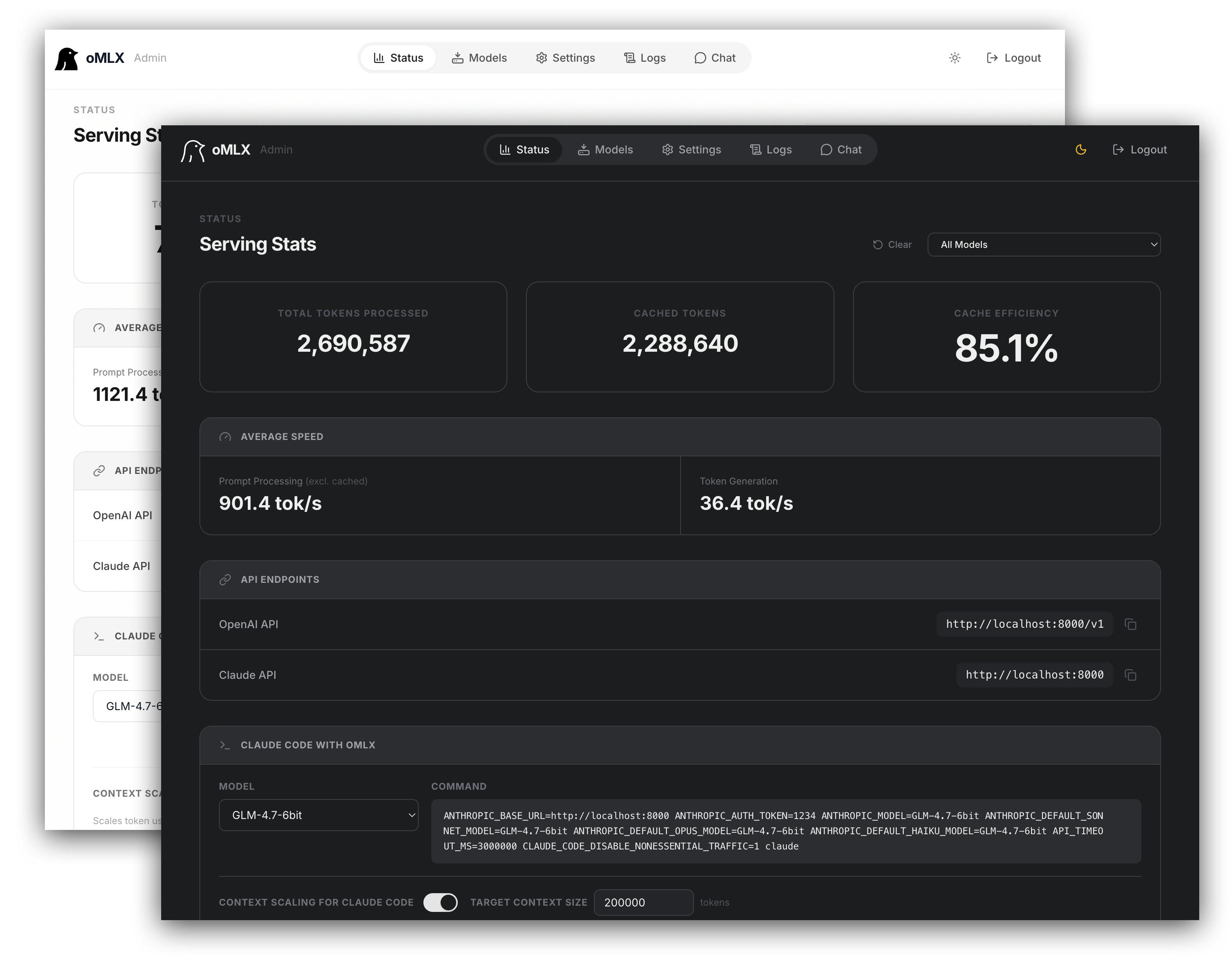
oMLX: Turn Your Mac into a Local LLM Server with AI Agent Responses 18x Faster
oMLX is an open-source tool that turns your Mac into a local LLM server, cutting AI agent response times from 90s to 5s using continuous batching and tiered KV caching. Supports OpenAI and Anthropic APIs.
Read more →

·3 min
Getting Started with Claude Code: Why It's the Most Powerful AI Coding Assistant
Deep dive into Claude Code's core advantages vs Cursor, Trae, and Copilot. Learn how its full-project context understanding and auto-debugging make it the top AI coding assistant.
Read more →

·3 min
Guide to Locally Deploying Vision Models on M4 Pro 64GB: Model Selection & Tool Recommendations
How to choose local vision language models on M4 Pro 64GB? Compare Qwen2.5-VL, Llama 3.2 Vision, and more, with tool recommendations for Ollama, LM Studio, and MLX.
Read more →

·4 min
Local AI Art Deployment Tutorial: From Installing the Stable Diffusion Bundle to Generating Your First Image
Complete guide to local AI art deployment: from Stable Diffusion bundle installation and model selection to generating images — run AI art for free on your own PC.
Read more →

·3 min
Step-by-Step Guide: Connecting DeepSeek to Claude Code Desktop
Complete guide to connecting DeepSeek to Claude Code Desktop — covering account-free setup, CC Switch config, API Key setup, Chinese localization, and custom Skill installation.
Read more →

·3 min
Google's SKILL.state Paper Explained: Replacing History with State to Save Agents 94% of Tokens
Google's SKILL.state method replaces full conversation history with structured state, cutting Agent token usage from 1.1M to 65K (94% reduction) in 100-step benchmarks while maintaining accuracy.
Read more →