#MCP Playwright
96 related articles

·4 min
TigrimOSR: An Open-Source Agent Framework in Rust with Configurable Agent Loops
TigrimOSR is an open-source multi-agent system written in Rust, supporting full agent loop definition via YAML config files with only 250MB memory usage. A deep dive into Loop Engineering, Rust advantages, and self-hosted Agentic AI.
Read more →

·5 min
Browser Use: A Deep Dive into the Event-Driven Browser AI Agent Framework
Browser Use is an open-source AI Agent framework that lets LLMs autonomously drive browser operations via natural language. This article breaks down its four-layer architecture, core Agent loop, CDP perception layer, dynamic Tools dispatch, and its Skills, Sandbox, and MCP extension capabilities.
Read more →

·3 min
OpenAI Codex CLI Hands-On Tutorial: A Guide to Using the Local Terminal AI Coding Agent
An in-depth guide to installing, logging in, and using OpenAI Codex CLI: call AI directly in your local terminal to modify code, refactor components, and add file and image context, with Git branch management for an efficient local AI coding workflow.
Read more →

·4 min
Docx-CLI: An Open-Source Tool That Boosts AI Agent Word Document Efficiency by 50%
Docx-CLI is an open-source CLI tool for AI agents that strips redundant XML and enables precise editing, helping LLM agents save half the tokens and time on Word docs.
Read more →

·7 min
Base44 in Practice: How Claude Code Powered Rapid Scaling from 1 to 80 People
How Base44's product team scaled from a single founding engineer to an 80-person team with Claude Code. Covers AI-assisted onboarding, code review, user evaluation, and QA automation.
Read more →

·6 min
The Complete Beginner's Guide to Claude Code: From Installation to Advanced Usage
Claude Code is one of the most powerful AI coding agents, running in the terminal to write code, batch operations, build web projects, and more. This guide covers installation, connecting local models via CC Switch, permission modes, CLAUDE.md, Skills, MCP, Subagents, and more.
Read more →

·3 min
Fortress: The Stealth Browser Built for AI Agents to Bypass Anti-Bot Detection
Fortress is an open-source stealth Chromium built for AI Agents. It eliminates automation fingerprints to bypass Cloudflare and other anti-bot systems.
Read more →

·2 min
Chrome DevTools MCP: Giving AI Coding Assistants True Browser Vision
Google Chrome's official chrome-devtools-mcp uses MCP to expose DevTools capabilities to AI coding assistants like Claude and Cursor, enabling screenshots, console reading, and network analysis.
Read more →
·7 min
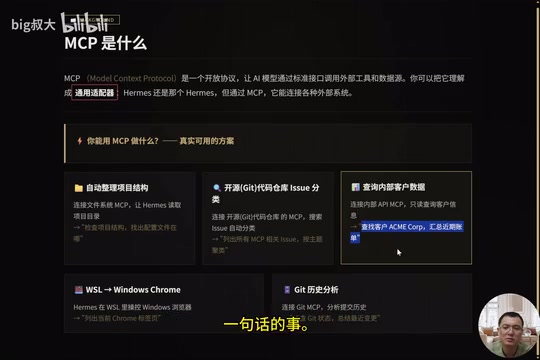
Connecting Hermes Agent to MCP: One Protocol to Unify All External Systems
Learn how to extend Hermes Agent's external system capabilities via MCP (Model Context Protocol): setup, whitelist permissions, WSL-to-Chrome bridging, and multi-server orchestration for AI Agent developers.
Read more →

·4 min
Zhipu ZCode 3.0 Hands-On Review: A Deep Dive into the Native GLM-5.2 AI Coding Tool
Hands-on review of Zhipu ZCode 3.0, the native GLM-5.2 AI coding tool for Mac/Windows. Covers permission modes, Go Mode, mobile collaboration, plugins, and more.
Read more →

·6 min
Claude Code Chinese Guide: A Complete Path from Zero to an Efficient Workflow
A systematic Claude Code learning guide built for Chinese developers, covering ten core modules including Slash Commands, Memory, MCP, and Hooks, with a three-tier path to build an AI coding workflow in 11–13 hours.
Read more →

·6 min
Playwright's Three Test Agents: A Deep Dive into Planner, Generator, and Healer
Playwright's three new Test Agents—Planner, Generator, and Healer—cover the full pipeline from test design to script generation and auto-repair, integrated with VS Code, Claude Code, and more.
Read more →
Firecrawl Goes Free: No Sign-Up Requir…
·3 min
Firecrawl Goes Free: No Sign-Up Required to Start Scraping Web Data
Firecrawl is now free with no sign-up required. Learn about its evolution from open source to zero-friction access and why web data matters for AI Agents.
Read more →

·3 min
Agent + Skill Architecture: A Practical Guide to AI-Driven End-to-End Automated Testing
Learn how to build an AI-driven API automation testing framework using Agent+Skill architecture with Claude Code, covering test case generation, script execution, and report output.
Read more →

·4 min
Four Core Strategies for Building Effective Claude Code Agents
Master Claude Code agents with four core strategies: planning, verification, context management, and system evolution. Move beyond Vibe Coding to systematic AI development.
Read more →

·4 min
7-Step Framework for Deploying Commercial AI Agents: From Requirements to Production
A detailed 7-step guide to building commercial AI Agents, covering requirements, platform selection (Coze/Dify/FastGPT), prompt engineering, databases, UI, testing, and deployment.
Read more →

·3 min
Three-Layer Workflow Optimization for Claude Code: Requirements Extraction, HTML Specs, and Embedded Verification in Practice
Anthropic engineer Arno shares a Claude Code workflow: AI-driven requirements extraction, HTML specs over Markdown, and DOM-embedded verification to boost AI-assisted coding efficiency.
Read more →

·4 min
Kimi Code Advanced Tutorial: Video Understanding, Swarm Mode & ACP Protocol Practical Guide
In-depth guide to Kimi Code's advanced features: video understanding, Swarm parallel mode, ACP protocol IDE integration, Goal multi-round iteration, and Skills configuration with Claude Opus comparison data.
Read more →

·2 min
Getting Started with Loop Engineering: Making AI Agents Run Workflows Autonomously
A deep dive into Loop Engineering: core concepts and hands-on setup including Codebase Harness, shared file systems, triggers, and Loop Contracts to make AI agents run autonomously.
Read more →
·3 min
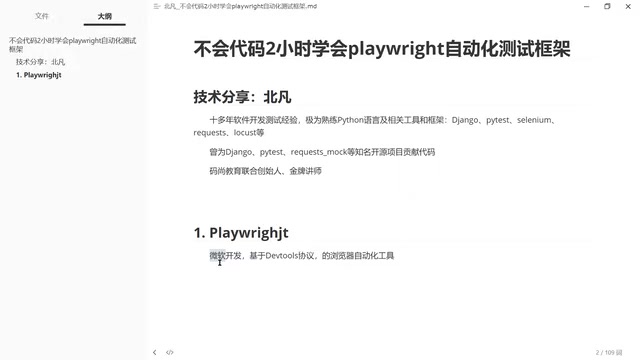
Playwright vs Selenium: Why More People Are Switching to Playwright
In-depth comparison of Playwright vs Selenium: DevTools protocol speed advantages, async support, smart locators, and AI/MCP integration to help you choose the right Web automation tool.
Read more →