#NPU optimization
2299 related articles

·3 min
Custom GPU Kernels Speed Up AlphaFold Protein Model by 6.8x
Open-source GPU kernel library fast_trimul optimizes triangle multiplicative update operations in AlphaFold3 family models, achieving 4.5-6.8x speedup with 2.2-2.4x memory reduction for short sequences.
Read more →

·4 min
Building an AI Digital Employee Customer Service System: Full Project Retrospective — 30-Day Delivery for $11K
A detailed retrospective of a real AI customer service commercialization case: 2-person team, 30-day delivery, $11K budget. Deep dive into tech stack, RAG architecture, and AI-human routing design.
Read more →

·3 min
Analog Compute-in-Memory: How Mythic Uses the Laws of Physics to Break Through AI Chip Energy Efficiency Bottlenecks
Deep dive into Mythic's analog compute-in-memory architecture, exploring how Ohm's Law and Kirchhoff's Law enable matrix multiplication directly in flash arrays for orders-of-magnitude edge AI efficiency gains.
Read more →

·4 min
5 Claude Code Productivity Tips: From Going Off-Track to Supercharged Workflow
5 battle-tested Claude Code work habits: system prompts, constraints, role assignment, phased building, and structured data to eliminate AI coding mistakes and drastically reduce rework.
Read more →
·4 min
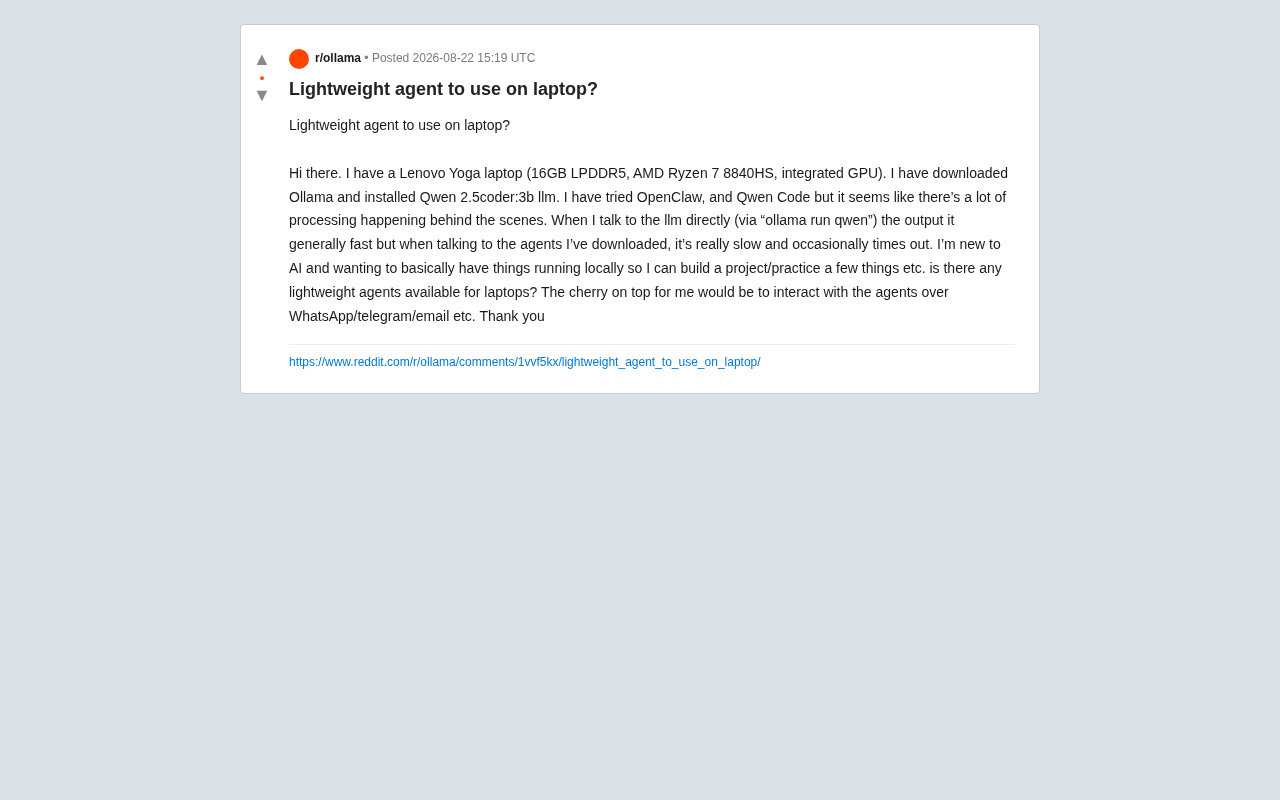
Local AI Agent Deployment Too Slow? A Lightweight Optimization Practical Guide
Local AI Agent deployment slow and timing out? This guide covers Agent framework overhead, hardware bottlenecks, and practical optimizations including context trimming, quantization, and Telegram Bot integration.
Read more →

·3 min
Choosing a Laptop for AI Studies: MacBook vs NVIDIA Laptop — An In-Depth Comparison Guide
In-depth analysis for AI students choosing laptops: MacBook Air M5 with remote GPU vs NVIDIA laptop, comparing CUDA support, portability, battery life, and value.
Read more →

·4 min
How a Hugging Face Engineer Automated His Team's Entire Workflow with AI Agents
Hugging Face ML engineer Niels shares how he automated his Community Science Team's workflow using AI Agents, from deterministic Workflows to autonomous Agents.
Read more →

·3 min
Fine-Tuning Qwen3-4B in Practice: Fixing Role Confusion with Just 100 Data Samples
A hands-on guide to fine-tuning Qwen3-4B: solving role confusion with just 100-200 identity stability samples. Covers data strategy, evaluation methods, and MoE architecture plans.
Read more →

·3 min
Memorex Code Open-Sourced: Giving Coding Agents Long-Term Memory
Memorex Code is an open-source long-term memory system for Coding Agents, solving cross-session memory loss. Features auto-recall, deduplication, and local codebase scanning for Cursor, Claude Code, and more.
Read more →

·2 min
Annotate: A New Tool That Turns Screen Recordings into AI Coding Prompts
Annotate is a free local-first tool that turns screen recordings with annotations and voice into multimodal prompts for AI coding agents like Cursor, Claude, and Codex.
Read more →

·3 min
Why Your Local LLM Feels Dumber Than It Actually Is
Local LLM feeling dumber than the online version? This article analyzes causes from quantization loss, context truncation, sampling parameters, and prompt templates, with an optimization checklist.
Read more →

·2 min
Unsloth Quantization Benchmarks: NVFP4 Delivers 1.5x Speedup, Dynamic GGUF Compresses Model Size by 83.5%
Unsloth's improved Dynamic algorithm delivers NVFP4 (1.5x speedup, 92-97% accuracy) and Dynamic GGUF (83.5% compression) for Qwen3.8-27B quantization.
Read more →
·2 min
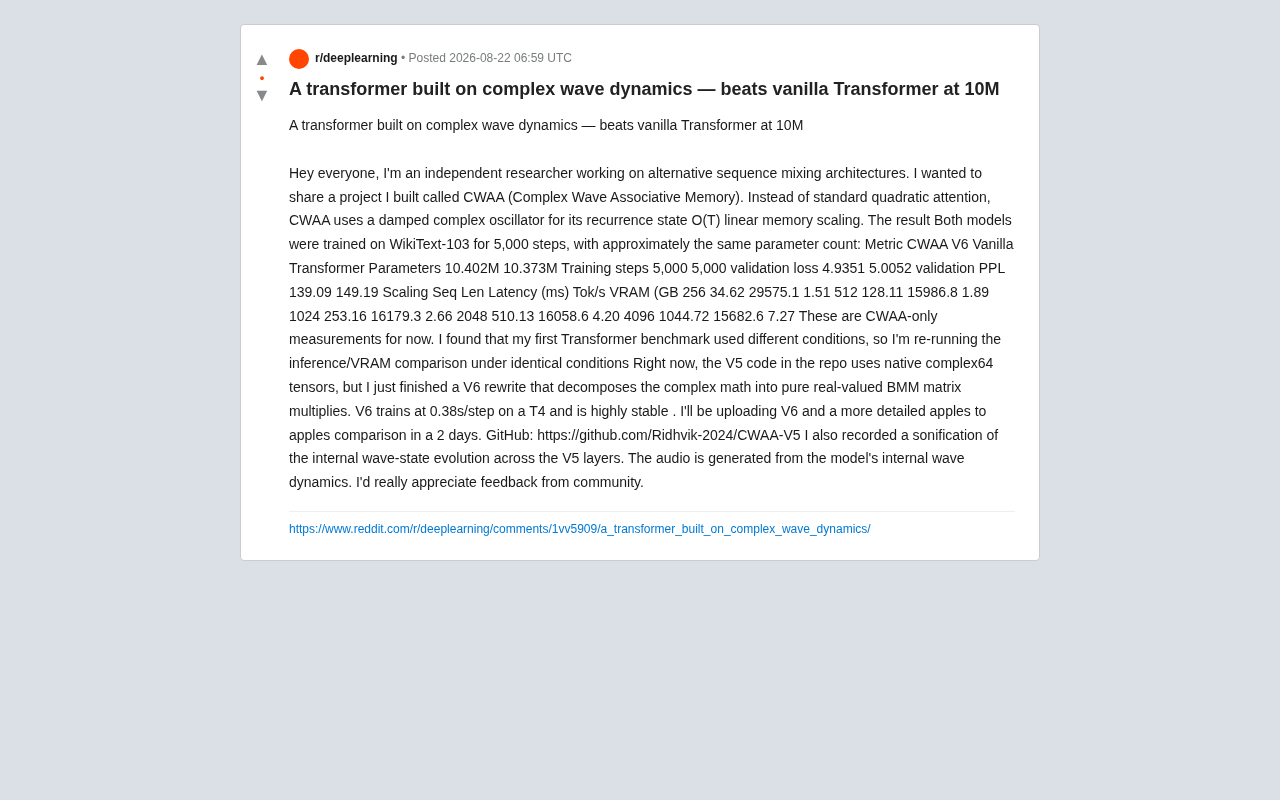
CWAA Architecture Explained: Replacing Transformer Attention with Complex Wave Dynamics
Deep dive into CWAA (Complex Wave Associative Memory), an architecture replacing Transformer self-attention with damped complex oscillators. At 10M parameters, it shows ~7% better perplexity with O(T) linear memory scaling.
Read more →

·2 min
Opus 5 Released: Dual Upgrade in Token Efficiency and Intelligence, Better Coding Experience
Anthropic releases Opus 5 with significant cross-domain token efficiency gains alongside higher intelligence. Excels at coding tasks with faster responses and lower costs, marking a new efficiency era in LLM competition.
Read more →

·3 min
TruIntel Review: An Analytics Tool for Monitoring Brand Visibility in AI Search
TruIntel is a brand visibility analytics tool for AI search, tracking how brands are cited in ChatGPT, Gemini, and Perplexity responses. Deep dive into GEO trends and practical value.
Read more →

·3 min
Vercel Zero: A Programming Language Designed Specifically for AI Agents
Vercel releases experimental language Zero, replacing traditional source code with semantic program graphs for AI agents to operate on structured graphs instead of editing strings.
Read more →

·3 min
OBLITERATUS Open-Source Project Goes Viral: Analyzing the AI LLM Jailbreak Attack-Defense Game
GitHub project OBLITERATUS hits 7900+ Stars, aggregating LLM jailbreak prompt techniques. Deep analysis of AI jailbreak principles, red team security research, and defense-in-depth strategies.
Read more →

·3 min
Crankwave: A Detailed Look at the Open-Source Engine Sound Simulation and Baking Tool
An in-depth look at Crankwave, an MIT-licensed open-source engine sound simulator and audio baking tool supporting JSON config, WASM execution, deterministic baking, and simulator-free playback for game developers.
Read more →

·2 min
GPT-5.6 Price Cut Over 20%: A Complete Analysis of AI Competition from OpenAI, DeepSeek Multimodal, and More
OpenAI cuts GPT-5.6 Sol prices by over 20%; Codex hits 20M active users with security scanning; DeepSeek launches V4 Flash Vision multimodal model; anonymous OS Alpha tops API call rankings.
Read more →

·2 min
KerasFormers: A Deep Dive into the Pure Keras 3 Cross-Framework Pretrained Transformer Model Library
KerasFormers is a pretrained Transformer library built on Keras 3's multi-backend architecture, enabling seamless switching between JAX, PyTorch, and TensorFlow.
Read more →