#OpenAI Codex tutorial
147 related articles

·6 min
The Eight-Step Method for Agent Development: A Practical Path from Pitfalls to Production
Many enterprises fail at AI Agents due to choosing the wrong tools and lacking methodology. This article outlines an eight-step Agent development method—from cognitive foundations, scenario selection, hand-writing ReAct, and structured output to Tool Use, RAG, evaluation sets, and production fallback.
Read more →

·4 min
AI Agents Powering the Full Research Pipeline: A Practical Guide to Automation from Topic Selection to Publication
Learn how to use AI Agents to link the entire research pipeline—from literature management, data analysis, and paper writing to scientific illustration and dissemination—building a reusable research automation workflow with NotebookLM, N8N, and Ollama.
Read more →

·3 min
OpenAI Codex in the Cloud: Exploring Codebases, Auto-Coding, and Generating PRs End-to-End
A deep dive into OpenAI Codex's cloud workflow: using a Next.js project to demo Ask/Code modes, auto-generating Pull Requests, and locally verifying merges for AI-assisted development.
Read more →

·7 min
Codex Direct Connection Configuration Guide for China: Complete GPT Agent Setup Tutorial
Complete guide for configuring OpenAI Codex Agent in China, covering installation, API key setup, permission modes, reasoning intensity, and security considerations for third-party relay services.
Read more →

·3 min
Connecting Codex to Ollama: A Complete Guide to Deploying AI Large Models Locally
A step-by-step guide to combining Codex with Ollama to deploy open-source AI large models locally. Private data, no subscription, offline operation, no VPN needed. Includes hardware selection and setup.
Read more →

·5 min
Connecting DeepSeek V4 in VSCode: Complete Claude Code Plugin Setup Tutorial
Shrinking GitHub Copilot student benefits? Learn to install the Claude Code plugin in VSCode and connect the DeepSeek V4 API via CCSwitch—powerful Agent capabilities at 25% price, no IDE switch needed.
Read more →

·5 min
From Prompts to Harness Engineering: The Evolution of AI Agent Development Paradigms
Why has AI engineering methodology evolved from prompts to context engineering and now Harness engineering? This article examines three paradigms, key bottlenecks, and the Agent = Model + Harness formula.
Read more →

·5 min
The Complete Guide to Claude Skills: Configure Once, Reuse Your Workflow Forever
An in-depth guide to Claude Skills: from built-in skills and plugins to building your own custom skills and continuous refinement. Learn to end repetitive instructions and build an automated, consistent AI workflow.
Read more →
·7 min
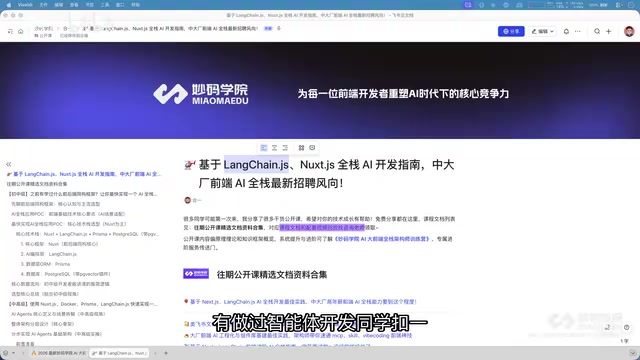
LangChain.js + Nuxt.js: An AI Full-Stack Advancement Path for Frontend Engineers
Frontend hiring now treats AI capabilities as a core assessment, covering RAG knowledge bases, AI Agent development, and LangChain.js engineering. Learn how LangChain.js + Nuxt.js helps frontend developers build memory- and retrieval-capable AI full-stack apps.
Read more →

·6 min
Codex China Direct Access Tutorial: Guide to Using DeepSeek as a ChatGPT Replacement
Use Codex without a ChatGPT account! This guide explains a China direct access solution for integrating the DeepSeek API via the Codex++ management tool.
Read more →

·7 min
The Complete Codex Guide: From Installation to Real-World Practice
Master OpenAI Codex fast, even from scratch! Learn Codex vs ChatGPT differences, four versions, interface tips, plugins & skills, browser automation, plus six best practices.
Read more →

·4 min
How to Connect DeepSeek to Codex: A Complete Guide (No ChatGPT Account Needed)
No ChatGPT Plus account? Use the Codex++ management tool to connect DeepSeek to Codex in 5 steps. Top up ¥10 and experience AI agent control of your computer with detailed setup guide.
Read more →

·4 min
Complete Guide to Connecting External Models in Codex: Two Methods to Unlock Full Capabilities
Two methods for connecting external models to Codex: manually configure keys via relay services, or use the CC Tool to auto-bridge GPT, DeepSeek, and more. Covers auth/config files, CC Tool usage, and multi-model switching.
Read more →

·6 min
Codex Beginner's Guide: Four Product Forms Explained, Plus Comparison with Claude Code and Cursor
In-depth analysis of OpenAI Codex's four usage forms, comparing Codex, Claude Code, and Cursor across price, stability, and frontend/backend fit to help developers choose the right AI programming tool.
Read more →

·6 min
Step-by-Step Guide: Power Codex with DeepSeek for Users Without ChatGPT Access
No ChatGPT account? No problem! Learn how to power Codex with DeepSeek API using the Codex++ management tool. Five easy steps, starting at just $1.40.
Read more →

·2 min
Complete Guide: Connecting Codex and Claude Code via an API Relay Service
Step-by-step guide to connecting Codex and Claude Code via an API relay service — covering key creation, group selection, CCS import, installation tips, and risk warnings.
Read more →

·3 min
Getting Started with Claude Code: A Guide to Terminal AI Coding Tools
A deep dive into Claude Code: the difference between Terminal and Device Agents, enterprise selection advice, and how to use Claude Code with DeepSeek in China.
Read more →

·8 min
The Codex Orange Book: An Open-Source Full-Stack Practical Guide for AI Programming Beginners
The Codex Orange Book is an open-source unofficial guide with 2.5K+ GitHub Stars, covering installation, plugins, MCP extensions, and hands-on projects to help beginners master AI programming tools.
Read more →

·2 min
AI Coding for Absolute Beginners: A Guide to Cursor and Its Best Budget Alternatives
Learn AI coding from scratch! This guide covers Cursor's core features — natural language coding, context-aware Q&A, smart autocomplete — plus comparisons with free alternatives Trae and Windsurf.
Read more →

·3 min
Complete Guide to OpenAI Codex: From Installation & Configuration to Automation in Practice
Complete guide to OpenAI Codex covering installation, permission setup, project management, skills reuse, plugin extensions, and automation tasks to turn Codex into a true project collaborator.
Read more →