#OpenAI ownership
210 related articles

·3 min
Norway's Sovereign Fund Acquiring OpenAI: A Thought Experiment on AI Governance and Ownership
Could Norway's $1.7 trillion sovereign wealth fund acquire OpenAI? An analysis of AI governance dilemmas, geopolitical barriers, and who should own frontier AI.
Read more →

·2 min
SpacebarX: A Deep Dive into the Keyboard-First, Local-First Outliner Note-Taking Tool
SpacebarX is a keyboard-first, local-first outliner note tool supporting offline use, cloud folder sync, and inline date management. A deep dive into its features and ideal users.
Read more →
·2 min
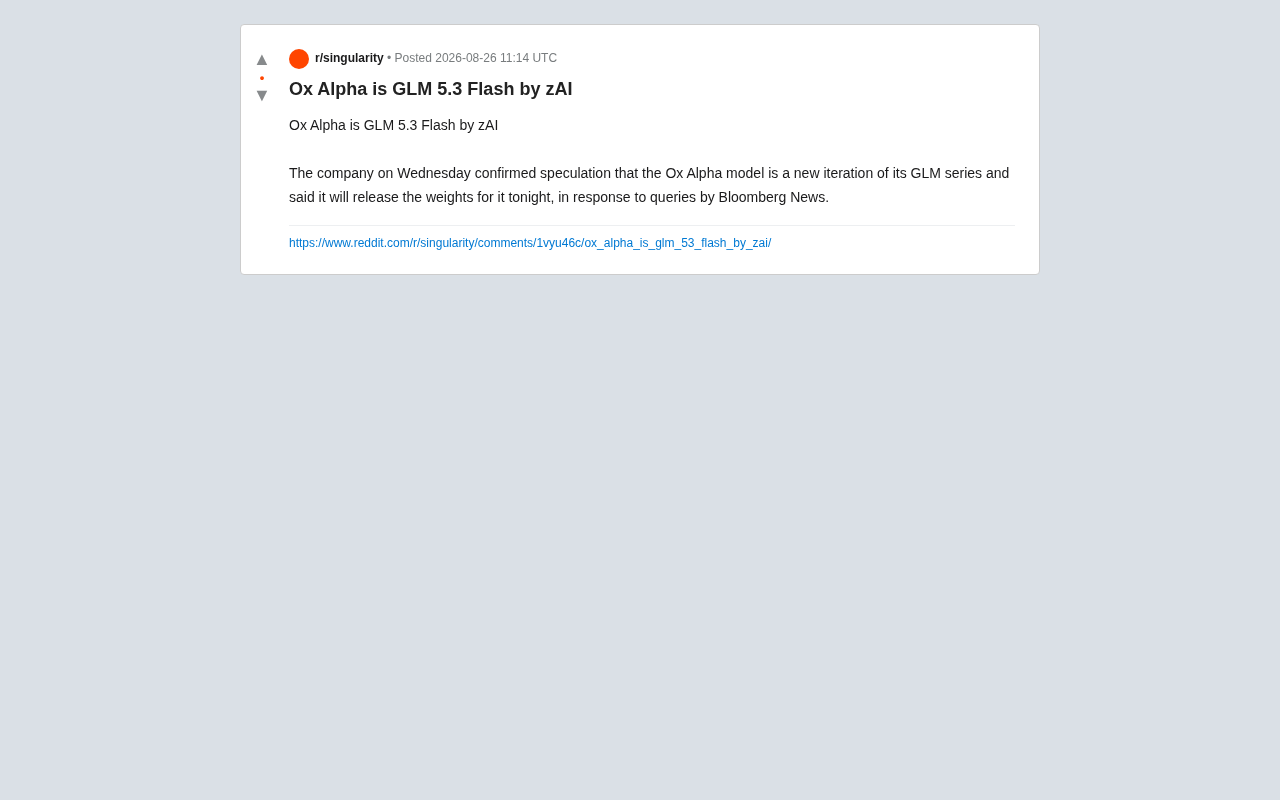
GLM 5.3 Flash Officially Confirmed: Zhipu AI Reveals Ox Alpha's True Identity and Releases Weights
Zhipu AI confirms mysterious model Ox Alpha is GLM 5.3 Flash and announces open-weight release. Analysis of its Flash positioning, strategic implications, and impact on the open-source LLM ecosystem.
Read more →

·4 min
grill-me: Let AI Interrogate You for 45 Minutes Before Coding — Save Countless Hours of Rework
grill-me is a viral open-source skill that has AI interrogate your technical plan before coding. Learn its 4-phase workflow, installation, and best practices.
Read more →

·3 min
reinfors Adds CarRacing Environment: Rust Backend Delivers 20x Reinforcement Learning Speedup
Open-source reinfors v0.3.0 adds CarRacing with a Rust backend, achieving 20x faster stepping than Gymnasium. Features overlapping train/sample execution via collect_stream, compatible with PyTorch and JAX.
Read more →

·3 min
Will AI Vulnerability Scanning Depreciate Over Time? A Deep Dive into Offensive-Defensive Economics
Analyzing whether AI-driven vulnerability scanning depreciates over time. Explores attack surface limits, offensive-defensive co-escalation, and hardware-layer security economics.
Read more →

·2 min
Offloop: A Shared Team Workspace for Humans and AI Agents
Offloop is a shared workspace that integrates AI Agents as formal team members, using Channels and Flow mechanisms to solve context loss and human-AI handoff challenges.
Read more →

·2 min
Debian Votes on AI Contribution Policy: A Pivotal Decision for the Open Source Community
Debian launches a formal vote on AI/LLM-generated code contribution policy, addressing copyright compliance, code quality, and accountability. Analysis of community divisions and implications for open source.
Read more →
·3 min
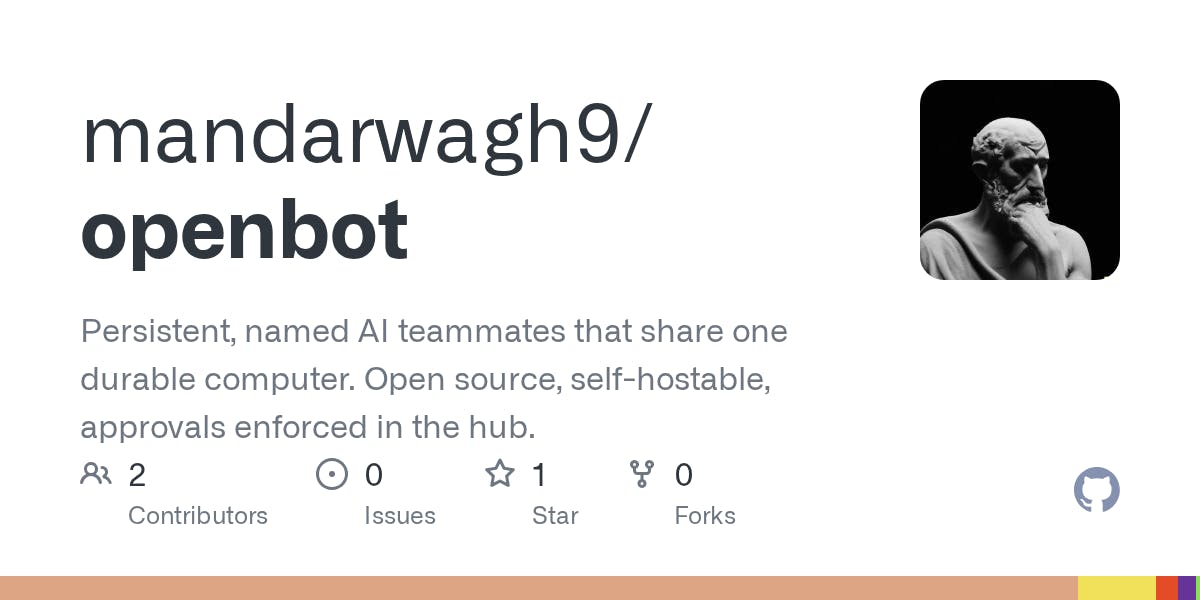
OPENBOT: Open-Source AI Agent Platform That Turns Agents Into Your Digital Colleagues
OPENBOT is an open-source Grokbot alternative featuring long-lived named agents with persistent memory, shared computing environments, and MCP dual-channel execution, turning AI Agents into digital colleagues.
Read more →

·2 min
OpenHuman: Building a Local-First Personal AI Super Brain with Rust
OpenHuman is an open-source personal AI project built with Rust, featuring local-first memory architecture, multi-agent orchestration, and deep research capabilities. With over 36,500 GitHub stars, it aims to return AI power to individuals while keeping data local.
Read more →
 Expert Opinions
·3 min
Rethinking Scaling Laws: Parameters Are Not the Only Answer
Deep analysis of Scaling Law evolution from Kaplan to Chinchilla to the MoE era, exploring why blindly stacking parameters is a mistake, and how GLM-5.3 proves scaling has multiple knobs.
Read more →

·4 min
Hollywood Creatives Forced to Train AI to Replace Themselves: The Cruel Reality of Digging One's Own Grave
Hollywood writers, voice actors, and illustrators are being hired to train AI systems, accelerating the automation of their own careers. A deep analysis of the ethical dilemmas and labor challenges.
Read more →

·2 min
The Logic Behind Stripe's $7 Billion Acquisition of OpenRouter: Why Chasing Trends Actually Works
Stripe acquires AI aggregation platform OpenRouter for $7B. Founder Alex's pivot from NFTs to AI reveals the core logic: trends are low-cost training grounds, and reusable capability frameworks are what truly hold value.
Read more →

·3 min
Cursor Acquisition Rumors: Why Developers Are Anxious About the Future of AI Tools
Reddit community debates Cursor's rumored SpaceX acquisition. Developers worry about AI coding tool independence. Analysis of acquisition anxiety and practical advice.
Read more →

·3 min
The Blind Spot of AI Code Factories: The Quality Crisis Behind the Speed
AI programming tools have accelerated code generation, but a quality crisis is silently spreading. This article examines the missing QA steps in AI code factories and how to balance speed with quality.
Read more →

·3 min
EU Rules AI-Generated Content Is Not Protected by Copyright: What This Means for Creators
The EU has clarified that AI-generated content is not copyright-protected, requiring works to reflect human intellectual creation. Analysis of legal basis, US comparison, and industry impact.
Read more →

·4 min
AI-Driven Testing in Practice: A Complete Guide to Building Your Claude Code Testing Workbench
Learn the key differences between AI-driven and AI-assisted testing, plus a step-by-step guide to building a Claude Code + DeepSeek testing workbench with five-layer architecture.
Read more →

·2 min
ProtoNote: Pinning AI Prototype Feedback Precisely on the Page
ProtoNote is an AI prototype collaboration tool that pins feedback precisely on pages, deeply integrates with Claude for one-click iteration, and offers free reviews without sign-up.
Read more →

·4 min
Build or Buy LLM Infrastructure? A 7-Month Hands-On Retrospective Reveals the Hidden Costs
A 7-month retrospective on building LLM infrastructure from scratch: hidden costs of routing, fallback, evals, and a comparison of orq.ai, LangSmith, Helicone, Portkey, and LiteLLM.
Read more →

·2 min
Building a Native Desktop App for Coding Agents with Rust + GPUI: Technology Choices and Trend Analysis
Analysis of a coding agent native desktop app built with Rust and GPUI, exploring why Rust's memory safety and GPUI's GPU-accelerated rendering matter for AI programming tools.
Read more →