#OpenAI security scanning
158 related articles

·5 min
OpenAI Open-Sources Codex Security: An In-Depth Review of the AI Security Scanning Tool's Strengths and Limitations
In-depth analysis of OpenAI's open-source Codex Security code scanning tool, comparing it with Snyk, Semgrep, and CodeQL, examining its AI Agent verification, real test data, and current limitations.
Read more →

·2 min
OpenAI Open-Sources Codex Security CLI: An AI-Powered Code Security Scanning Tool
OpenAI quietly open-sources Codex Security CLI, supporting repo security scanning, vulnerability tracking, fix verification, and CI/CD integration — extending AI from code generation into security.
Read more →

·2 min
VMs Can't Contain AI Hacker Agents: The Security Isolation Myth Is Shattered
Deep analysis of why VMs can't truly isolate AI agents with cyber attack capabilities. Covers VM isolation failures, new AI security paradigms, and defense-in-depth strategies.
Read more →
·3 min
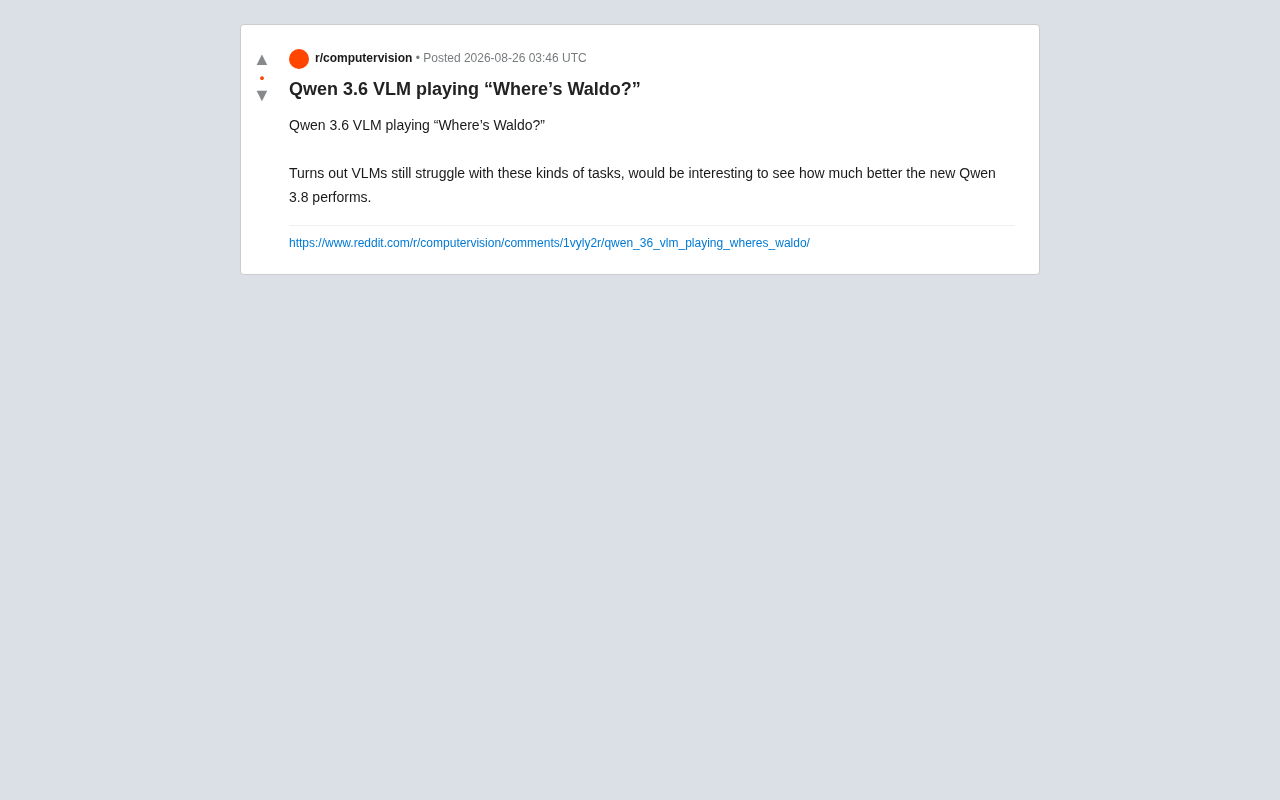
Qwen VLM Takes on Where's Waldo: Exposing the Achilles' Heel of Fine-Grained Visual Localization
Qwen 3.6 VLM takes on Where's Waldo, revealing vision-language models' weaknesses in fine-grained target localization in dense scenes. Analysis of resolution limits, visual grounding gaps, and future directions.
Read more →

·5 min
AI Penetration Testing Learning Roadmap: A Four-Stage Progressive Guide from Beginner to Enterprise-Level Practice
A systematic breakdown of the four-stage AI + penetration testing learning roadmap, covering Agent fundamentals, Web vulnerability discovery, enterprise automation, and advanced practice.
Read more →

·3 min
NullOrigin Open-Source Tool: A Deep Dive into the Local Proxy That Removes AI Watermarks and Provenance Metadata
Deep dive into NullOrigin, an open-source local proxy that destroys text watermarks via local SLM rewriting, strips C2PA/EXIF image metadata, and scans for Trojan Source code vulnerabilities.
Read more →

·3 min
Will AI Vulnerability Scanning Depreciate Over Time? A Deep Dive into Offensive-Defensive Economics
Analyzing whether AI-driven vulnerability scanning depreciates over time. Explores attack surface limits, offensive-defensive co-escalation, and hardware-layer security economics.
Read more →

·2 min
GPT-5.6 Price Cut Over 20%: A Complete Analysis of AI Competition from OpenAI, DeepSeek Multimodal, and More
OpenAI cuts GPT-5.6 Sol prices by over 20%; Codex hits 20M active users with security scanning; DeepSeek launches V4 Flash Vision multimodal model; anonymous OS Alpha tops API call rankings.
Read more →

·2 min
Complete Analysis of MCP Protocol Security Attacks: 16 Threat Types Across a Four-Stage Lifecycle
Systematic breakdown of MCP protocol's four-stage lifecycle and 16 security attack types, covering supply chain poisoning, prompt injection, credential theft, and more real-world threats.
Read more →

·3 min
Getting Started with Claude Code: A Complete Tutorial for the Terminal-Native AI Programming Assistant
Complete guide to Claude Code setup, multi-model switching, code generation, and project refactoring. Master this terminal-native AI coding tool for efficient command-line development.
Read more →

·3 min
GitHub Daily · Aug 23: Agent Ecosystem Explodes, Codex Leads the Terminal Programming Revolution
GitHub Trending Aug 23: Agent ecosystem explodes with OpenAI Codex leading terminal programming, Rust dominating high-performance tools, and local-first AI rising.
Read more →

·3 min
Beyond Vibe Coding: Building Reliable AI Programming Workflows
Explore the pitfalls of Vibe Coding and learn how to build reliable AI programming workflows through test-driven development, code review, and requirement specification.
Read more →

·3 min
AI-Powered Vulnerability Discovery in Practice: A Complete Guide to LLM Security Applications
A deep dive into LLM applications in cybersecurity offense and defense, covering AI code auditing, automated vulnerability discovery, CTF Agents, and more, with tool selection guides and compliance guidelines.
Read more →

·5 min
The $60 Billion Cursor Acquisition: Birth and Deep Dive into the AI Programming Operating System
SpaceX acquires Cursor for $60B. How did this AI coding tool evolve from a VS Code fork into a software development operating system? Deep analysis of Agent orchestration, Origin hosting, and model strategy.
Read more →
·2 min
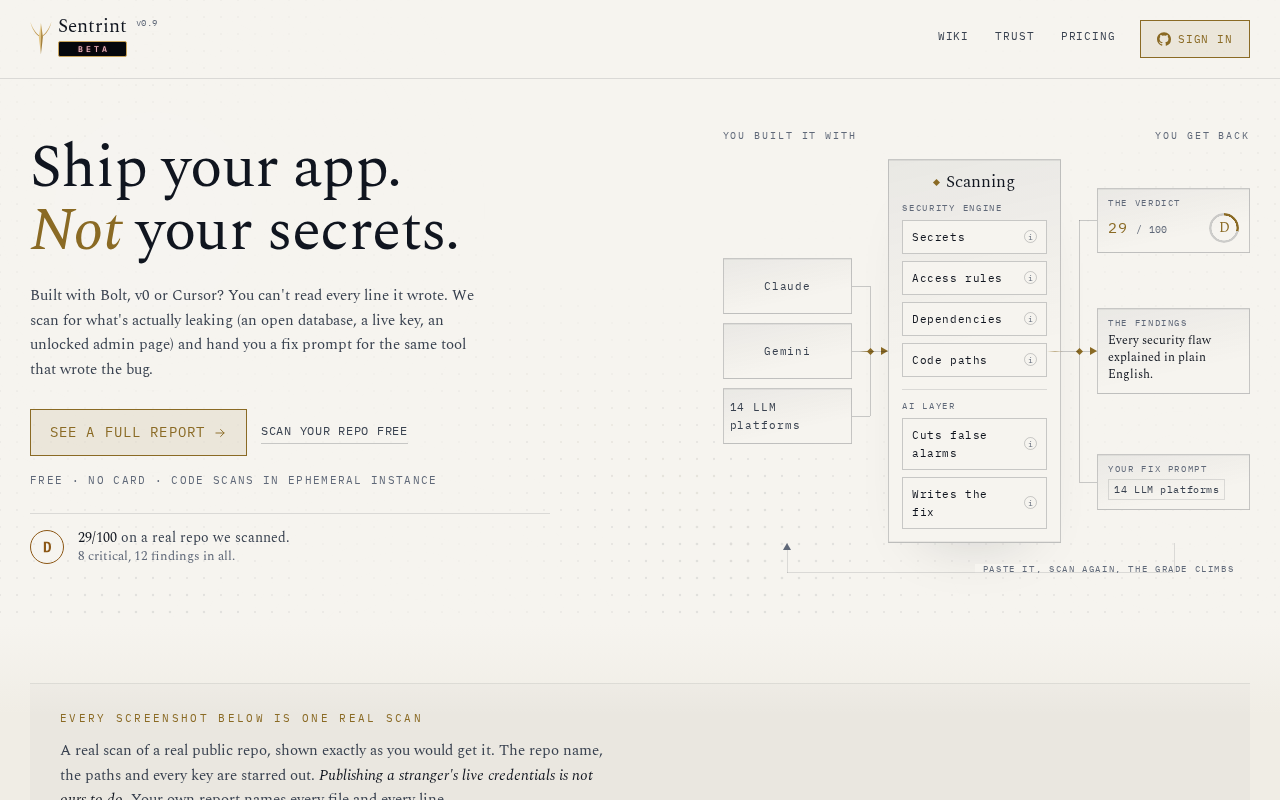
Sentrint: A Security Scanner Built Specifically for AI-Generated Code
Sentrint is a security scanner designed for LLM-generated code, detecting secret leaks, hallucinated dependencies, and injection vulnerabilities in AI code.
Read more →

·5 min
Unified Configuration Across Agents: One Ruleset to Drive Claude Code, Codex, and Pi
Learn how to unify Claude Code, Codex, and Pi with a single AGENTS.md config file, Git version control, and global/project layering for efficient multi-Agent workflows.
Read more →

·2 min
DSH Modern Theme: An In-Depth Analysis of the Modern Interface Plugin for DeepSeek Harness
In-depth analysis of the DSH Modern Theme plugin for DeepSeek Harness, featuring soft gray canvas design, five brand color schemes, archived session management, and cross-platform installation.
Read more →

·2 min
Gemini 3.5 Flash Cyber: Google's AI Security Model Built for Vulnerability Detection and Remediation
Google releases Gemini 3.5 Flash Cyber, a lightweight AI model for automated vulnerability detection and patching. Deep dive into its capabilities, architecture, and competitive positioning.
Read more →

·3 min
Claude Code Enables Auto Mode by Default: The Era of Autonomous AI Coding Has Arrived
Anthropic enables Auto Mode by default in Claude Code, shifting AI coding from collaboration to autonomous execution. Analysis of Sandboxes security, DeepSeek's Harness team, and token cost management.
Read more →

·2 min
GLM-5.3 Deep Dive: Frontier Coding Capabilities and Emergent Cybersecurity Abilities
Deep analysis of GLM-5.3's frontier coding capabilities and emergent cybersecurity abilities, exploring applications in software engineering, vulnerability discovery, and security auditing.
Read more →