#Playwright Test Agent
157 related articles

·4 min
BrowserWing: A Browser Action Recorder That Offers a Pragmatic Approach to AI Web Automation
BrowserWing is an open-source browser action recorder (1300+ GitHub stars) with 78 built-in scripts for GitHub, Bilibili, Zhihu, and more. Record once, run repeatedly, and let AI Agents reliably execute fixed web workflows.
Read more →

·2 min
Comet Browser Users Call for Claude Sonnet 5 Upgrade: A Deep Dive Into the AI Browser Dilemma
Perplexity's Comet browser faces user criticism over lagging model versions, stalled updates, and stability issues. A deep analysis of AI browser challenges.
Read more →

·3 min
GPT-5.6 Three-Model Hands-On Test: A Complete Comparison of Sol, Terra, and Luna
An in-depth hands-on test of the GPT-5.6 series' three models—Sol, Terra, Luna—compared with Fable and Sonnet 5. Sol wins overall at nearly half the price. Full analysis of prototyping, code debugging, and browser use.
Read more →

·5 min
Browser Use: A Deep Dive into the Event-Driven Browser AI Agent Framework
Browser Use is an open-source AI Agent framework that lets LLMs autonomously drive browser operations via natural language. This article breaks down its four-layer architecture, core Agent loop, CDP perception layer, dynamic Tools dispatch, and its Skills, Sandbox, and MCP extension capabilities.
Read more →

·3 min
OpenAI Codex CLI Hands-On Tutorial: A Guide to Using the Local Terminal AI Coding Agent
An in-depth guide to installing, logging in, and using OpenAI Codex CLI: call AI directly in your local terminal to modify code, refactor components, and add file and image context, with Git branch management for an efficient local AI coding workflow.
Read more →

·7 min
Base44 in Practice: How Claude Code Powered Rapid Scaling from 1 to 80 People
How Base44's product team scaled from a single founding engineer to an 80-person team with Claude Code. Covers AI-assisted onboarding, code review, user evaluation, and QA automation.
Read more →

·6 min
GPT-5.6 Hands-On Deep Dive: ChatGPT and Codex Merge, Full Analysis of the Sol Model
GPT-5.6 is officially released, merging ChatGPT and Codex into one app and launching the three-tier Sol, Terra, and Luna models. A detailed breakdown of 16 hands-on tests plus Worker mode and Codex dev upgrades.
Read more →

·8 min
OpenAI Merges Codex with ChatGPT: A Deep Dive into the Unified Desktop App Overhaul
OpenAI officially merges its coding agent Codex with ChatGPT into a unified desktop app, adding new coding workflows, a Chrome extension, a built-in browser, and GPT-5.6-powered Computer Use capabilities.
Read more →

·6 min
The Complete Beginner's Guide to Claude Code: From Installation to Advanced Usage
Claude Code is one of the most powerful AI coding agents, running in the terminal to write code, batch operations, build web projects, and more. This guide covers installation, connecting local models via CC Switch, permission modes, CLAUDE.md, Skills, MCP, Subagents, and more.
Read more →

·6 min
Playwright E2E Builder: Engineering AI-Driven Web Automation Testing
Playwright E2E Builder is an AI Skill installed in Cursor that transforms UI automation from throwaway scripts into sustainable engineering assets through a four-step workflow, with built-in locator health checks.
Read more →

·6 min
Microsoft Layoffs Hit id Software: Doom Studio Loses Over Half Its Staff
Microsoft's massive Xbox layoffs deal a heavy blow to Doom developer id Software, cutting over 90 positions with QA hit hardest. An in-depth analysis of the layoff backdrop, causes of the industry winter, and its impact.
Read more →

·3 min
Fortress: The Stealth Browser Built for AI Agents to Bypass Anti-Bot Detection
Fortress is an open-source stealth Chromium built for AI Agents. It eliminates automation fingerprints to bypass Cloudflare and other anti-bot systems.
Read more →

·7 min
Learning Python Web Scraping from Scratch: How It Works, the Full Workflow, and Legal Boundaries
A must-read intro to Python web scraping: from HTTP requests and HTML parsing to data storage, systematically explaining how crawlers work and their full workflow, while clarifying legal boundaries like the robots protocol and privacy protection.
Read more →

·8 min
Python Web Scraping for Beginners: How It Works, Core Workflow, and Legal Red Lines Explained
A plain-language guide to how Python web scrapers work: from HTTP requests and responses, HTML tag parsing, to the complete three-step data scraping workflow, with a focus on the three legal red lines and compliance advice.
Read more →

·7 min
Learning Python from Scratch: A Complete Guide to the Three-Stage Learning Path
Want to learn Python from scratch but don't know where to begin? This article breaks down three stages—basic syntax, advanced mastery, and hands-on practice—with real projects in crawling, automation, and data analysis to help you build programming thinking.
Read more →

·2 min
Chrome DevTools MCP: Giving AI Coding Assistants True Browser Vision
Google Chrome's official chrome-devtools-mcp uses MCP to expose DevTools capabilities to AI coding assistants like Claude and Cursor, enabling screenshots, console reading, and network analysis.
Read more →
·7 min
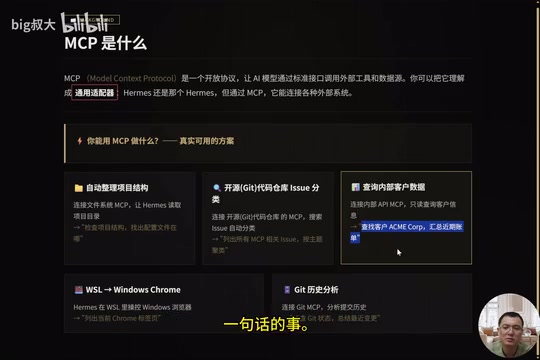
Connecting Hermes Agent to MCP: One Protocol to Unify All External Systems
Learn how to extend Hermes Agent's external system capabilities via MCP (Model Context Protocol): setup, whitelist permissions, WSL-to-Chrome bridging, and multi-server orchestration for AI Agent developers.
Read more →

·4 min
Zhipu ZCode 3.0 Hands-On Review: A Deep Dive into the Native GLM-5.2 AI Coding Tool
Hands-on review of Zhipu ZCode 3.0, the native GLM-5.2 AI coding tool for Mac/Windows. Covers permission modes, Go Mode, mobile collaboration, plugins, and more.
Read more →

·6 min
Claude Code Chinese Guide: A Complete Path from Zero to an Efficient Workflow
A systematic Claude Code learning guide built for Chinese developers, covering ten core modules including Slash Commands, Memory, MCP, and Hooks, with a three-tier path to build an AI coding workflow in 11–13 hours.
Read more →

·3 min
Kimi K2.7 Code Goes Open Source | Chinese Image Model HiDream Tops Global Rankings
Kimi K2.7 Code open-sourced with 30% fewer tokens; HiDream O1 Image 1.5 tops global rankings, beating Google and ByteDance. A roundup of China's latest AI breakthroughs.
Read more →