#calculus for deep learning
69 related articles

·3 min
Linguistics to NLP Engineer: Comparing Three Pathways and Finding the Optimal Strategy
How can linguistics or translation majors transition into NLP engineering? This article compares three pathways and offers a phased strategy covering core skills, project building, and job hunting tips.
Read more →

·3 min
AI-Powered OSINT in Practice: A Learning Path and Tool Guide for CS Professionals
How can OSINT practitioners with a CS background automate intelligence with AI? This guide covers computer vision, VLMs, and Agent frameworks including YOLO, SAM, and Grounding DINO.
Read more →

·3 min
AI/ML Internship Red Flags: How to Spot and Land Internships That Actually Matter
Is paying for an internship worth it? This deep dive into AI/ML "internship commodification" exposes the real problems with pay-to-intern schemes and offers actionable alternatives — open source, cold outreach, and technical fundamentals.
Read more →

·4 min
Do You Still Need to Hand-Code Machine Learning Algorithms in the AI Era? The Answer and the Method
With AI tools everywhere, is it still worth hand-coding SVM, decision trees, and other ML algorithms? This article explores the real value of hand-coding, the limits of AI tools, and smarter learning strategies for beginners in the AI era.
Read more →
·4 min
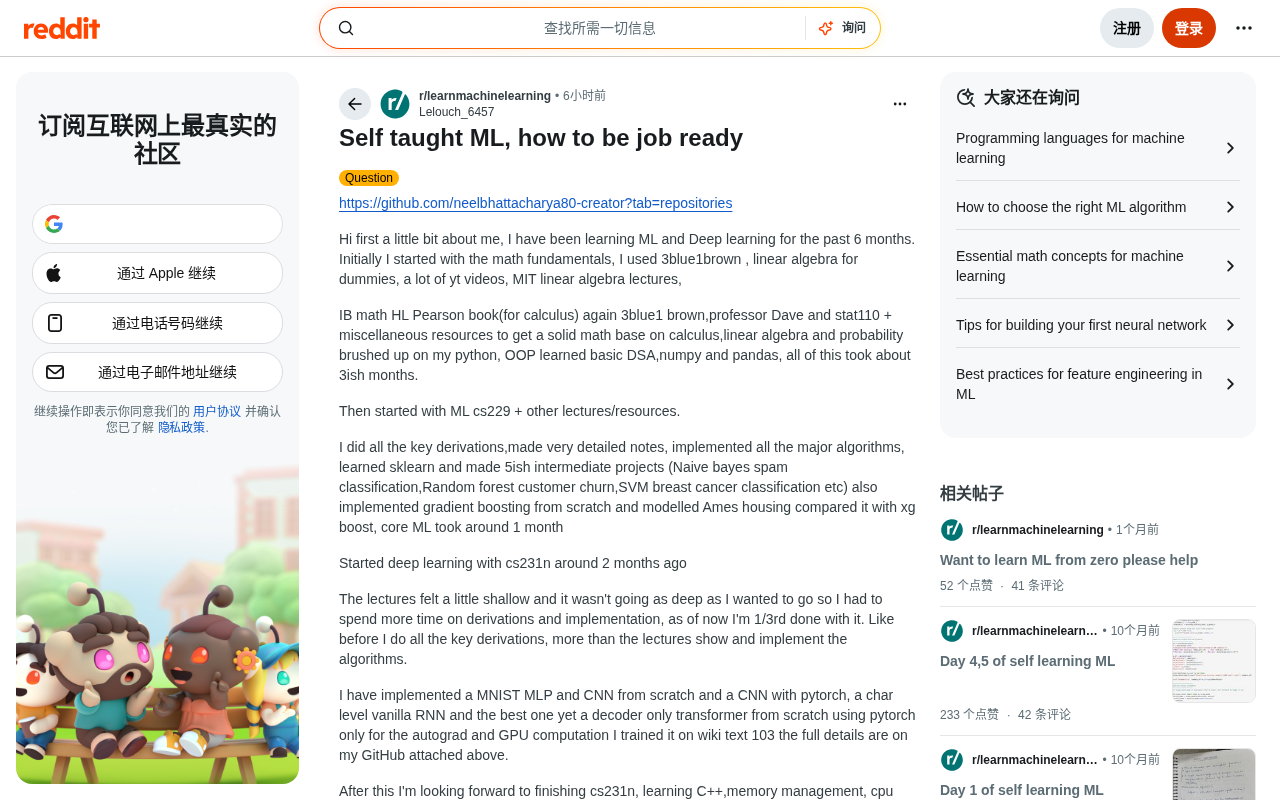
6 Months of Self-Taught Machine Learning: A Complete Roadmap from Zero to Job-Ready
A self-learner completed a full progression from math foundations and core ML to deep learning in 6 months—hand-writing a Transformer and implementing gradient boosting from scratch. This article breaks down the highlights and blind spots of this real roadmap.
Read more →

·2 min
The 7-Stage Roadmap to Becoming an AI Engineer: Breaking Down the Value and Blind Spots of Each Phase
A roadmap for growing into an AI engineer, from Python basics to production deployment, covering LLM app development, RAG systems, model evaluation, and safety. This article breaks down each phase to help you avoid detours and go from beginner to production-ready faster.
Read more →
·3 min
Career Switch to AI Engineer Without a CS Degree: A Self-Study Roadmap from Scratch
A real case study of an agriculture student breaking into AI: how to start with CS50 and systematically master Python, machine learning, and MLOps skills, with a three-phase transition plan for self-learners.
Read more →

·6 min
Jacobian-Lens in Practice: Manually Reshaping LLM Behavior with J-Space
After Anthropic released Jacobian-Lens, a developer reversed it from an interpretability tool into a behavior editor, manually tuning J-Space to reshape LLM outputs. An in-depth look at the tech, representation engineering, and AI safety risks.
Read more →

·5 min
Advanced Machine Learning Reading List: How to Choose the Right Book Among These 4 Classics?
Torn between Géron, Chollet, and Raschka? This article breaks down 4 classic ML books for self-learners aiming at finetuning and small language models (SLM), helping you find the best advanced path.
Read more →

·6 min
An Efficient Learning Guide for Data Science: Study Partnerships and Hands-On ML in Practice
Struggling to learn data science alone? This article explores the value of study partnerships and pairs them with the classic Hands-On ML textbook to offer a phased learning plan from math foundations to deep learning.
Read more →

·6 min
Is AI Really Smart? The Future Directions and Capability Boundaries of Next-Generation Artificial Intelligence
Are large language models truly intelligent? This article analyzes core AI limitations — pattern matching, hallucinations, reasoning deficits — and explores next-gen directions like inference-time compute, neuro-symbolic AI, and embodied intelligence.
Read more →

·3 min
Java Developers Pivoting to AI: Why the Agent Direction Is the Best Choice
How can experienced Java and backend developers pivot to AI? This deep-dive explains why the Agent direction is the best fit — skills transfer well, market demand is high, and the path from "using frameworks" to "understanding source code" is clear.
Read more →

·4 min
How to Choose a Machine Learning Course for Beginners: A Complete Roadmap
Not sure where to start with machine learning? This guide covers the community-approved ML roadmap: from math and Python basics to Andrew Ng, fast.ai, Kaggle, and CS229.
Read more →

·5 min
Essential Math for AI/ML Research: Should Undergrads Choose the Specialist Sequence or the Major Track?
Aiming for AI/ML research? How should you pick undergrad math courses? This article breaks down linear algebra, probability & statistics, and optimization, weighing the specialist sequence vs. the Major track.
Read more →

·3 min
Should Open Source Projects Add Donation Links? A Complete Guide to Revenue Sharing Among Multiple Contributors
Should open source projects add donation links? We analyze four revenue-sharing models for multi-contributor projects and offer practical advice for maintainers.
Read more →
·6 min
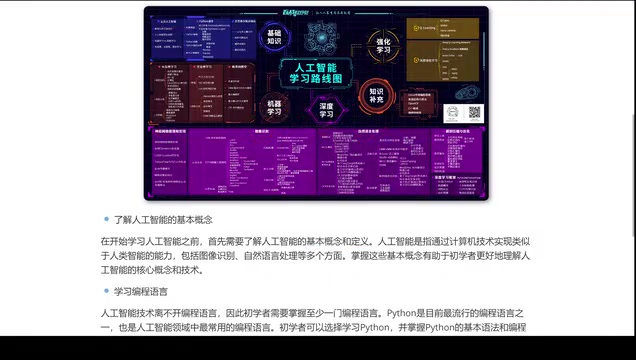
AI for Beginners: A Five-Step Practical Path That Skips the Math and Python Syntax Traps
Struggling with math and Python when learning AI from scratch? This article lays out a five-step entry path: grasp the concepts, learn Python lightly, master ML and deep learning principles, get hands-on with PyTorch, then deepen understanding through real projects.
Read more →
Beware of Big Tech AI Agents: How to P…
·2 min
Beware of Big Tech AI Agents: How to Protect Your Research Intellectual Property
Are your research code, algorithms, or unpublished papers safe with Big Tech AI agents? This deep dive explores data risks and offers practical protection strategies.
Read more →

·3 min
A Complete Guide to Learning Python from Scratch: From Basics to Web Scraping Projects
A systematic Python learning path for beginners covering syntax, OOP, web scraping, office automation, and data analysis, with methodology tips and resources.
Read more →

·3 min
Learn Python from Scratch: A Three-Phase Systematic Learning Path and Practical Guide
How to efficiently learn Python from scratch? This guide covers a three-phase learning path—fundamentals, intermediate, and practical—including environment setup, OOP, web scraping, office automation, and data analysis.
Read more →

·3 min
How Much Math Do AI Practitioners Really Need? A Deep Dive into Three Role Types
How much math do AI/ML practitioners really need? This article breaks down three roles — Users, Developers, and Researchers — and analyzes the math requirements for each to help you plan your learning path.
Read more →