#contract drift
62 related articles

·3 min
Code Refactoring and Culinary Evolution: How Software Thinking Explains Cultural Transmission
From Iraqi stew to Singaporean cuisine across centuries—using software refactoring concepts to decode cultural evolution, code reuse, and incremental change.
Read more →

·3 min
Code Refactoring and Culinary Evolution: How Software Thinking Explains Cultural Transmission
From Iraqi stew to Singaporean cuisine: a cross-century journey explored through software refactoring metaphors, revealing universal laws of complex system evolution.
Read more →

·4 min
What It Feels Like When Production Actually Runs Like Localhost
Why does production never match local? This article analyzes root causes like config gaps and dependency drift, and explores how Docker, Twelve-Factor App, and IaC practices bridge the dev-prod divide.
Read more →

·4 min
Disaster and Glory of the Apollo Program: The History We Must Revisit Before Returning to the Moon
From the fatal Apollo 1 fire to Apollo 8's daring lunar orbit to Apollo 11's successful landing—revisiting the disasters, fears, and compromises of the Apollo program and their lessons for today's return to the Moon.
Read more →

·4 min
LiDAR Reveals Ancient Cities: How Laser Technology Is Rewriting the History of Lost Civilizations
Discover how LiDAR laser technology penetrates deserts and jungles to reveal Sela's underground cistern system and Nan Madol's hidden structures, rewriting the history of lost civilizations.
Read more →

·5 min
The Five Stages of AI Agent Architecture Evolution: The Real Path from Model Calls to Production Runtime
Deep dive into the five evolution stages of AI Agent architecture: model calls, tool calls, workflows, Agent loops, and production runtime. Learn the responsibility boundaries and design principles.
Read more →

·5 min
Complete Breakdown of Core Competencies for AI Agent Engineers: From Demo to Production-Grade Systems
Deep breakdown of 4 core AI Agent engineer competencies: business decomposition, multi-Agent architecture, quantitative evaluation, and engineering delivery—bridging the gap from Demo to production.
Read more →

·3 min
API Mock vs. Sandbox in Agent Testing: A Detailed Layered Strategy Guide
API Mock is fast but misses bugs; Sandbox is realistic but costly. This article analyzes their core differences and provides a layered testing strategy for building reliable Agent test systems.
Read more →

·7 min
Enterprise AI Agent Security Isolation and Memory Design: NanoClaw Founder Breaks Down Real-World Lessons
NanoClaw founder David Boyd breaks down the core engineering of enterprise autonomous Agents: a triple security isolation model, LLM Wiki memory design, and the real-world path from personal Agents to team-scale deployment.
Read more →

·4 min
Beyond Vibe Coding: A Complete Guide to Enterprise-Grade AI Engineering
Hit the Vibe Coding ceiling? This guide covers the three-stage AI coding progression path, Claude Code vs. Codex, SuperPower SDD, and how to go from vibe coding to enterprise-grade AI engineering.
Read more →

·8 min
LangChain Crash Course: A Complete Roadmap from Zero to Agent Development
A systematic roadmap from LangChain and LangGraph to multi-agent development, covering RAG, Tool Calling, MCP, and more, helping developers break into AI app development.
Read more →

·2 min
Dependency Drift in Production AI Agents: Detection, Response, and Building Resilient Systems
AI Agents in production face systemic dependency drift risks — model updates silently change outputs and silent failures are hard to detect. Learn detection strategies, hidden costs, and engineering practices.
Read more →

·3 min
The Truth Behind Three RAG Pipeline Crashes: Why Inter-Stage Data Contracts Matter
A RAG pipeline crashed three times due to inter-stage data format mismatches. Learn how JSON Schema and Pydantic explicit contracts turn fragile AI pipelines into maintainable systems.
Read more →

·3 min
Career Pivot at 47: Midlife Job Anxiety and Redefining Competence in the Age of AI
A 47-year-old engineer who pivoted to data science faces re-employment struggles — a mirror of AI-era anxiety: does using AI count as coding? How to break the midlife career trap?
Read more →
·3 min
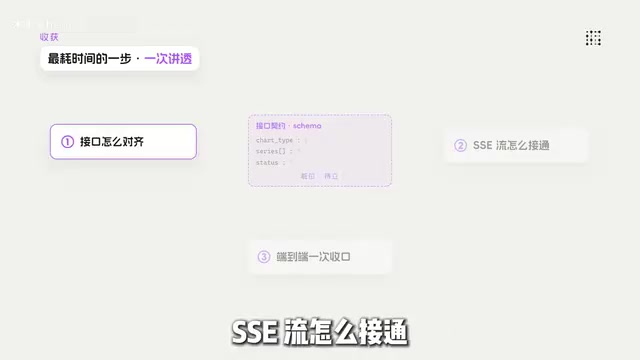
Building an Intelligent Data Analysis Agent: A Complete Guide to Interface Alignment and SSE Streaming Response Integration
A practical guide to interface alignment, SSE streaming integration, and end-to-end testing for enterprise AI Agent projects — eliminate wasted debugging and ship faster.
Read more →

·4 min
7 Core Components for Designing Long-Running AI Agents
A deep dive into the 7 core components for building long-running AI Agents: Goal, Evaluator, Verifier, Loop, Orchestration, Observability, and Memory.
Read more →

·3 min
Introducing LLM Gateways in Production: Five Key Concerns and the Prerequisites for Trust
Introducing an LLM Gateway in LangChain production brings unified APIs and auto-fallback, but also quality drift, cost spikes, and debug black boxes. This article breaks down the five key engineering concerns and what it takes to earn trust.
Read more →

·4 min
Agent Loop in Practice: A Guide to Building Self-Improving Automation with Guardrails
A deep dive into building verifiable, self-evolving Agent automation loops with Claude Code and Codex — covering Loop Contracts, four trigger types, three-phase execution architecture, and Evolve Loops.
Read more →

·6 min
AI Data Centers Flood Into Rural America: A Complete Analysis of Compute Expansion and Community Battles
The generative AI boom is driving rapid data center expansion into rural America, drawn by cheap land, power, and water. But high water and energy use, unmet job promises, and noise pollution are sparking community resistance. A deep dive into siting logic and equitable solutions.
Read more →
·3 min
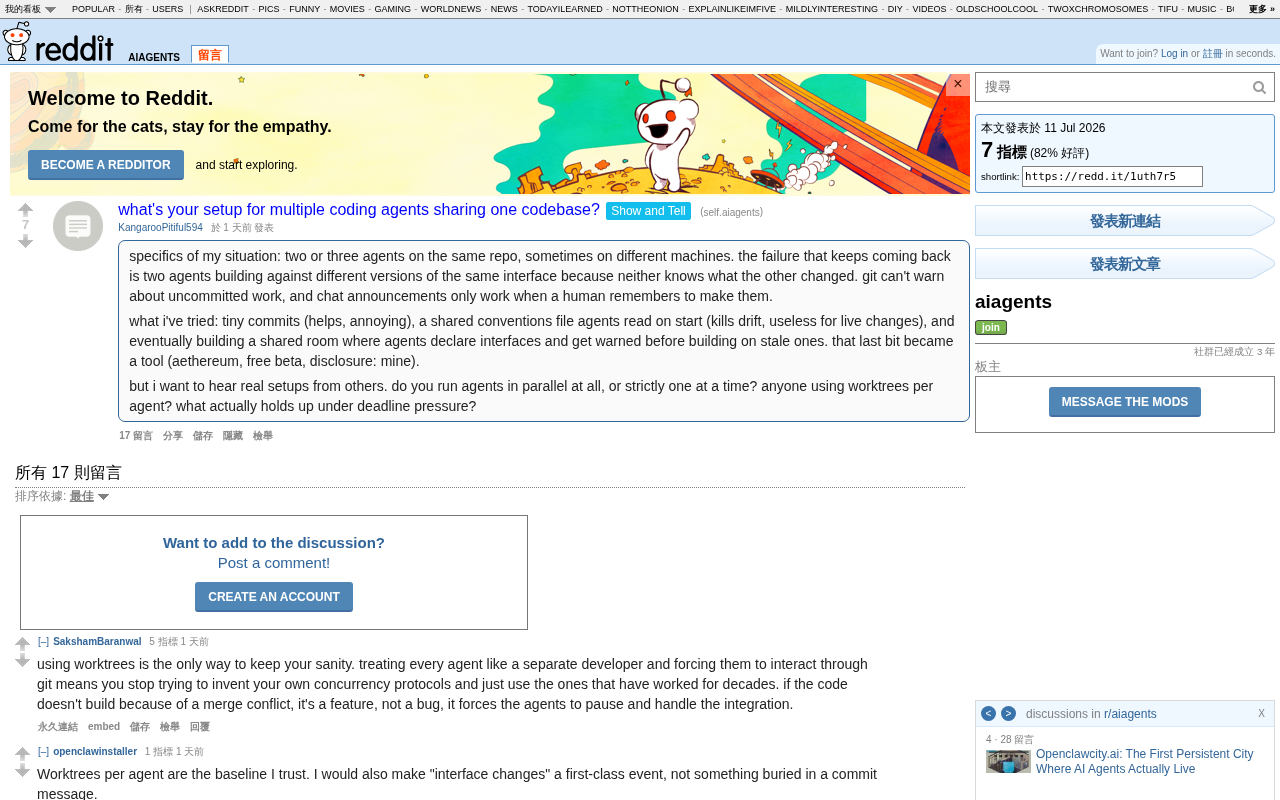
Multiple AI Agents Sharing a Codebase: Parallel Collaboration Conflicts and Practical Solutions
When multiple AI coding agents work on the same codebase simultaneously, how do you avoid interface conflicts and coordination chaos? A deep dive into Git worktree isolation, contract-first design, and intent declaration.
Read more →