#deep learning optimizer
143 related articles

·7 min
Training Machine Learning Models from Scratch: A Complete Beginner's Guide
A complete walkthrough of training machine learning models from scratch—covering problem definition, data preprocessing, algorithm selection, hyperparameter tuning, and evaluation, with tool recommendations for beginners.
Read more →
·5 min
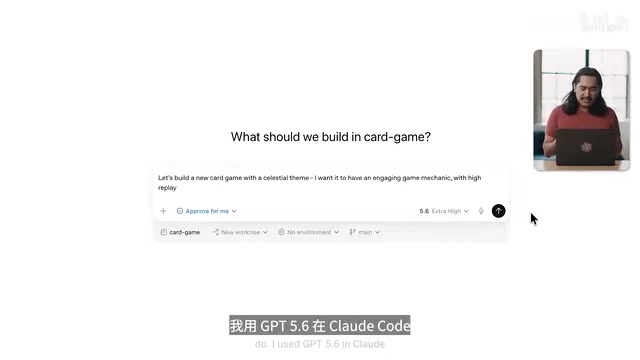
GPT-5.6 Released: Hands-On Analysis of Programmatic Tool Calling and Autonomous Agents
GPT-5.6 is officially released with core upgrades including programmatic tool calling, autonomous subagent delegation, and higher token information density. A hands-on card game build reveals its Agentic power.
Read more →

·7 min
Practical RL Compute Optimization: Core Strategies to Boost CPU and GPU Utilization
An in-depth look at why CPU and GPU utilization is low in RL training, covering vectorized environment parallelism, distributed Actor-Learner architectures, GPU-side simulation (Isaac Gym/Brax), and Ray RLlib practice.
Read more →

·3 min
From IT Support to AI Engineer: A Real NCA-GENL Certification Journey and Lessons Learned
A real NCA-GENL study journal from an IT-support-turned-AI-engineer: 50+ scenario questions, 7-week prep, and a brutal 40% on Trustworthy AI. Covers Transformer concepts, NVIDIA tools, and what actually works.
Read more →

·5 min
Postgres Is Enough More Often Than You Think: Stop Piling On Your Tech Stack
Many teams add message queues, search engines, and caches before they ever need them. This article maps out what Postgres can cover—task queues, full-text search, JSON storage—and when you actually need Redis, Kafka, or Elasticsearch.
Read more →

·3 min
GitHub Daily · July 11: Agent Skills Ecosystem Explodes, AI Programming Enters the Era of 'Skill Standardization'
July 11 GitHub Daily: Three Agent Skills projects surge on the same day, signaling AI programming's shift to skill standardization, with cross-platform open standards and local Agent memory leading the way.
Read more →

·5 min
Essential Math for AI/ML Research: Should Undergrads Choose the Specialist Sequence or the Major Track?
Aiming for AI/ML research? How should you pick undergrad math courses? This article breaks down linear algebra, probability & statistics, and optimization, weighing the specialist sequence vs. the Major track.
Read more →

·4 min
DeepSeek-V4 Deep Dive: Million-Token Context Architecture Breakthrough and Core Innovations
Deep dive into DeepSeek-V4: 1.6T-parameter MoE, CSA+HCA hybrid attention, MHC & MUON optimizer. Inference FLOPs drop to 27% of V3.2, redefining open-source LLM SOTA.
Read more →

·5 min
TensorRT Multi-Device Inference: Engineering Practices for Breaking Through Single-GPU Memory Bottlenecks
NVIDIA TensorRT now supports multi-device inference via pipeline and tensor parallelism, distributing large models across multiple GPUs to break through single-card memory limits.
Read more →

·7 min
Complete Guide to Training Small Models on Kaggle's Free Compute: GPU Quotas and Practical Tips
In-depth guide to Kaggle's free-tier compute: P100/T4 GPU with 30 hours/week quota, 12-hour sessions, suitable models like CNN and BERT fine-tuning, plus tips like mixed precision and checkpointing to start deep learning at zero cost.
Read more →

·6 min
Introduction to Prompt Engineering: Principles, Methods, and Practical Case Studies
Prompt Engineering is the core skill for harnessing LLMs. This article covers principles and design methods through real cases like translation role-setting and DeepSeek image generation.
Read more →

·5 min
GPT-5.6 Explained: Sol, Terra & Luna — Tiered Positioning and Capability Comparison
OpenAI releases the GPT-5.6 series with flagship Sol, balanced Terra, and lightweight Luna. An in-depth look at each model's positioning, use cases, pricing, and the multi-agent Ultra architecture.
Read more →

·4 min
Career Switch to LLM Development: A Four-Level Skill Progression Roadmap
Want to switch careers into LLM development but don't know where to start? This guide breaks down a four-level skill roadmap — from basics and API calls to RAG, fine-tuning, Agent development, and multimodal — to help you build real AI career value.
Read more →

·7 min
HuggingFace Open-Sources ml-intern: An AI Engineer That Reads Papers and Trains Models Autonomously
Hugging Face's open-source ml-intern autonomously reads papers, writes training scripts, and finetunes LLMs, deeply integrating the HF ecosystem and smolagents. Explore its features and impact on ML careers.
Read more →

·5 min
A Programmer's Guide to Large Language Models: The Complete Path from Prompts to Agents
A tailored large-model learning path for ordinary programmers: from prompt engineering, API calls, and LangChain, to RAG, Agents, fine-tuning, and enterprise deployment—six steps to build AI application skills fast.
Read more →

·2 min
Unsloth v0.1.461-beta: Fix for Local GGUF Vision Model Loading
Unsloth v0.1.461-beta fixes local GGUF vision model loading on llama-server in Studio, adds variant directory companion file lookup for stable multimodal deployment.
Read more →
·7 min
How Quantum Computing + AI Supercomputing Could Crack Fusion's Fuel Dilemma
One of the biggest bottlenecks to fusion commercialization is the tritium fuel breeding and cycling problem. This article explores how quantum computing and AI supercomputers can jointly tackle fusion's fuel challenge.
Read more →

·6 min
Not Everything Is Worth a Token: When to Use AI and When to Use Deterministic Code
Over-reliance on LLMs is an overlooked pitfall in AI development. Explore the hidden costs of Token economics, the boundaries between LLMs and deterministic code, and how hybrid architectures balance flexibility and reliability.
Read more →

·2 min
Training Just One Transformer Layer Can Match Full-Parameter RL Training?
A controversial study shows training just one Transformer layer can match full-parameter RL training. We analyze the technical principles, engineering value, and limitations of this approach.
Read more →

·4 min
NVFP4 Quantization in Practice: A Guide to Compressing Large Models with NVIDIA Model Optimizer
Deep dive into NVFP4 quantization: using NVIDIA Model Optimizer to compress Nemotron 3 Ultra to FP4 checkpoints, reducing memory by 75% and boosting inference throughput on Blackwell GPUs.
Read more →