#domain business continuity
66 related articles

·2 min
DeepSeek V4 Pro: Why the Open-Source LLM Community Is Eagerly Waiting
DeepSeek V4 Pro sparks open-source community buzz. Analysis of DeepSeek's V2-to-V3 evolution, MoE architecture cost advantages, and what developers should expect from the next-gen open-source LLM.
Read more →

·3 min
Termexo: A Local AI Coding Workbench for Windows, Integrating Claude Code and Codex
Termexo is a local AI coding workbench for Windows that integrates Claude Code and Codex agents, offering multi-terminal grid layouts, session recovery, approval notifications, and model switching—no account required.
Read more →

·3 min
Eventually Ticketing: A Detailed Look at Squarespace's Commission-Free Ticketing Solution
Eventually Ticketing is a commission-free ticketing tool for Squarespace, using flat monthly pricing to help workshops, studios, and event sellers maintain brand consistency while retaining full guest data.
Read more →

·3 min
Modulify 2.0 Deep Dive: How a Full-Lifecycle AI Website Platform Keeps Sites Growing
Deep analysis of Modulify 2.0's full-lifecycle AI website platform — from design and publishing to management and optimization. Exploring its core differences from traditional AI builders.
Read more →
·2 min
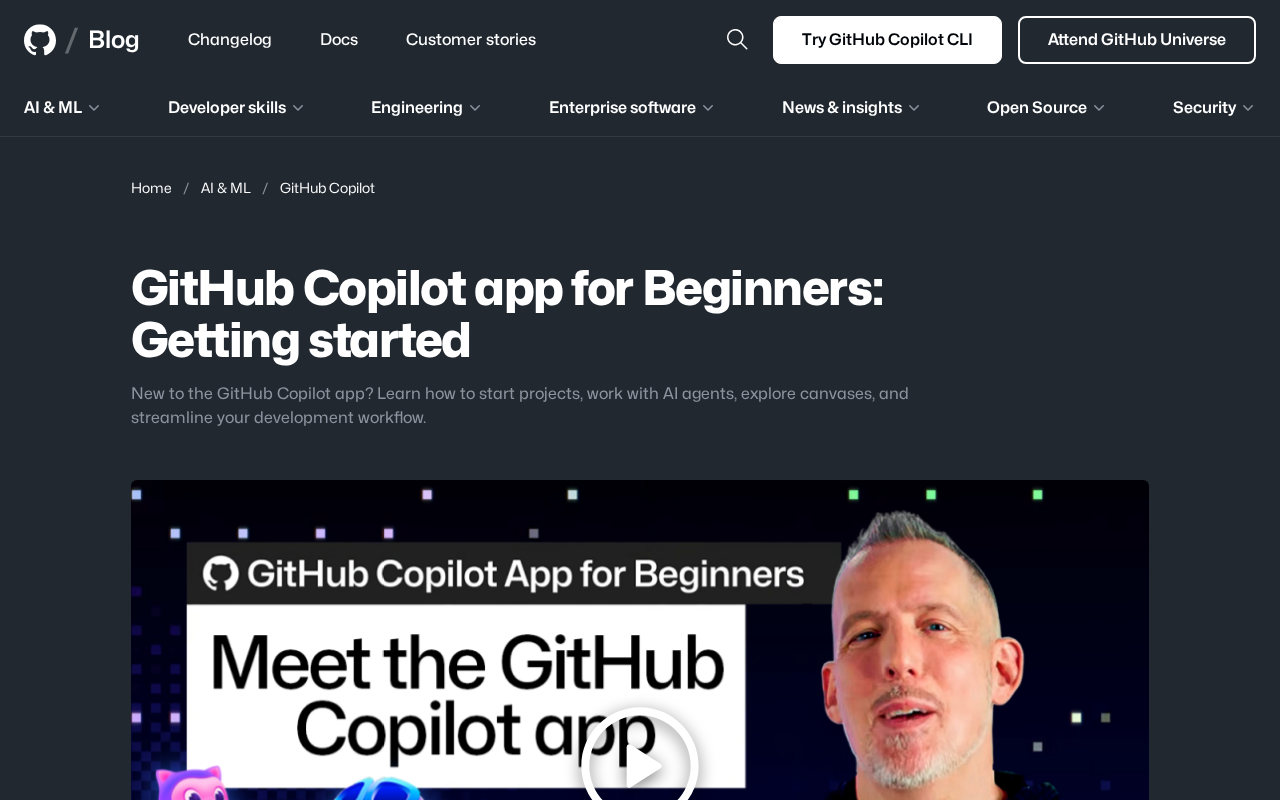
GitHub Copilot App Beginner's Guide: Mastering AI-Assisted Development from Scratch
A detailed guide to the GitHub Copilot standalone app's core features including project creation, AI agent collaboration, and canvases to help developers get started with AI-assisted development.
Read more →

·3 min
Liang Wenfeng on AGI Strategy: Team Stability Is DeepSeek's Only Core Interest
DeepSeek raises over 50B RMB at a 350B valuation. Founder Liang Wenfeng explains why team stability is the only core interest on the path to AGI.
Read more →

·3 min
Multi-Model AI Aggregator Platforms Explained: Access GPT, Claude, Gemini & More from One Chat Interface
AI aggregator platforms promise one interface for GPT, Claude, Gemini, DeepSeek & more. This deep-dive covers core features, real value, data security risks, and safer alternatives.
Read more →

·6 min
Making Money with AI Coding Gigs: A Sober Breakdown and Honest Assessment of the Four-Week Learning Path
Can beginners really earn over 10,000 yuan in their first month with AI coding gigs? This article breaks down the four-week AI coding learning path week by week and objectively assesses the real monetization barriers.
Read more →

·3 min
Agent Fine-Tuning in Practice: A Complete Guide to Training Your Own AI Agent
A deep dive into Agent Tuning: from LLM hallucination and staleness issues to RAG vs. Agent architecture, the 4-step fine-tuning process, and cost analysis for building your own AI agent.
Read more →

·4 min
Claude Usage Anxiety: The Hidden Cost Trap of AI Coding Tool Subscriptions
Real Reddit user rants reveal AI subscription pain points: Claude, Sol, and other tools consume usage at wildly different rates—does faster mean pricier? A deep dive into AI billing logic, usage transparency, and platform trust.
Read more →

·3 min
Coze Deep Dive: A Complete Guide to the Agent Building Platform vs. Dify
A deep dive into ByteDance's Coze platform: tool categories, positioning vs. Dify, skill store, multi-agent collaboration, and workflow building — your AI Agent selection guide.
Read more →

·2 min
The Truth Behind Anthropic's Account Bans: Client Detection Logic and a Wave of AI Model Launches
Unpacking the technical truth behind Anthropic's account bans: hidden timezone and proxy detection logic sparks privacy debate. Plus Claude Sonnet 5, Linux support, and new releases from OpenAI, NVIDIA, and Google DeepMind.
Read more →

·3 min
Java Developers Transitioning to AI: A Practical Guide to Building RAG Knowledge Bases
How can Java developers break into AI? This guide covers the AI application engineer career path, RAG knowledge base fundamentals, vector database retrieval, and enterprise-grade RAG challenges.
Read more →

·4 min
GPT-5.6 + Codex Tested: 3 Prompts to Edit a 15-Minute Video, Efficiency Doubled
OpenAI's GPT-5.6 and Codex integration tested: 3 prompts to edit a 15-min video in just 20 minutes. Full breakdown of performance, Token costs, GPT Work automation, and Chat Card real-world results.
Read more →

·3 min
ASE Control Panel: How STATE_SYNC Tokens Enable AI State Persistence
A deep dive into ASE's core mechanism — the STATE_SYNC checkpoint token — and how it transforms stateless LLMs into stateful AI systems for complex multi-turn workflows.
Read more →

·4 min
LangChain + LangGraph Full-Stack in Practice: A Production-Ready Guide to Six Core Modules and Agent Deployment
A systematic breakdown of LangChain's six core modules (Models/Prompts/Chains/Memory/RAG/Agent) and LangGraph's state graph, persistence, and HITL — with production deployment tips.
Read more →
Telegram's Short Domain t.me Suspended…
·2 min
Telegram's Short Domain t.me Suspended: The Infrastructure Risk Behind Short-Link Dependency
Telegram's core short domain t.me was suspended, sparking wide tech community debate. We analyze single-point dependency risks, ccTLD compliance pitfalls, and how enterprises can build domain resilience.
Read more →

·2 min
State Machine Voice Agents in Practice: Balancing Latency and Accuracy with Pipecat and Vapi
A deep dive into state machine-based voice AI agent architecture, comparing Pipecat Flows and Vapi Squad, and exploring the latency vs. accuracy trade-offs in agentic handoffs.
Read more →

·3 min
Can MiniMax Serve as a Hermes Agent's Brain? A Complete V0.18 Evaluation
A hands-on test of MiniMax as an AI Agent brain using the Hermes V0.18 framework: fast inference, low cost, stable long tasks—but clear flaws in complex reasoning and tool calling. Learn its three strengths, three weaknesses, and best-fit workflows.
Read more →

·3 min
How Machine Learning Engineers Can Adapt in the AI Era: A Guide to Skill Trade-offs and Career Reinvention
In the AI wave, ML engineers' work is quietly shifting: from building models to using them, from feature engineering to LLM app development. This article outlines the new skills to prioritize, fading old ones, and how to turn AI into career leverage.
Read more →