#e-commerce course project
96 related articles

·3 min
LangChain V1.3 Hands-On Tutorial: A Complete Breakdown of RAG, Multi-Agents, and Engineering Mindset
An in-depth look at LangChain V1.3's core philosophy: from RAG to multi-agent workflows. Master LangGraph, Chain, and DeepAgent, learn token control and Human-in-the-loop, and become a true master of AI app development.
Read more →

·2 min
A Complete Guide to Nuxt: Core Features and Best Practices of the Vue Full-Stack Framework
An in-depth look at Nuxt—the full-stack meta-framework built on Vue.js. Covers SSR, SSG, the Nitro server engine, file-system routing, and more.
Read more →

·3 min
Getting Started with Pandas: How to Choose Tutorials and Efficient Practice Resources
Struggling to pick a Pandas tutorial? This article breaks down the logic for choosing new vs. old versions, recommends hands-on resources like Kaggle and GitHub, and offers a 'tutorial + practice + projects' method to master data processing.
Read more →

·3 min
15 Months, 10 Failed Interviews: A Deep Retrospective and Breakthrough Guide for AI Engineers
An AI/ML engineer with 4 years of experience faced 10 failed interviews in 15 months at Meta, Amazon, and more. This deep analysis breaks down the root causes and offers ML interview strategies and mindset advice.
Read more →

·6 min
Andrew Ng × Anthropic: A Hands-On Claude Code Tutorial and Core Methodology
Andrew Ng partners with Anthropic to launch a hands-on Claude Code course, revealing its simple architecture, local security edge, and core context methodology across three cases: RAG chatbot, Jupyter analysis, and Figma-to-frontend.
Read more →

·5 min
Building Your Own Reading Tracker: Craig Mod's Digital Garden and the Case for Data Sovereignty
Why did Craig Mod abandon Goodreads to build his own reading tracker? A deep dive into the motivations, benefits, and trade-offs of self-hosting, data sovereignty, and the IndieWeb movement.
Read more →

·6 min
Cross-Model Review Between Claude and Codex: A Practical Workflow to Systematically Eliminate AI Code Bugs
Vibe Coding saves time but leaves piles of bugs? This article details the cross-model review workflow: Claude generates, Codex auto-reviews, with Stop Hook and Skill mechanisms building an AI code review system that intercepts problems automatically.
Read more →

·4 min
AI Agent Learning Path for Beginners: From Theory to Real-World Practice
A complete AI Agent learning roadmap covering BDI theory, core components (Perception/Planning/Execution), AutoGen multi-agent frameworks, and DeepSeek RAG projects for beginners.
Read more →

·4 min
Kun: An Open-Source AI Coding Agent Deeply Optimized for DeepSeek
Kun is an open-source AI coding agent optimized for DeepSeek and domestic users, with nearly 5,000 GitHub stars. Features include requirements drafting, inline diffs, cost visualization, and mobile monitoring. Real-world cache hit rates reached 97%, keeping costs extremely low.
Read more →

·7 min
21-Day Python Automation Testing Crash Course: A Complete Breakdown of the Three-Stage Learning Path
Learn automation testing from scratch! This article breaks down a three-stage path: Selenium/Appium tools, Requests+PyTest API testing, performance testing and CI/CD, with real projects—build a complete skill set in 21 days.
Read more →

·7 min
From Vibe Coding to Engineered AI Programming: A Practical Guide to Enterprise Development
AI coding tools are changing development, but Vibe Coding hides risks in code quality and maintenance. This article explores Engineered AI Programming, compares Codex and Claude Code, and reveals real enterprise development paths.
Read more →

·4 min
Career Switch to LLM Development: A Four-Level Skill Progression Roadmap
Want to switch careers into LLM development but don't know where to start? This guide breaks down a four-level skill roadmap — from basics and API calls to RAG, fine-tuning, Agent development, and multimodal — to help you build real AI career value.
Read more →
·6 min
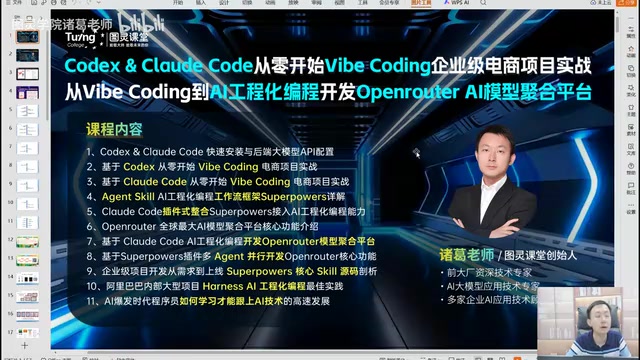
Understanding the Limits of Vibe Coding: A Practical Guide to AI Engineering-Grade Programming
An in-depth look at the difference between Vibe Coding and AI engineering-grade programming. Can AI replace programmers? From Claude Code and Codex to Cursor, revealing the real limits, enterprise pain points, and engineering solutions of AI coding tools.
Read more →

·3 min
Python for Absolute Beginners: A Complete Breakdown of a 10-Hour Systematic Course
Breaking down a 10-hour Python course for absolute beginners — covering syntax, OOP, functional programming, web scraping, and automation, with mind maps and exercises.
Read more →

·4 min
Python Learning Path for Absolute Beginners: A Science-Based Guide to Avoid Common Pitfalls
How can beginners learn Python without getting lost? This guide outlines a 3-stage learning path covering basics, advanced topics, and hands-on practice in web scraping, data analysis, and office automation.
Read more →

·6 min
GPT-5.6 Three-Model Family Launch: A Complete Breakdown of Sol/Terra/Luna Capabilities and the Government Restriction Incident
OpenAI officially launches the GPT-5.6 family, including the Sol flagship, Terra balanced, and Luna lightweight models. Coding capabilities set a new industry benchmark, generating a Minecraft clone in 90 minutes—while OpenAI publicly opposes U.S. government release restrictions.
Read more →

·6 min
From Vibe Coding to AI Engineering: A Complete Practical Guide to Codex and Claude Code
An in-depth analysis of the practical use of Codex and Claude Code, comparing Vibe Coding and AI engineering, covering Super Power plugins, Spec-Driven Development, and Chinese LLM integration strategies.
Read more →

·6 min
TechCrunch Startup Battlefield Australia: Applications Close July 6
TechCrunch Startup Battlefield Australia applications close July 6. Seize this premier startup competition for global investor exposure, capital connections, and brand endorsement.
Read more →

·3 min
Kimi K2.7 Code Hands-On: How Does High Speed Mode Feel in Practice?
Hands-on test of Kimi K2.7 Code in High Speed mode across two real projects: a frontend interactive lab and an e-commerce microservice. Speed is noticeably improved, with strong responsiveness for legacy codebases and frontend-backend integration.
Read more →

·3 min
Claude Code in Practice: Writing Maintainable AI Code with the Harness Methodology
Learn how to write controllable, maintainable AI code using the Harness methodology with Claude Code. Covers SDD, Agent orchestration, and enterprise-grade AI programming practices.
Read more →