#low-code
352 related articles

·2 min
Dify Getting Started Guide: Build Enterprise-Grade AI Apps with Zero Code
Dify is a Chinese open-source AI app platform supporting chatbots, Agents, and workflows. This guide covers Dify 1.8.0 Docker deployment, enterprise use cases, and how to build your first AI app.
Read more →
OpenAI Research: How AI Agents Are Res…
·2 min
OpenAI Research: How AI Agents Are Reshaping Work and Productivity
OpenAI research reveals AI agents are evolving from chat assistants into autonomous "digital workers," driving productivity gains across technical and non-technical roles alike.
Read more →

·6 min
Dify Self-Hosted Deployment in Practice: Building an Enterprise-Grade AI Application Platform from Scratch
A complete guide to self-hosting Dify, the open-source AI platform: environment setup, Docker Compose deployment, LLM integration, and app building. Runs on just 2 cores and 4GB RAM.
Read more →

·3 min
MiniMax Hub In-Depth Review: Hands-On with an All-in-One AI Creative Workstation
Hands-on review of MiniMax Hub desktop app — testing a full creative workflow from PDF brief to finished video, covering canvas editing, image tools, video generation, and the skills system.
Read more →
 Industry Insights
·3 min
OpenAI's Internal Codex Usage Surges 56x — AI Coding Is Eating Everything
OpenAI reveals internal Codex usage data: Research up 56x, Customer Support 32x, Engineering 27x, Legal 13x since Nov 2025. AI coding tools are penetrating every department faster than expected.
Read more →
 Expert Opinions
·2 min
The Lazy Person's Productivity Theory: Why Being 'Lazy' Actually Drives Peak Performance
Explore the engineering philosophy behind 'lazy people are most productive': how constructive laziness drives automation, AI tools amplify efficiency, and systems thinking eliminates wasted effort.
Read more →

·3 min
Dify Comprehensive Guide: The Open-Source Platform for Building AI Apps Without Code
Deep dive into Dify, the open-source LLM app development platform featuring visual workflow engine, RAG knowledge base, Agent capabilities, hundreds of model integrations, Docker deployment, and comparisons with LangChain, Coze, and FastGPT.
Read more →

·4 min
LangGraph.js Practical Guide: A Frontend Engineer's Path to AI Agent Development
A practical LangGraph.js guide for frontend engineers covering LangGraph vs LangChain comparison, workflow vs general-purpose agent types, and layered Agent architecture design.
Read more →

·3 min
The Complete Evolution of Codex: From Coding Tool to All-in-One AI Workstation
Deep dive into OpenAI Codex's evolution from coding agent to all-in-one AI workstation, covering computer use, visual annotations, memory, CodexSites deployment, and more.
Read more →

·3 min
How Is Codex Different from ChatGPT? Breaking Down the Core Differences of the AI Coding Agent
Compare OpenAI Codex vs ChatGPT: ChatGPT handles Q&A while Codex acts as an AI coding agent that autonomously writes code, fixes bugs, and runs tests.
Read more →

·4 min
7-Step Framework for Deploying Commercial AI Agents: From Requirements to Production
A detailed 7-step guide to building commercial AI Agents, covering requirements, platform selection (Coze/Dify/FastGPT), prompt engineering, databases, UI, testing, and deployment.
Read more →

·2 min
Deep Dive into n8n Workflow Platform: Core Capabilities and Suitability Assessment for China
Deep dive into n8n's core capabilities including 500+ nodes, AI Agent building, and RAG integration, with an objective analysis of its limitations and suitability for use in China.
Read more →

·3 min
How Much Math Do AI Practitioners Really Need? A Deep Dive into Three Role Types
How much math do AI/ML practitioners really need? This article breaks down three roles — Users, Developers, and Researchers — and analyzes the math requirements for each to help you plan your learning path.
Read more →

·3 min
OpenAI Codex Fully Explained: The Paradigm Shift from ChatGPT Conversations to Autonomous AI Programming
Deep dive into OpenAI Codex vs ChatGPT: ChatGPT explains, Codex executes. Learn how AI programming agents autonomously generate code, fix bugs, and run tests.
Read more →

·3 min
OpenAI Codex Deep Dive: The Leap from ChatGPT to an AI Coding Agent
Deep dive into OpenAI Codex vs ChatGPT: how AI coding agents autonomously write code, fix bugs, and run tests, and why developers must master this new tool.
Read more →

·3 min
Trae IDE in Practice: Building a Student Management System from Scratch with AI Conversational Programming
A detailed walkthrough of using ByteDance's Trae IDE to build a student management system from scratch through hand-drawn prototypes and AI conversation, covering page generation and code analysis.
Read more →

·2 min
A Complete Guide for Solo Developers to Build Profitable Apps from Scratch Using AI Tools
A solo developer used Vibe Coding to build an AI app earning $1,400/month in 23 days. Learn how to find validated ideas, choose tools, build MVPs fast, and generate recurring income.
Read more →

·3 min
Build an App in 30 Minutes with Zero Code: A Complete Hands-On Walkthrough Using the AI Tool Tusi
Build a fully installable mobile app in 30 minutes with zero code using AI tool Tusi. A complete walkthrough from requirements to finished product, showing how AI shifts app development from coding skills to clear communication.
Read more →
·4 min
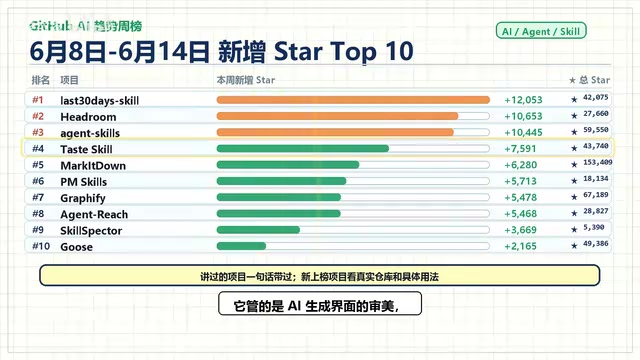
GitHub AI Weekly: Agent Ecosystem Support Tools Explode onto the Scene
June 2026 GitHub AI trends: Agent ecosystem middleware tools surge — PM Skills, Agent Reach, Graphify, and Skill Spectre signal the Agent middleware era.
Read more →

·2 min
Generate a Game with One Sentence: Hands-On Review of AI Coding Tools — No Experience Required
Hands-on review of AI coding tools: generate a complete mini-game in one minute with a single sentence. Supports iterative refinement via natural language. Exploring zero-code development trends.
Read more →