#mobile programming workflow
382 related articles

·7 min
Turning Any AI Agent into an Orchestration Hub: A Deep Dive into Multi-Agent Collaboration Architecture
An in-depth analysis of the "any Agent as an orchestrator" design philosophy, exploring the technical implementation of multi-Agent collaboration, context management, and workflow automation.
Read more →

·4 min
Kun: An Open-Source AI Coding Agent Deeply Optimized for DeepSeek
Kun is an open-source AI coding agent optimized for DeepSeek and domestic users, with nearly 5,000 GitHub stars. Features include requirements drafting, inline diffs, cost visualization, and mobile monitoring. Real-world cache hit rates reached 97%, keeping costs extremely low.
Read more →

·6 min
AI's Second Half: The Decisive Battle Shifts from Models to Infrastructure
Model capabilities are converging, making inference cost and scalability the new focus of AI competition. A deep analysis of AI infrastructure's core layers.
Read more →

·7 min
21-Day Python Automation Testing Crash Course: A Complete Breakdown of the Three-Stage Learning Path
Learn automation testing from scratch! This article breaks down a three-stage path: Selenium/Appium tools, Requests+PyTest API testing, performance testing and CI/CD, with real projects—build a complete skill set in 21 days.
Read more →

·7 min
The Four-Stage Learning Path for AI Agent Development: From Beginner to Real-World Deployment
A systematic four-stage roadmap for AI Agent development: fundamentals, core principles, enhancement, and real-world deployment. Build complete Agent skills.
Read more →
·7 min
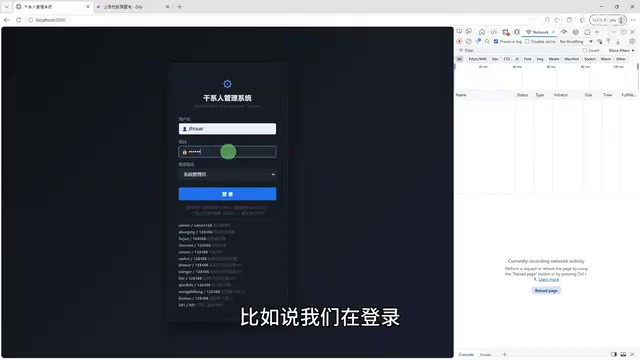
Dify Enterprise System Integration in Practice: Building a Project Management AI Copilot with Workflows
Using a project management system as an example, this article details how to use the Dify low-code platform to achieve AI-powered integration of enterprise internal systems through interface capture and workflow orchestration.
Read more →

·5 min
Embedded Linux vs. AI Agent Development: A Comprehensive Comparison of Salary, Job Availability, and Career Stability
Embedded Linux or AI Agent development? This in-depth comparison covers salary, job availability, and career stability to help developers pick the right path.
Read more →

·7 min
Geosql: A Vertical Skill Pack That Teaches AI Geospatial Data Analysis
Geosql is a geospatial SQL skill pack designed for AI coding assistants like Claude and Codex, enabling LLMs to accurately generate PostGIS queries and handle coordinate transformations and spatial analysis.
Read more →

·7 min
Spec-Driven Development: Andrew Ng Teaches You to Master AI Coding Agents Efficiently
Andrew Ng partners with JetBrains on a new course systematically teaching Spec-Driven Development. By writing high-quality specs, developers can precisely control AI coding agents, eliminate context decay, and boost intent fidelity.
Read more →

·7 min
Rowboat: An Open-Source, Local-First Alternative to Claude Desktop
Rowboat is an open-source, local-first AI desktop client positioned as a Claude Desktop alternative. Local data storage and fully transparent code help developers control privacy and workflows.
Read more →
·6 min
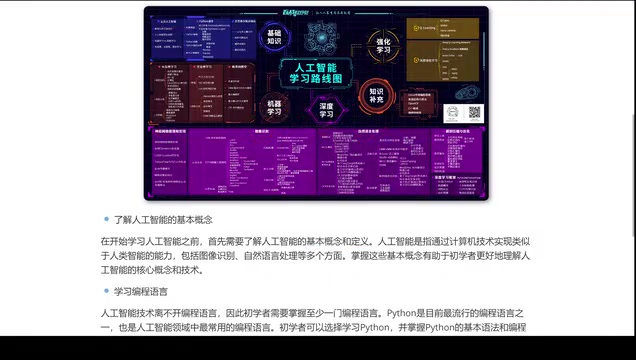
AI for Beginners: A Five-Step Practical Path That Skips the Math and Python Syntax Traps
Struggling with math and Python when learning AI from scratch? This article lays out a five-step entry path: grasp the concepts, learn Python lightly, master ML and deep learning principles, get hands-on with PyTorch, then deepen understanding through real projects.
Read more →

·6 min
Coze from Scratch: A Complete Guide to Building Multi-Agent Collaboration
A detailed guide to Coze's core features: cross-platform interoperability, the Skills system, multi-agent collaboration, and workflow building. Compare Coze and Dify to build practical AI apps with zero coding.
Read more →
·7 min
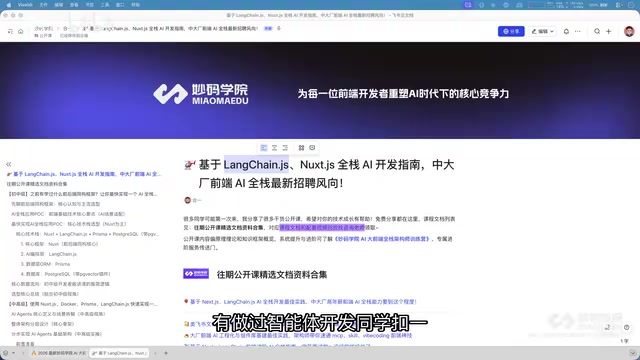
LangChain.js + Nuxt.js: An AI Full-Stack Advancement Path for Frontend Engineers
Frontend hiring now treats AI capabilities as a core assessment, covering RAG knowledge bases, AI Agent development, and LangChain.js engineering. Learn how LangChain.js + Nuxt.js helps frontend developers build memory- and retrieval-capable AI full-stack apps.
Read more →

·4 min
Shellular: A New Way to Remotely Control Claude Code and Other AI Coding Assistants from Your Phone
Shellular lets developers remotely control AI coding assistants like Claude Code and Codex from their phones. A deep dive into the problem it solves, its architecture, and the real demand for mobile AI coding.
Read more →

·7 min
Learning Python from Scratch: A Complete Guide to the Three-Stage Learning Path
Want to learn Python from scratch but don't know where to begin? This article breaks down three stages—basic syntax, advanced mastery, and hands-on practice—with real projects in crawling, automation, and data analysis to help you build programming thinking.
Read more →

·6 min
GPT-5.6 Three-Model Family Launch: A Complete Breakdown of Sol/Terra/Luna Capabilities and the Government Restriction Incident
OpenAI officially launches the GPT-5.6 family, including the Sol flagship, Terra balanced, and Luna lightweight models. Coding capabilities set a new industry benchmark, generating a Minecraft clone in 90 minutes—while OpenAI publicly opposes U.S. government release restrictions.
Read more →

·5 min
A Programmer's Guide to Large Language Models: The Complete Path from Prompts to Agents
A tailored large-model learning path for ordinary programmers: from prompt engineering, API calls, and LangChain, to RAG, Agents, fine-tuning, and enterprise deployment—six steps to build AI application skills fast.
Read more →

·3 min
Unsloth v0.1.45-beta Released: 2x Faster LLM Fine-Tuning with 70% Less VRAM
Unsloth v0.1.45-beta (PyPI: 2026.6.2) delivers 2x faster LLM fine-tuning and up to 70% VRAM reduction. Now at 67.9k GitHub stars, upgrade via pip install.
Read more →

·7 min
The Complete Codex Guide: From Installation to Real-World Practice
Master OpenAI Codex fast, even from scratch! Learn Codex vs ChatGPT differences, four versions, interface tips, plugins & skills, browser automation, plus six best practices.
Read more →

·3 min
Three Fatal Flaws of AI Script Writing — and How MCP Services Fix Them
AI script development plagued by amnesia, blindness, and repeat errors? This article examines how MCP service tools — history nodes, node preprocessing, and an error library — systematically fix AI programming's structural flaws.
Read more →