#multi-model AI development
535 related articles

·2 min
Complete Tutorial: Building Agents and Personal Knowledge Bases with DeepSeek
A complete guide to building AI agents with DeepSeek R1: private knowledge bases using RAG, basic/advanced agent implementation, and Coze/Dify workflow tutorials.
Read more →

·2 min
Grok 4.5 Is Back Online: A Deep Dive Into Model Selection and the Persistent Problem of Usage Limits
Grok 4.5 is back online, and Kimi 3 is on the way. This deep dive explores the multi-model landscape, complementary capabilities, cost strategies, and why usage limits persist across Claude, Gemini, and Grok.
Read more →

·3 min
Perplexity Max Deep Dive: Is the $200/Month Plan Worth It? The Truth About Credit Consumption
A Reddit user's real experience with Perplexity Max ($200/month): 15,000 credits burned on one task, failed Grok integration, and complex MCP setup. Is it worth it?
Read more →

·3 min
OpenClaw Multi-Agent AI Programming Workflow in Practice: From Coder to Manager
Deep dive into OpenClaw multi-agent AI programming workflows: context layering, CMUX parallel terminal management, work trees, and manager-perspective debiasing for scalable AI dev automation.
Read more →

·3 min
Pi Agent Review: A Minimalist Coding Agent That's Lightweight, Efficient, and Highly Customizable
Pi Agent hands-on review: ~1,200 token overhead, no built-in system prompts, supports Codex/Grok and more. Compared to Claude Code and OpenCode, Pi Agent wins with minimalist design and full customizability.
Read more →

·2 min
Why System Architects Are Becoming the Most In-Demand Tech Talent in the AI Era
A veteran architect with 10+ years of experience reveals: in the AI coding era, the real scarcity isn't people who write code — it's people who design great systems.
Read more →

·3 min
Coze Deep Dive: Core Capabilities and Tips for a Multi-Agent Collaboration Platform
A deep dive into Coze 3.0's multi-agent collaboration, covering project workspace architecture, credit economics, local tool integration, and a Dify comparison.
Read more →

·3 min
AI Coding Agents Explosion: CodeWell Goes Open Source, Kimi K3 Launches, Claude Gets Browser Access
CodeWell open-sources a multi-model terminal coding agent, Kimi K3 launches with ultra-long context, MiniMax Code 2.0 rebuilds its Agent architecture, and Claude gets browser access. AI is accelerating from content generation to task execution.
Read more →
·3 min
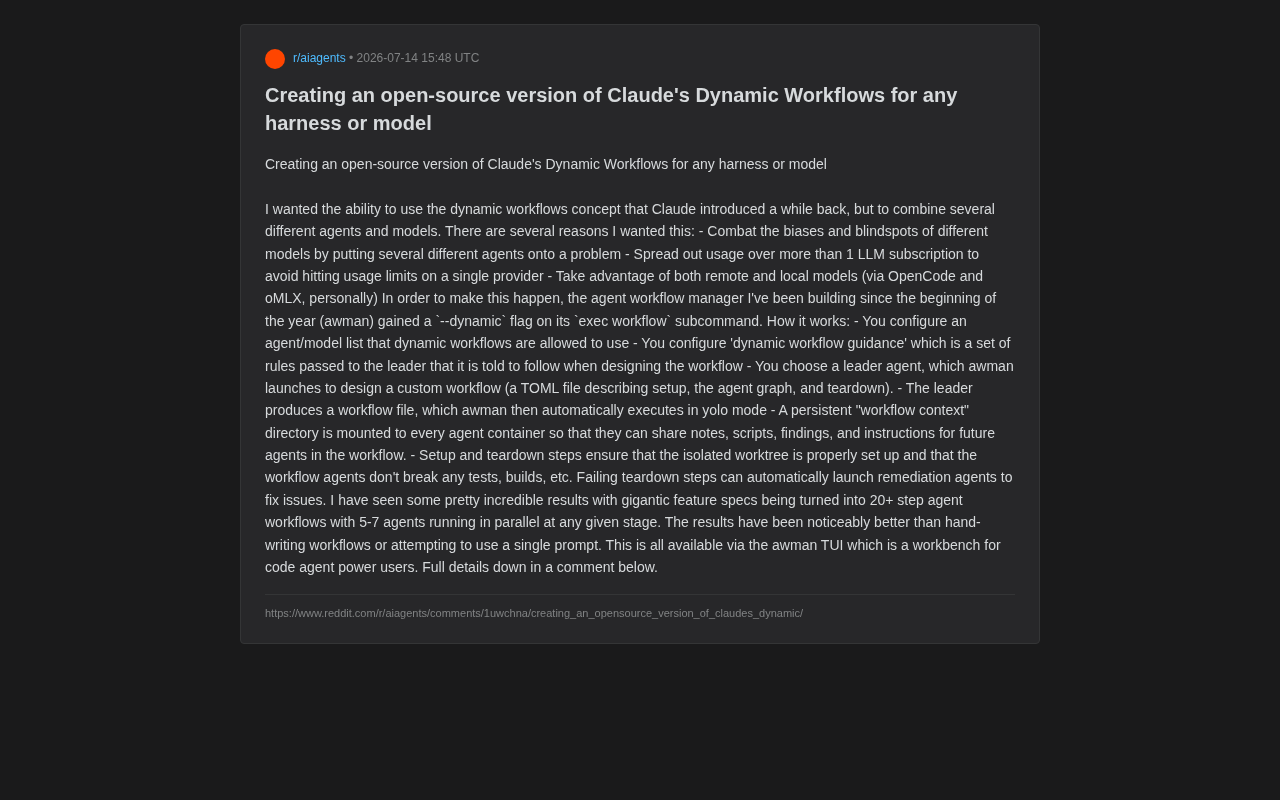
Open-Source Dynamic Workflows: How awman Enables Multi-Model Collaborative AI Programming
awman's --dynamic flag enables cross-framework dynamic workflows with multi-model collaboration. Explore its leader agent architecture, shared context design, and auto fault-tolerance mechanisms.
Read more →

·3 min
Cherry Studio + MCP + Ollama: The Complete Guide to Building a Local AI Agent and Private Knowledge Base
A hands-on guide to building a local AI agent and private knowledge base using Cherry Studio, MCP, and Ollama — with web scraping, report generation, and terminal control.
Read more →

·2 min
Dify 1.8.0 Hands-On Tutorial: Deploy and Build Your AI Application Platform from Scratch
A hands-on guide to deploying Dify 1.8.0, covering setup steps, Workflow vs. Chatflow differences, RAG knowledge base, and MCP support for AI app development.
Read more →

·2 min
AI Coding Model Selection Guide: A Tiered Strategy from Budget to Flagship
A deep dive into tiered AI coding model selection: Deepseek and Mimo for daily tasks, Composer for serious dev, and Grok/GPT flagships for architecture planning.
Read more →

·3 min
Bun Rewrote a Million Lines of Code in 11 Days with Claude Code: A New Paradigm for AI-Assisted Programming
Bun author Jared Sumner used Claude Code's dynamic workflows to rewrite 1M+ lines of Zig code into Rust in 11 days for $165K — what 3 engineers would need a year to do.
Read more →

·2 min
Spring AI in Action: A Complete Guide to LLM Integration for Java Developers
Spring AI is Java's answer to LangChain — offering unified multi-model APIs, structured output, RAG, Tool Calling, and MCP protocol support for enterprise LLM development.
Read more →

·3 min
Tencent Hunyuan Hy3 Free Access Guide: 5 Channels to Try It at No Cost
Tencent Hunyuan Hy3 is live — here are 5 free access channels including WorkBuddy, Hermes Agent, OpenRouter, SiliconFlow, and WeChat Mini Program (up to 100M tokens).
Read more →

·3 min
AI Video Generator Mobile Experience Ranked: Testing 8 Tools on Android and iOS
Hands-on mobile testing of 8 AI video generators across Android and iOS. Higgsfield, Runway, and Imagine Art lead; VO 3.1 and Pika fall short. Find the best tool for mobile video creation.
Read more →

·3 min
n8n Automated AI Video Generation Pipeline: From Prompts to Batch Output — Complete Guide
A complete guide to n8n AI video generation automation: LLM-structured prompts, batch reference images, async video polling, and Google Sheets cost tracking — triggered by a single Webhook.
Read more →

·2 min
Android Studio Parallel Chats: Run Multiple AI Agents Simultaneously and Stop Waiting
Android Studio's new Parallel Chats feature lets you run multiple AI agent tasks simultaneously, each with a different model — UI refactors, docs, and code explanations all at once.
Read more →
·3 min
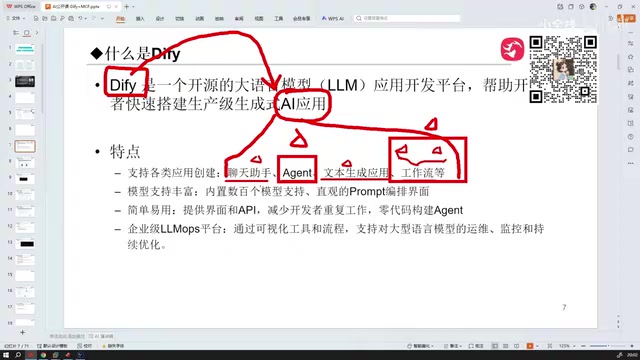
Getting Started with Dify: A Complete Guide to Building Enterprise-Grade AI Apps with Low-Code
A complete guide to Dify, the low-code AI app platform: five app types, multi-model setup, Docker deployment, and enterprise data security. Build LLM-powered workflows and Agents at minimal cost.
Read more →

·3 min
LangChain4j Getting Started Guide: A Java Engineer's Fast Track to AI Application Development
LangChain4j is the AI application development framework built for Java engineers. Integrate DeepSeek, Qwen, and more into Spring Boot — no Python required.
Read more →