#multimodal AI diagnosis
57 related articles

·2 min
Google's AMIE Achieves Real-Time Video Consultations: AI Medical Diagnosis Enters the Multimodal Era
Google's medical AI system AMIE demonstrates real-time video consultation capabilities in simulated clinical settings, enabling observe-ask-reason multimodal diagnosis. A deep dive into its breakthroughs and challenges.
Read more →

·4 min
Machine Learning Roadmap: A Complete 85-Day Plan from Zero to Mastery
A structured 85-day machine learning roadmap covering regression, classification, unsupervised learning, neural networks, reinforcement learning, NLP, Transformers, and more with detailed time planning.
Read more →
·3 min
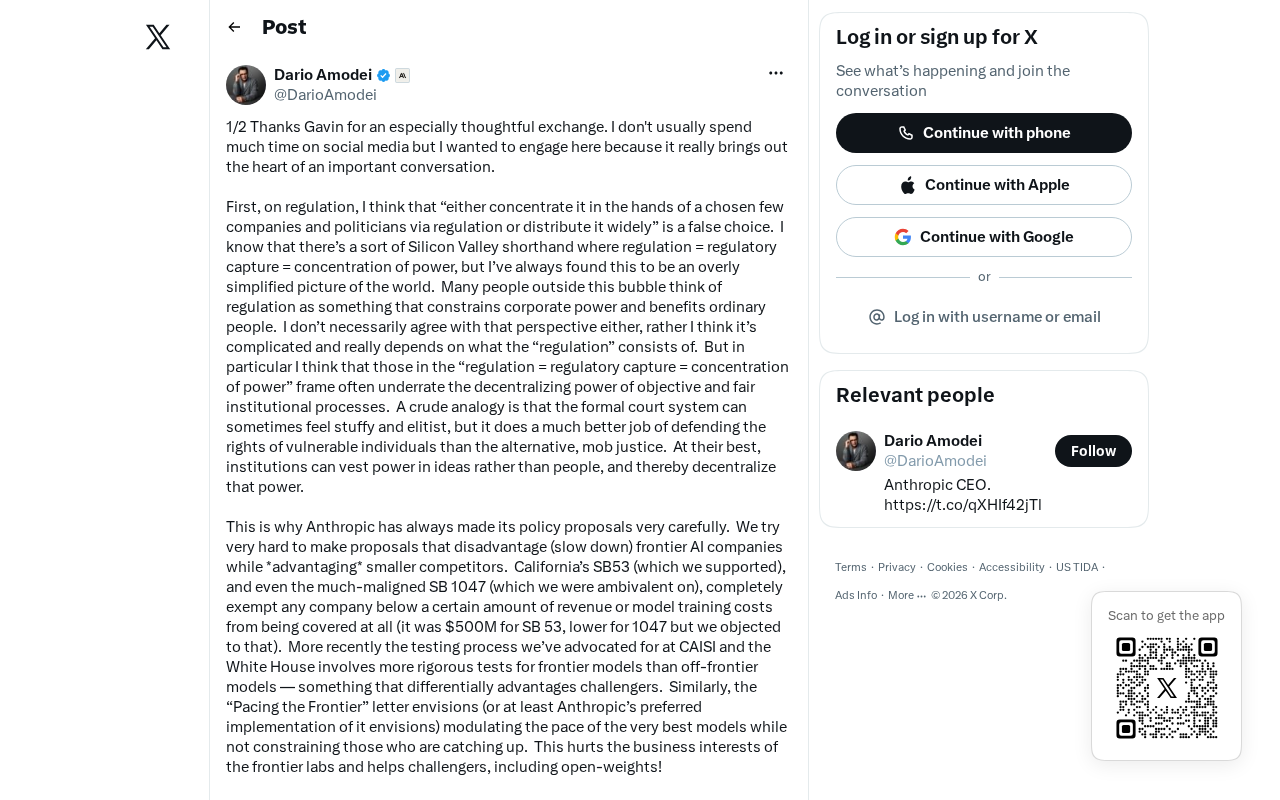
The AI Regulation Battle: Power Dynamics Behind Technical Narratives and Regulatory Capture
In-depth analysis of AI regulation controversies: from technical narrative shaping and regulatory capture risks to open-source dilemmas, exploring rational paths between innovation and safety.
Read more →

·4 min
What Is an AI Agent? A Complete Guide to Core Architecture and Enterprise Implementation Challenges
A deep dive into AI Agent concepts, LLM-based architecture (perception, brain, action), four core components and their maturity levels, plus the key differences between chatbots, AI assistants, and agents.
Read more →

·4 min
Fei-Fei Li on AI: Visual Intelligence, the Boundaries of Creativity, and Human Agency
Stanford professor Fei-Fei Li discusses AI and visual science on Huberman Lab, explaining how ImageNet ignited modern AI, AI's capability boundaries, healthcare applications, and why human agency is the central question in AI development.
Read more →

·2 min
HookLens: AI-Powered Root Cause Analysis Tool for Webhook Failures
HookLens is a developer tool for real-time Webhook monitoring and AI root cause analysis, using Google Gemini to turn cryptic JSON payloads into clear failure explanations and code-ready fixes for Stripe, Shopify, and more.
Read more →

·4 min
Muse Glimmer Local Testing: Meta's Open-Source 30B Multimodal Model Runs on a Single GPU
Meta releases Muse Glimmer, a 30B open-source multimodal model running on a single 24GB GPU. Tested at 233 tokens/sec with speculative decoding on RTX 5090, Apache 2.0 licensed with GGUF support.
Read more →

·4 min
AI Giants in a Price War: Gemini, Grok, and DeepSeek Strike on the Same Day — A Golden Era for Developers Begins
Google Gemini 3.7 Flash halves prices, xAI Grok 4.6 tops benchmarks at low cost with Cursor integration, OpenAI launches 14x speed mode, and DeepSeek open-sources its agent framework.
Read more →

·2 min
Vidaya Review: An AI Tool That Quantifies Healthspan Using Wearable Data and DNA
Deep analysis of how Vidaya combines wearable devices, lab results, and DNA data to generate AI-powered Healthspan scores with personalized longevity plans.
Read more →

·2 min
TradingAgents: A Deep Dive into the Multi-Agent LLM Financial Trading Framework
Deep analysis of the TradingAgents open-source project: a multi-agent LLM collaborative framework for financial trading decisions. Explore its architecture, roles, implementation, and limitations.
Read more →

·3 min
How to Choose a Research Direction for Your AI Master's? A Practical Decision Framework for Employment
How should employment-focused AI master's students choose research directions? Analyzing action recognition, EEG image generation, affective computing, and causal inference from a skill transferability perspective.
Read more →

·3 min
Unsloth Teams Up with Thinking Machines: Dynamic 1-bit Quantization Achieves 86% Compression, Running Multimodal LLMs in 270GB
Unsloth and Thinking Machines release dynamic 1-bit GGUF quantization for Inkling, compressing the model from 1.9TB to 270GB (86% reduction) while retaining 74.2% accuracy and adding vision/audio multimodal support.
Read more →

·3 min
Space OCR: A Deep Dive into the Self-Verifying Intelligent OCR Tool
Space OCR is an intelligent OCR tool that self-verifies its answers, supporting structured data extraction from receipts, invoices, and forms with data provenance and auto-validation capabilities.
Read more →

·4 min
A Beginner's Guide to Machine Learning: From Course Selection Confusion to a Systematic Learning Path
Confused by the overwhelming number of ML courses? This guide covers Udemy course evaluation, top free resources, and an actionable beginner learning path.
Read more →

·3 min
Why AI Products Always Fall Short: The Key Is Deletion, Not Creation
jQuery UI creator Paul Bakaus identifies the core quality problem in AI products: it's not insufficient generative power, but a lack of editorial judgment. When AI output density is too high, human aesthetic trade-offs become the key differentiator.
Read more →

·3 min
ChatGPT as Your Home Tech Advisor: How It Helped Me Save $20 a Month
A Reddit user used ChatGPT to diagnose home network issues, discovered the bottleneck was the router not the ISP, and saved $20/month by downgrading their plan. Learn the AI collaboration method.
Read more →

·2 min
How Users Gradually Learn to Trust Gemini: The Shift from Full Supervision to Selective Delegation
Exploring how users evolve trust in Gemini and generative AI—from verifying everything to selective delegation, analyzing trust patterns, key factors, and the trust drift trap.
Read more →

·3 min
The 'Permanent Underclass' of the AI Era: How Ordinary People Can Confront Class Stratification Anxiety
From a Reddit post to Sam Altman's "permanent underclass" concept, a deep analysis of class stratification risks in the AI era and how ordinary people can find their path forward.
Read more →

·3 min
Midjourney's Multi-Industry Expansion: The Cross-Domain Logic Behind Its Move from AI Art to Healthcare and Astrology
Midjourney expands from AI image generation into medical scanning, spas, and astrology apps. Behind the seemingly chaotic diversification lies a clear strategic logic of generative AI's horizontal penetration.
Read more →

·7 min
AI Daily: T-Head Open-Sources SAIL Software Stack at WAIC, Flurry of Large Model Releases
T-Head open-sources AI software stack T-Head SAIL at WAIC to lower the barrier for domestic chip development; Kimi K3 tops the WebDev leaderboard; Qwen 3.8 Max Preview cuts prices aggressively; Moonshot prepares a Hong Kong IPO; and Oracle switches its data center to a fuel cell microgrid.
Read more →