#no-code AI platforms
200 related articles

·7 min
Dify 1.8.0 in Practice: A Complete Guide to Building Enterprise-Grade AI Workflows with Zero Code
An in-depth walkthrough of deploying Dify 1.8.0 and building applications: three-step Docker deployment, five app types compared, and Workflow vs Chatflow use cases—build enterprise AI apps with zero code.
Read more →

·7 min
Getting Started with Dify: A Complete Guide from Local Deployment to Building Enterprise-Grade AI Applications
A detailed guide to Dify, the open-source LLM app development platform, covering its core features and full local deployment via VMware + Ubuntu + aaPanel + Docker. Supports 100+ models like DeepSeek and ChatGPT to build enterprise AI apps fast.
Read more →

·6 min
Getting Started with Dify: A Complete Guide to Deployment, Configuration, and Workflow Practice
A systematic guide to Dify's three deployment methods (Docker/source/online), five application types, and hands-on workflow nodes—covering LLM integration, MySQL config, and app publishing.
Read more →

·4 min
From Claude Code to Claude Tag: How AI Programming Tools Break Out of Engineering Teams
Anthropic's Boris Cherny and Cat Wu discuss how Claude Code expanded from engineering teams company-wide, the Claude Tag platform strategy, and the launch of Claude Fable 5.
Read more →

·7 min
A Complete Guide to LangGraph's Core Concepts: The Framework of Choice for Enterprise Agent Development
An in-depth analysis of LangGraph's core concepts: short-term and long-term storage mechanisms, its differences from LangChain, the MIT open-source license, and private deployment solutions for enterprise Agent development.
Read more →

·4 min
AI Daily Briefing: $60B Cursor Acquisition, GLM-5.2 Open-Sourced, DeepSeek's $7B+ Funding Round
Today's AI headlines: Cursor acquired for $60B in all-stock deal; Zhipu GLM-5.2 open-sourced under MIT; DeepSeek raises $7B+ at $50B valuation; Anthropic reports 27% Agent coding value growth in 7 months.
Read more →
 Industry Insights
·3 min
OpenAI's Internal Codex Usage Surges 56x — AI Coding Is Eating Everything
OpenAI reveals internal Codex usage data: Research up 56x, Customer Support 32x, Engineering 27x, Legal 13x since Nov 2025. AI coding tools are penetrating every department faster than expected.
Read more →

·3 min
Dify Comprehensive Guide: The Open-Source Platform for Building AI Apps Without Code
Deep dive into Dify, the open-source LLM app development platform featuring visual workflow engine, RAG knowledge base, Agent capabilities, hundreds of model integrations, Docker deployment, and comparisons with LangChain, Coze, and FastGPT.
Read more →

·3 min
The Complete Guide to Building Dify Workflows: A Hands-On Guide to No-Code AI Applications
Complete guide to Dify's five app types, Docker deployment for v1.8.0, and workflow building. Compare Dify vs Coze and learn to build enterprise AI apps with no code.
Read more →

·3 min
Deep Dive into Codex Record and Replay: Generate Automation Skills Just by Screen Recording
Deep dive into OpenAI Codex's Record and Replay feature: generate reusable automation Skills through screen recording demos. Covers workflow, skill invocation, RPA comparison, and real-world use cases.
Read more →

·3 min
The Complete Evolution of Codex: From Coding Tool to All-in-One AI Workstation
Deep dive into OpenAI Codex's evolution from coding agent to all-in-one AI workstation, covering computer use, visual annotations, memory, CodexSites deployment, and more.
Read more →

·3 min
How Is Codex Different from ChatGPT? Breaking Down the Core Differences of the AI Coding Agent
Compare OpenAI Codex vs ChatGPT: ChatGPT handles Q&A while Codex acts as an AI coding agent that autonomously writes code, fixes bugs, and runs tests.
Read more →

·4 min
7-Step Framework for Deploying Commercial AI Agents: From Requirements to Production
A detailed 7-step guide to building commercial AI Agents, covering requirements, platform selection (Coze/Dify/FastGPT), prompt engineering, databases, UI, testing, and deployment.
Read more →

·2 min
Deep Dive into n8n Workflow Platform: Core Capabilities and Suitability Assessment for China
Deep dive into n8n's core capabilities including 500+ nodes, AI Agent building, and RAG integration, with an objective analysis of its limitations and suitability for use in China.
Read more →

·3 min
Claude Cowork vs Codex: An In-Depth Multi-Dimensional Comparison
In-depth comparison of Claude Cowork and OpenAI Codex across UI, integrations, automation, design, and pricing to help you choose the best AI Agent tool.
Read more →

·3 min
Trae IDE in Practice: Building a Student Management System from Scratch with AI Conversational Programming
A detailed walkthrough of using ByteDance's Trae IDE to build a student management system from scratch through hand-drawn prototypes and AI conversation, covering page generation and code analysis.
Read more →

·2 min
A Complete Guide for Solo Developers to Build Profitable Apps from Scratch Using AI Tools
A solo developer used Vibe Coding to build an AI app earning $1,400/month in 23 days. Learn how to find validated ideas, choose tools, build MVPs fast, and generate recurring income.
Read more →

·3 min
Build an App in 30 Minutes with Zero Code: A Complete Hands-On Walkthrough Using the AI Tool Tusi
Build a fully installable mobile app in 30 minutes with zero code using AI tool Tusi. A complete walkthrough from requirements to finished product, showing how AI shifts app development from coding skills to clear communication.
Read more →
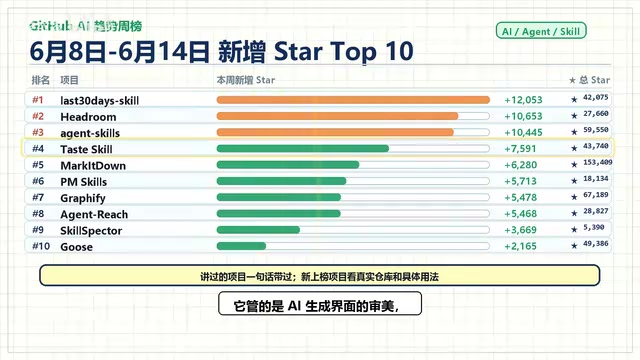
·4 min
GitHub AI Weekly: Agent Ecosystem Support Tools Explode onto the Scene
June 2026 GitHub AI trends: Agent ecosystem middleware tools surge — PM Skills, Agent Reach, Graphify, and Skill Spectre signal the Agent middleware era.
Read more →

·2 min
Generate a Game with One Sentence: Hands-On Review of AI Coding Tools — No Experience Required
Hands-on review of AI coding tools: generate a complete mini-game in one minute with a single sentence. Supports iterative refinement via natural language. Exploring zero-code development trends.
Read more →