#quality gate LLM
1122 related articles

·2 min
Quantifying LLM Output Quality with Pydantic Evals and Integrating It into CI Quality Gates
Learn how to build an LLM evaluation system with Pydantic AI and Amazon Bedrock — turning fuzzy AI output quality into automated, CI-enforceable engineering metrics.
Read more →

·3 min
From Web Developer to AI Engineer: A Pragmatic Career Transition Roadmap
A pragmatic roadmap for web developers transitioning to AI engineering—from solidifying math foundations and mastering Transformers to hands-on fine-tuning and deployment.
Read more →

·3 min
The Truth About Free Cloud LLMs: The Business Logic Behind the Free Tier
Why do AI platforms offer free cloud LLMs? A deep dive into the business logic of customer acquisition, vendor subsidies, and data exchange behind free models, plus hidden restrictions to watch for.
Read more →

·4 min
Claude Opus 5 Prompt Guide: 6 Key Changes and Practical Optimization Tips
Based on Anthropic's official Claude Opus 5 prompting guide, covering 6 practical tips: verbosity control, over-verification traps, effort levels, sub-agent delegation, and more.
Read more →

·3 min
Speko: A Unified Routing Platform for Voice AI — Building the OpenRouter for Speech
Speko, a YC S26 startup, positions itself as the OpenRouter for voice AI. Its unified API aggregates multiple speech providers for STT, TTS, and more, reducing integration costs and vendor lock-in.
Read more →

·3 min
AI Agent in Practice: Building an Automated Interior Design Rendering Workflow with Coze
Step-by-step guide to building an AI Agent workflow on Coze that auto-generates interior design renderings from floor plans, covering node setup, prompts, and fault tolerance.
Read more →

·2 min
Qwen3.8 27B Scores 52 Points: How a Mid-Size Open-Source Model Is Rewriting the Performance Landscape
Alibaba's Qwen3.8 27B scores 52 on Artificial Analysis, rivaling flagship models with just 27B parameters. Explore its performance, local deployment advantages, and impact on the open-source model landscape.
Read more →

·3 min
Gemini Responses Starting with "Sff": When AI's Internal Reasoning Accidentally Leaks
Google Gemini unexpectedly displays "Sff" and internal reasoning text in responses. This article explains the technical causes, including chain-of-thought leaks and delimiter parsing failures.
Read more →

·3 min
Harness Multi-Agent Framework: A Deep Dive into Planner→Builder→Evaluator Three-Agent Collaboration
Deep dive into the Harness multi-agent framework's three-agent paradigm (Planner, Builder, Evaluator), covering Agent Loop design, circular invocation prevention, Sandbox isolation, and A2A vs SubAgent selection strategies.
Read more →

·2 min
4 Core Skills More Valuable Than Writing Code in the AI Era
When AI can efficiently write code, where does a developer's competitive edge lie? This article breaks down 4 skills more valuable than coding in the AI era.
Read more →

·3 min
Building an AI Agent into Your Custom CRM: How to Pick the Most Practical First Feature
When building an AI-native CRM, what should the first AI Agent feature be? This guide recommends Lead Triage & Enrichment as the best starting point, with practical architecture advice.
Read more →

·2 min
Bill Gates: The Turbulent AI Era Has Arrived
Bill Gates declares the turbulent AI era has arrived. This article analyzes why he chose "turbulent," its implications for individuals and businesses, and how to stay competitive amid AI transformation.
Read more →
·2 min
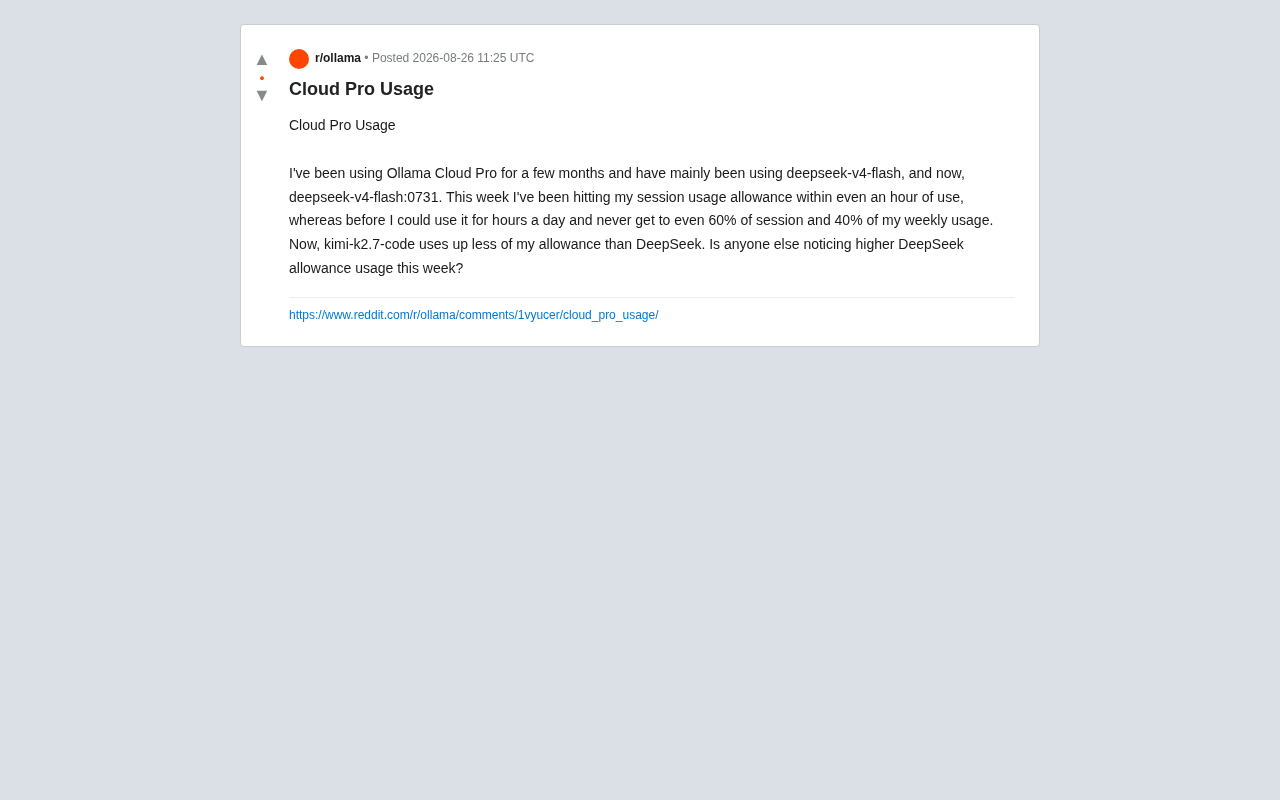
Ollama Cloud Pro Unusual Usage Depletion: In-Depth Analysis of DeepSeek's Sudden Usage Spike
Ollama Cloud Pro users report DeepSeek model usage spiking suddenly, hitting limits within an hour. We analyze token billing, model versioning, and billing weight changes, plus offer optimization tips.
Read more →

·3 min
Run Multiple Open-Source OCR Models via a Unified API: 100K Pages for Just $60
VLM.run wraps open-source OCR models like DeepSeek-OCR-2, GLM-OCR, and dots.mocr into a unified OpenAI-compatible API. Parse 100K pages for just $60 with JSON output and MCP server support.
Read more →

·2 min
DeepSeek API Pricing Adjustments Explained: A New Option for Developer Cost Optimization
In-depth analysis of DeepSeek's latest API pricing strategy, covering context caching, price comparisons with GPT-4 and Claude, the LLM API price war, and developer recommendations.
Read more →

·3 min
Cursor Auto Pricing Adjustment Explained: Is Per-Model Pricing a Hike or a Discount?
Cursor announces Auto mode pricing shift from flat rate to per-model billing with increased plan limits. We break down the real impact for light and heavy users.
Read more →

·2 min
Why Developers Miss the Old Claude Code: The Experience Regression Problem in AI Programming Tools
Why do developers miss the old Claude Code? This article analyzes experience regression in rapid AI tool iteration, covering model drift, workflow disruption, and strategies for vendors and developers.
Read more →

·2 min
OpenAI Launches Limited-Time Price Cut for GPT-5.6 Sol: AI Model Price War Intensifies
OpenAI launches a limited-time price cut for GPT-5.6 Sol, sparking developer community debate. Analysis of the competitive logic, developer ecosystem impact, and future of AI model pricing wars.
Read more →

·2 min
Gemini 3.7 Flash Deep Dive: Major Upgrades in Coding, Debugging, and Agent Capabilities
Deep dive into Google Gemini 3.7 Flash: enhanced coding and debugging, more stable multi-step agent execution, and high-fidelity design-to-code generation for developers.
Read more →

·3 min
The Small Model RAG Trap: Why Retrieval Quality Becomes a Make-or-Break Factor
After migrating from GPT-4 to open-source small models, RAG retrieval quality issues are dramatically amplified. Learn production-grade strategies including hybrid retrieval, reranking, and corrective retrieval.
Read more →