#test harness AI
341 related articles
 Expert Opinions
·2 min
Token Maxing: YC CEO's Methodology for Achieving 400x Programming Efficiency with AI
YC CEO Gary Tan returned to coding after 13 years using Token Maxing with Claude Code, completing a $4M project in 5 days. Detailed breakdown of his 15 parallel agents, Plan-Eng-Review skills framework, and G-Stack open-source workflow.
Read more →
 Tutorials
·1 min
Harness Engineering Implementation Guide: Managing AI Like an Employee — Six Core Modules Explained
Deep dive into Harness Engineering's six core modules: Rule, Skill, Subagent, Workflow, Scripts, and MCP — explained through workplace analogies for AI engineering collaboration.
Read more →
 Product Reviews
·2 min
Google AntiGravity 2.0 In-Depth Review: Desktop App, Go-Rewritten CLI, and Gemini 3.5 Flash Hands-On
In-depth analysis of Google I/O 2026's AntiGravity 2.0 desktop app, Go-rewritten CLI, and Gemini 3.5 Flash model. Covers multi-agent workflow testing, benchmarks, and competition with Claude Code/Cursor.
Read more →
 Deep Dives
·1 min
Harness Engineering Explained: The Underlying Principles and Practical Methods for Controlling AI Agents
Deep dive into Harness Engineering: controlling AI Agents through rules, tool configuration, and workflow design, plus feedback mechanisms and Lifelong AI Agent practices.
Read more →
 Deep Dives
·2 min
Harness Engineering Explained: The Third Paradigm Shift in AI Engineering
Deep dive into Harness Engineering: the evolution from Prompt Engineering to Context Engineering to Harness Engineering, comparing Anthropic and OpenAI's different approaches to AI Agent development.
Read more →
 Tutorials
·1 min
Archon Deep Dive: A Practical Guide to the Open-Source AI Coding Harness Builder
Deep dive into Archon, the open-source AI coding Harness builder. Learn how orchestrating multiple AI coding Agents can boost PR acceptance rates from 6.7% to 70% through systematic AI programming engineering.
Read more →
 Tech Frontiers
·2 min
Sam Altman and Jony Ive Merge IO into OpenAI: A New Era of AI-Native Hardware
OpenAI CEO Sam Altman and former Apple design chief Jony Ive announce IO's merger with OpenAI to build AI-native hardware. Altman calls it "the coolest tech product ever," aiming to democratize AI.
Read more →
 Tech Frontiers
·2 min
OpenAI Merges with Jony Ive's io Company: Redefining the Future of AI Hardware
OpenAI merges with Jony Ive's hardware company io to create a new AI device beyond the iPhone. Altman calls it "the coolest tech product ever made," marking AI's leap from software to new hardware.
Read more →
 Tutorials
·2 min
Harness AI Engineering Programming: A Practical Guide from Prompts to Mastering Engineering
Deep dive into Harness Engineering methodology covering the three-stage evolution from prompt engineering to context engineering to AI Agent mastery, with enterprise e-commerce project examples.
Read more →
 Tutorials
·2 min
Harness AI Engineering Programming: A Practical Guide to Building Enterprise-Grade Projects with Claude Code
A deep dive into the Harness AI Engineering Programming framework — how to use Claude Code with VS Code for enterprise-grade development, covering architecture, task decomposition, and quality gates.
Read more →
 Tech Frontiers
·2 min
Qwen3.7 Max Deep Dive: 1T Parameter MoE Architecture with Full Agent Framework Compatibility
Deep analysis of Alibaba's Qwen3.7 Max: 1T-parameter MoE architecture, 256K context window, leading agent programming capabilities, full framework compatibility, and the model-vs-harness industry debate.
Read more →
 Deep Dives
·1 min
Harness Engineering Explained: Core Methodology and Implementation Guide for Industrializing AI Agents
Deep dive into Harness Engineering methodology: Agent=Model+Harness formula, the Prompt→Context→Harness evolution path, and a developer implementation guide.
Read more →
 Tutorials
·2 min
Harness Engineering Explained: A Guide to Building a Four-Step Closed-Loop AI Agent Work System
A deep dive into the Harness Engineering four-step closed-loop principle (Goal, Action, Verification, Memory), clarifying its relationship with Prompt Engineering, Context Engineering, and MCP.
Read more →
 Expert Opinions
·2 min
In the Age of AI Coding, Is It Still Worth Learning to Program?
When AI writes code faster than most engineers, should ordinary people still learn to program? A veteran developer analyzes how coding skills become the lever for harnessing AI productivity.
Read more →
 Deep Dives
·3 min
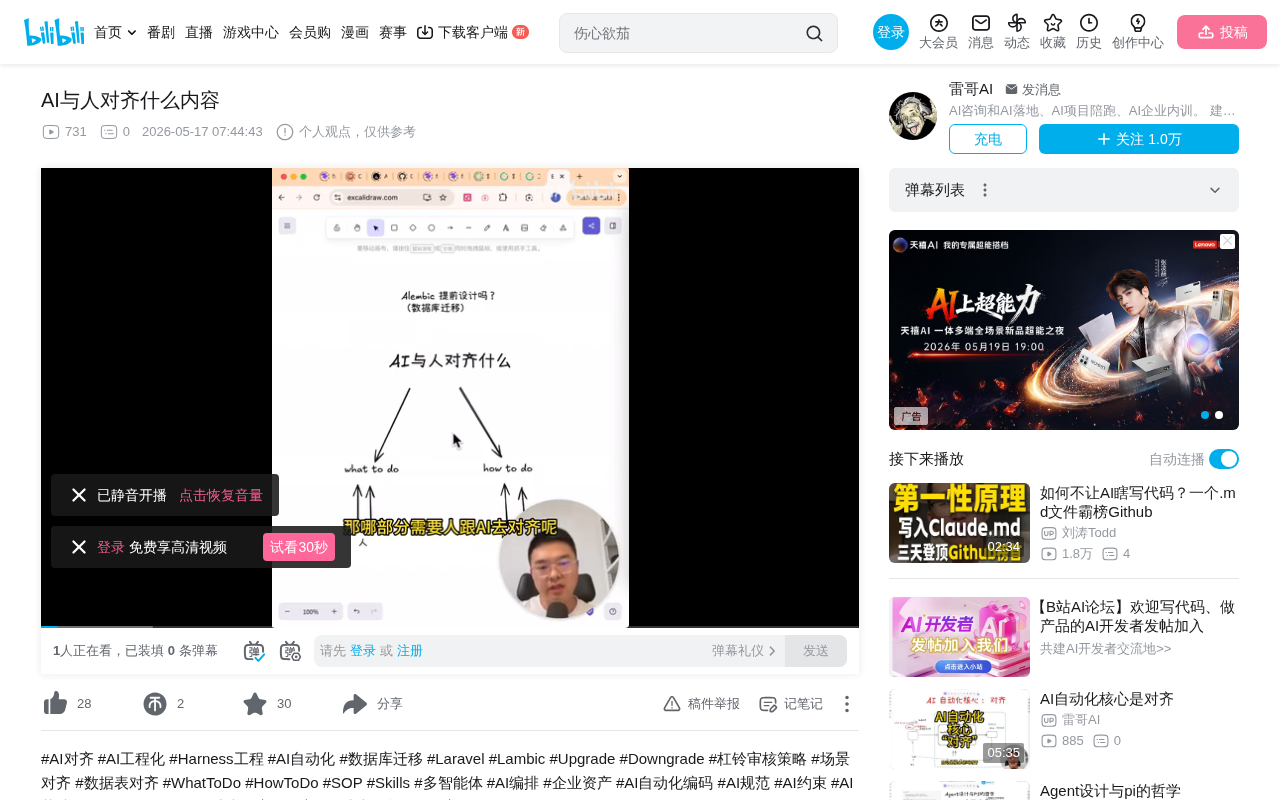
The Essence of AI Alignment: Aligning What to Do, Not How to Do It
The core of AI alignment is aligning What to do, not How to do. Through an Alembic database migration case, learn how Harness engineering crystallizes dev standards into reusable assets for automated programming.
Read more →
 Tutorials
·4 min
Harness Engineering in Practice: A Three-Layer Architecture for Taming AI Agent Development
A detailed guide to Harness Engineering's three-layer architecture for controlling AI Agent code generation quality, covering the Information, Constraint, and Automation layers with practical setup and pitfall avoidance tips.
Read more →
 Tech Frontiers
·3 min
GPT Image 2 Generates APP Interfaces from Scratch — A Paradigm Revolution in AI Front-End Development
GPT Image 2 generates flawless text and photorealistic APP interfaces from scratch. Combined with Codex, AI front-end development enters a paradigm revolution. Coverage includes Amap's ABOT, LLM interpretability breakthroughs, and Huang's TPU rebuttal.
Read more →
 Deep Dives
·3 min
The Truth About AI Writing Code: Can It Actually Program? A Complete Breakdown
Can AI really program? This article explains how LLMs generate code through massive training and pattern matching, and analyzes the true capabilities and limitations of AI coding tools.
Read more →
 Research
·4 min
Continual Harness: AI Automatically Builds Scaffolding to Beat Pokémon RPGs
Princeton and Google DeepMind propose Continual Harness, enabling LLM agents to automatically build and optimize scaffolding to beat multiple Pokémon RPGs without human intervention, cutting costs by 40%.
Read more →
 Deep Dives
·4 min
Five Core Concepts of AI Programming: A Complete Guide from Prompt to Harness Engineering
A clear breakdown of five core AI programming concepts — Prompt Engineering, Context Engineering, Agent, Skill, and Harness Engineering — with real-world use cases and advice for indie developers.
Read more →