#ATS alternative
510 related articles

·3 min
Lumichats Desktop: A Claude Code Alternative Without the Terminal
Lumichats Desktop is an AI coding tool for non-technical users, offering local file operations and command execution through a GUI—no terminal required.
Read more →
·4 min
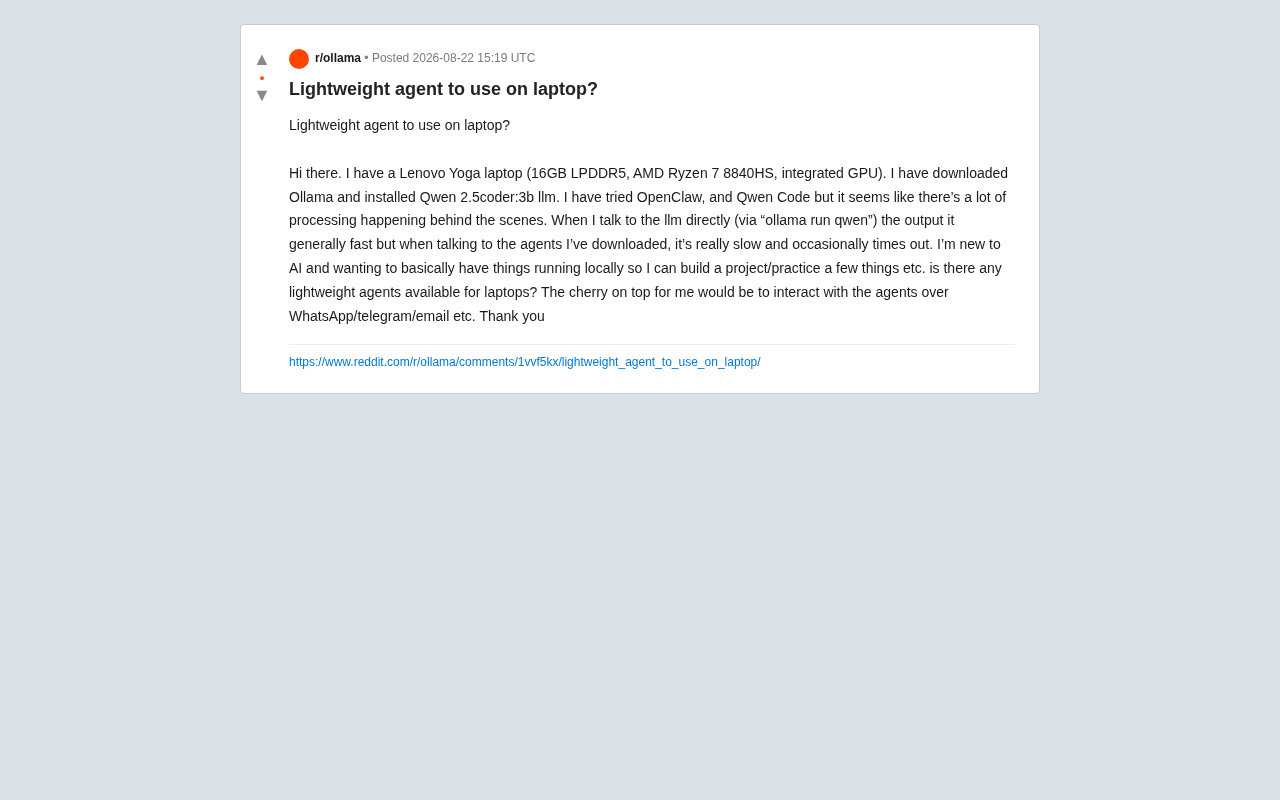
Local AI Agent Deployment Too Slow? A Lightweight Optimization Practical Guide
Local AI Agent deployment slow and timing out? This guide covers Agent framework overhead, hardware bottlenecks, and practical optimizations including context trimming, quantization, and Telegram Bot integration.
Read more →
·2 min
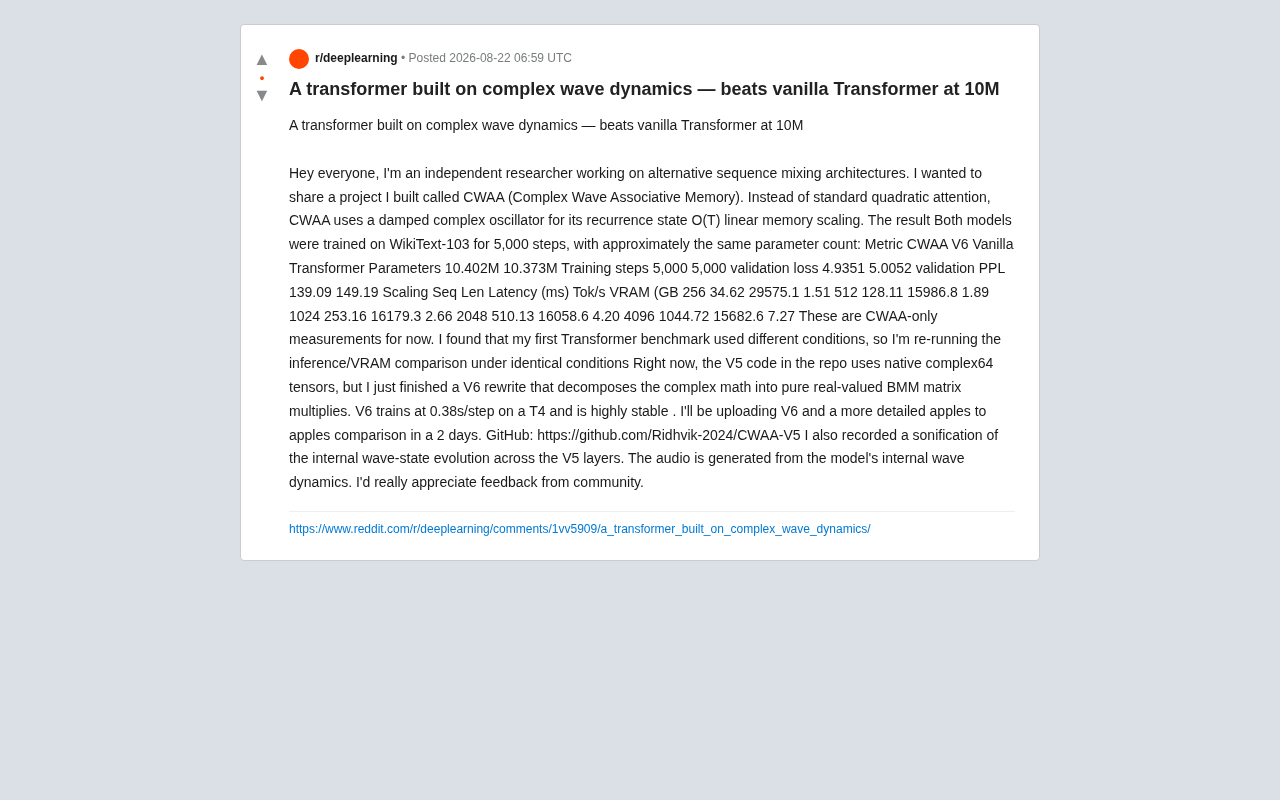
CWAA Architecture Explained: Replacing Transformer Attention with Complex Wave Dynamics
Deep dive into CWAA (Complex Wave Associative Memory), an architecture replacing Transformer self-attention with damped complex oscillators. At 10M parameters, it shows ~7% better perplexity with O(T) linear memory scaling.
Read more →

·3 min
Cursor Acquisition Rumors: Why Developers Are Anxious About the Future of AI Tools
Reddit community debates Cursor's rumored SpaceX acquisition. Developers worry about AI coding tool independence. Analysis of acquisition anxiety and practical advice.
Read more →

·3 min
Chatterbox-Nano: A Fully Local, Open-Source Browser TTS Extension
Chatterbox-Nano is a local-first, open-source browser TTS extension for Firefox and Chrome. Text never leaves your machine, runs on CPU, with Voice Lab for custom voices.
Read more →

·2 min
Muse: A Local AI-Powered Visual Bookmark Manager for Mac — $29 One-Time Purchase, No Subscription
Muse is a Mac AI visual bookmark manager that collects images, screenshots, links & videos with on-device AI auto-tagging, local storage for privacy, and a $29 one-time purchase with 30-day free trial.
Read more →

·3 min
Even Nvidia Is in the Game: The AI Open-Source Race Enters the Full-Stack Era
Nvidia transforms from AI chip supplier to full-stack player, actively joining open-source model competitions. Deep analysis of ecosystem lock-in strategy, intensifying competition, and implications for the AI landscape.
Read more →

·4 min
Deep Dive into Cursor Origin: Why an AI Editor Is Building a Code Hosting Platform
Cursor launches Origin, a Git platform for the Agent era. Deep analysis of strategic intent, technical architecture, security audit mechanisms, and competition with GitHub, with practical migration advice.
Read more →

·3 min
Is Claude Opus 5 Worth the Upgrade? A Three-Question Framework to Help You Decide
Claude Opus 5 offers doubled capabilities at unchanged pricing, with 2x Frontier-Bench scores. Use our Three-Question Framework to decide which tasks deserve Opus 5 and which don't.
Read more →

·3 min
Entropic Scree: Reconstructing PCA Dimensionality Reduction by Replacing Variance with Information Entropy
Entropic Scree is a new information-theory-based dimensionality reduction method that replaces linear variance with entropy to estimate intrinsic data dimensions, with applications in neural network bottleneck design.
Read more →

·2 min
Codex on AWS Bedrock Billing Bug: Why Bills Are Surging 10x and How to Respond
AWS Bedrock Codex model calls show severe billing anomalies with 10x bill surges. Analysis of token metering errors, retry duplicate charges, and practical prevention tips.
Read more →

·2 min
Training AI Models on Google Colab: Capability Boundaries & Practical Guide
An in-depth analysis of Google Colab's real capabilities for AI model training, covering free vs Pro GPU differences, model size limits, LoRA fine-tuning, and local+cloud workflow best practices.
Read more →

·2 min
Claude Opus 5 Real-World Test: 3 Enterprise-Level Full-Stack Projects Completed in One Shot
Real-world testing of Claude Opus 5 across three enterprise full-stack projects: student management, vocabulary app, and logistics system with RPC permissions, maps, and middleware integration.
Read more →

·2 min
Shape: A Deep Dive into the Agentic IDE That Unifies Design and Code
Shape is an agentic IDE for designers and programmers, unifying design, coding, Git, and AI chat in one desktop app. A deep dive into its features, positioning, and challenges.
Read more →

·4 min
Fei-Fei Li on AI: Visual Intelligence, the Boundaries of Creativity, and Human Agency
Stanford professor Fei-Fei Li discusses AI and visual science on Huberman Lab, explaining how ImageNet ignited modern AI, AI's capability boundaries, healthcare applications, and why human agency is the central question in AI development.
Read more →

·3 min
GitHub Daily · August 20: Mojo Tops the Charts & The Local-First Open Source Rebellion
GitHub Trending Aug 20: Mojo tops charts for AI compute stack ambitions, OpenLogi surges 1225 stars with local-first philosophy, and privacy rebellion dominates.
Read more →

·2 min
Why Data Centers Can't Live Without Diesel Generators: The Core Logic of Backup Power
An in-depth analysis of why data centers depend on diesel generators, covering UPS-to-diesel relay mechanisms, fast-start technology, redundancy strategies, and sustainable alternatives.
Read more →

·3 min
Cursor's Default Switch to Grok Sparks Controversy: Model Transparency Becomes Trust Focal Point for AI Coding Tools
Cursor users discover the IDE silently switches to Grok without clear model labeling, showing only "quality" and "speed" tags, sparking debate on AI coding tool transparency and trust.
Read more →

·4 min
Why Are AI Coding Assistants So Expensive? The Real Bill Behind the Harness
Deep dive into the hidden cost structure of AI coding assistants like Claude Code, Cursor, and Cline — revealing how system prompts, Agent round trips, and Prompt Caching impact your bill.
Read more →

·2 min
Local AI Code Review Tools: How Developers Build Their Own Alternatives to Save on Subscription Fees
A developer canceled their commercial AI code review subscription and built a free local alternative. This article analyzes privacy benefits, cost savings, and feasibility of local AI code review tools.
Read more →