#Apple Silicon GPU acceleration
84 related articles

·3 min
ShogunAI: A Deep Dive into the Personal AGI Assistant Running on Your Local PC
ShogunAI is a personal AGI assistant running locally on Mac, building a work state engine from your contacts, projects, and commitments. Deep dive into its local-first, evidence-backed design.
Read more →

·3 min
Local: A Privacy-First AI Tool That Runs Entirely on Your Mac — No Internet Required
Local is a free macOS app that runs AI entirely on your Mac — no accounts, no internet needed. It supports chat, coding agents, and meeting notes with up to 5.4x performance gains.
Read more →
·3 min
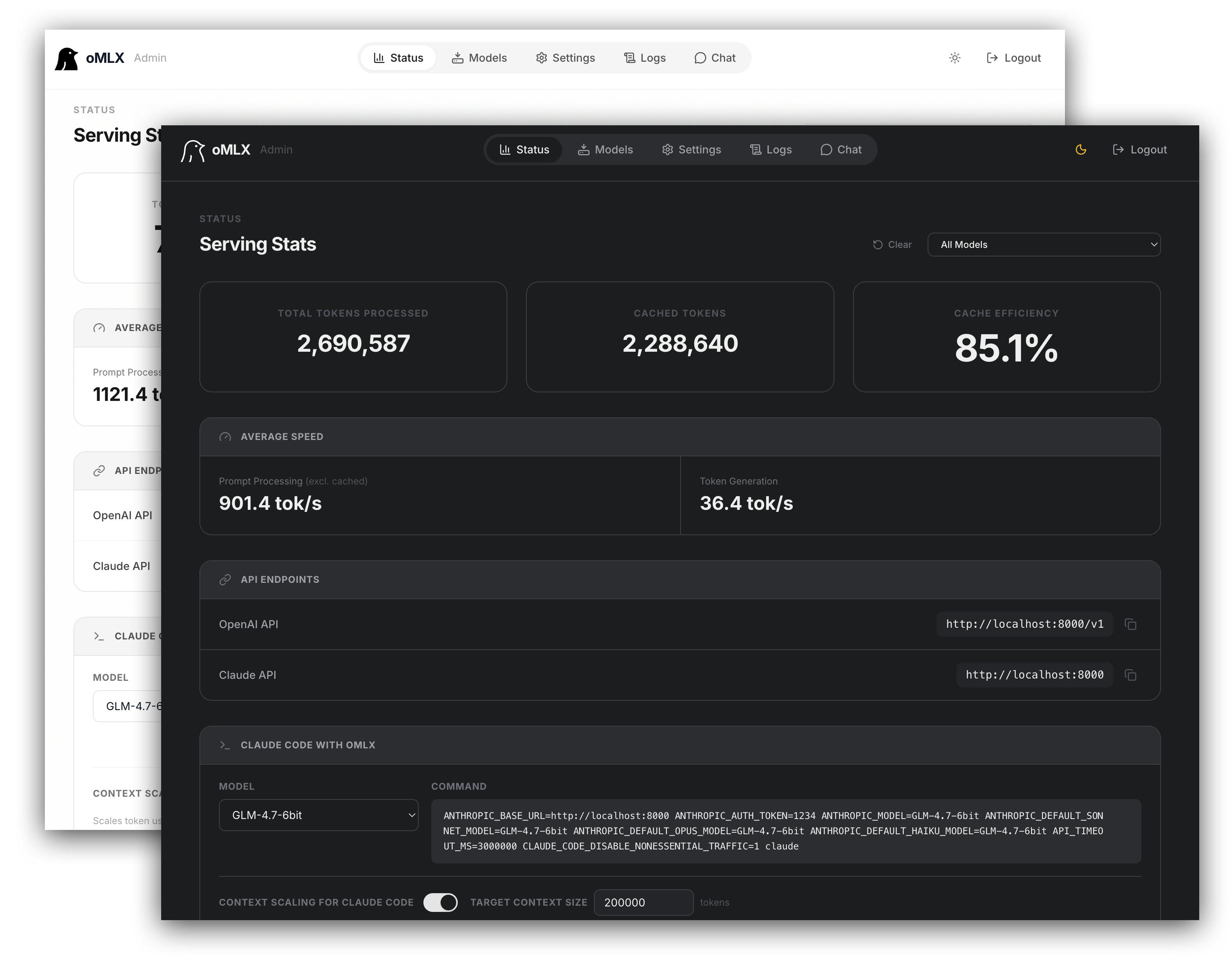
oMLX: Turn Your Mac into a Local LLM Server with AI Agent Responses 18x Faster
oMLX is an open-source tool that turns your Mac into a local LLM server, cutting AI agent response times from 90s to 5s using continuous batching and tiered KV caching. Supports OpenAI and Anthropic APIs.
Read more →

·3 min
Is There a Glass Ceiling in AI R&D Without a Ph.D.?
Can you go all the way in AI R&D without a Ph.D.? This article analyzes the glass ceiling for master's-level engineers in CV and AI, the IC track, and whether a doctorate is worth the cost.
Read more →

·3 min
Guide to Locally Deploying Vision Models on M4 Pro 64GB: Model Selection & Tool Recommendations
How to choose local vision language models on M4 Pro 64GB? Compare Qwen2.5-VL, Llama 3.2 Vision, and more, with tool recommendations for Ollama, LM Studio, and MLX.
Read more →

·3 min
Multi-Harness Integration in Practice: Striking the Balance Between Local and Cloud Inference
Exploring multi-harness integration for AI coding tools, analyzing tradeoffs between local and cloud inference, covering Ollama cloud, M5 Max bottlenecks, overnight mode design, and hybrid strategies.
Read more →

·3 min
StemDeck: A Detailed Look at the Free, Open-Source, Local AI Stem Separation Tool
An in-depth look at StemDeck, a free open-source local AI stem separation tool covering features, use cases, technical principles, and comparisons with cloud solutions.
Read more →

·3 min
Running Qwen 27B Locally on Mac Studio: Real-World Performance Tests & Deployment Guide
Developer benchmarks Qwen 27B on Mac Studio, covering unified memory advantages, quantization strategies, real tokens/s performance, and cost vs. privacy trade-offs for local LLM deployment.
Read more →

·4 min
Breakthroughs in Domestic Computing SuperNodes and the Open-Source Wave of AI Large Models: A Comprehensive Analysis
In-depth analysis of China's computing power SuperNode breakthroughs, multimodal open-source models, $600B data center investments, AI-native apps, and regulatory developments.
Read more →

·3 min
Running TensorFlow on M1 MacBook: Is GPU Acceleration Worth Enabling?
Guide to TensorFlow GPU acceleration on Apple M1 MacBook: tensorflow-metal setup, performance scenarios, compatibility issues, and beginner recommendations.
Read more →

·2 min
NobodyWho Open-Source Inference Engine: A Multi-Platform SDK for Running LLMs Locally
NobodyWho is an open-source on-device inference engine built on llama.cpp, supporting Swift, Kotlin, Flutter, React Native, Python, and Godot with tool calling, multimodal, voice, and GPU acceleration.
Read more →

·3 min
Complete Guide to Building a Local AI Inference Platform at Home with Salvaged Hardware
A detailed guide on building a local AI inference platform with salvaged hardware, covering hardware selection, VRAM needs, inference frameworks (llama.cpp/Ollama), and model quantization.
Read more →

·2 min
Can't Load BailingMoE3 Architecture? llama.cpp Compatibility Issues and Solutions
Ling 3.0 Flash uses the new BailingMoE3 architecture that stock llama.cpp can't load. This article explains why and covers fork compilation and upstream PR progress.
Read more →

·3 min
Choosing a Laptop for AI Studies: MacBook vs NVIDIA Laptop — An In-Depth Comparison Guide
In-depth analysis for AI students choosing laptops: MacBook Air M5 with remote GPU vs NVIDIA laptop, comparing CUDA support, portability, battery life, and value.
Read more →

·3 min
Meta Open-Sources 30B Model Muse Glimmer: A Practical Breakdown of Running a Local Agent on a Single GPU
Meta's Superintelligence Lab open-sources Muse Glimmer, a 30B multimodal Agent model using 4-bit quantization, hybrid attention, and D-Flash speculative decoding to run on a single consumer GPU like the RTX 4090.
Read more →

·4 min
Qwen3 27B + DeepSeek Harness Real-World Testing: Local Open-Source Agent Performance Evaluation
Real-world testing of Qwen3 27B with DeepSeek Harness agent framework: deployment setup, visual understanding, reasoning intensity comparison, and token consumption data across multimodal tasks.
Read more →

·3 min
llama.cpp GUI Launcher for Linux: Hands-On Review of Two Installation Methods
Hands-on review of the llama.cpp GUI Launcher for Linux, comparing manual compilation vs. Snap installation, covering startup commands, known bugs, and differences from Ollama and LM Studio.
Read more →

·2 min
Supercut: A Local AI Video Editor with Zero Uploads and Zero Sign-ups to Protect Your Privacy
Supercut is a privacy-first local AI video editor where all processing happens on-device. Features natural language editing, auto-zoom screen recording, auto captions, and 40 tools — free to start, no account needed.
Read more →

·3 min
Building an LLM Inference Engine in Rust That Rivals Llama.cpp
Exploring the technical path to building an LLM inference engine in pure Rust that rivals Llama.cpp, analyzing Rust's advantages and challenges in memory safety, SIMD optimization, and GPU backends.
Read more →

·2 min
Modly: An Open-Source Image-to-3D Modeling Tool Running on Your Local GPU
Modly is an open-source desktop app that runs AI models on your local GPU to automatically generate 3D models from images. No cloud APIs needed, ensuring data privacy for game devs, 3D printing fans, and designers.
Read more →