#Cursor multi-agent
374 related articles
 Tech Frontiers
·1 min
Devin Launches Multi-Instance Parallel Mode: AI Programming Evolves from Solo Operations to Army-Scale Collaboration
Devin launches multi-instance parallel mode, letting developers dispatch multiple AI Agents for different tasks simultaneously. Analysis of its impact on development efficiency and how multi-Agent collaboration redefines the developer role.
Read more →
 Product Reviews
·2 min
In-Depth Review of ByteDance's Trae: The Strengths and Limitations of a Free AI-Native IDE
In-depth review of ByteDance's AI-native IDE Trae: analyzing its three-layer engine architecture, Builder Mode, multi-modal code generation, and how it compares to Cursor as a free AI coding tool.
Read more →
 Product Reviews
·2 min
Tollecode: A Local-First AI Coding Agent That Keeps Your Code on Your Machine
Tollecode is a local-first AI coding agent supporting file operations, Shell commands, and sub-agent scheduling. Code stays on your machine with full developer control—ideal for privacy-conscious engineers.
Read more →
 Product Reviews
·2 min
BNA Code: An AI Programming Tool That Builds Full-Stack Mobile Apps with a Single Command
BNA Code is a CLI AI agent tool that uses a dual-Agent architecture to generate complete full-stack mobile apps with auth, database, and APIs from a single terminal command in minutes.
Read more →
 Product Reviews
·2 min
Superset 2.0 Deep Dive: A New IDE for Running Hundreds of AI Coding Agents in Parallel
Deep analysis of Superset 2.0 IDE's core features including multi-agent parallel execution, sandbox isolation, and unified monitoring, exploring AI coding's evolution toward agent orchestration.
Read more →
 Product Reviews
·2 min
Kanwas Open-Source Knowledge Management Tool: Building a Knowledge Base That Serves Both Humans and AI Agents
Kanwas is a free, open-source knowledge management tool that turns your team's knowledge base into shared working memory for both humans and AI Agents.
Read more →
 Industry Insights
·1 min
Karpathy Joins Anthropic: An Industry Shift from Vibe Coding to Agentic Engineering
AI leader Andrej Karpathy officially joins Anthropic's pretraining team, marking his evolution from Vibe Coding to Agentic Engineering and a return to frontier AI research.
Read more →
 Industry Insights
·1 min
Anthropic Releases AI-Native Startup Playbook: A Four-Stage Framework Redefining Entrepreneurship for 2026
Anthropic releases The Founder's Playbook, a guide for AI-native startups with a four-stage framework (Idea, MVP, Launch, Scale) redefining entrepreneurship for 2026.
Read more →
 Tech Frontiers
·2 min
Cursor 2.0 Beginner's Guide: Three AI Interaction Modes & Core Features Explained
Complete guide to Cursor 2.0 AI code editor covering Plan, Agent, Ask modes, Quick Edit, Git version control, MCP extensions, and project rules setup.
Read more →
 Tech Frontiers
·3 min
Top 10 Practical Cursor Tips for 2025: From Agent Mode to Multi-Model Parallel Processing
Deep dive into the top 10 core tips for Cursor's 2025 latest version, covering Agent/Edit modes, custom models, Debug mode, WorkTree multi-Agent parallel processing, MCP, and Rules management.
Read more →
 Tech Frontiers
·2 min
AI Weekly: GPT-6 Codenamed Spud Revealed, Claude Conway Agent, DeepSeek V4 Shifts to Huawei Chips
This week in AI: OpenAI's next-gen base model Spud (GPT-6) targets Spring 2026, Anthropic builds persistent agent Conway, Cursor 3 rebuilds the IDE for agents, DeepSeek V4 runs natively on Huawei chips, and Qwen 3.6 and Gemma 4 lead open-source.
Read more →
 Tech Frontiers
·2 min
VolcEngine Ark Coding Plan Setup Guide: Connecting Claude Code, Cursor, and More
Complete guide to setting up VolcEngine Ark Coding Plan with Claude Code, OpenCode, Trae, and Cursor, including model selection tips and API Key configuration.
Read more →
 Tutorials
·2 min
ACPX in Practice: Scaling AI Agent Deployment on Kubernetes for Automated PR Processing
How to build an automated PR processing system using ACP protocol, ACPX workflow engine, and Kubernetes. From OpenCLO's 60K+ PR challenge to enterprise-grade multi-Agent orchestration.
Read more →
 Product Reviews
·2 min
Replit Agent 3 Deep Dive: The AI Coding Powerhouse That Works 200 Minutes Straight
Deep analysis of Replit Agent 3's multi-agent architecture and browser simulation testing. Compare with GitHub Copilot and Cursor, and see how this AI assistant works 200 minutes straight to help anyone build apps in an hour.
Read more →
 Product Reviews
·2 min
Replit vs Cursor vs PageAgent: Which AI Agent Actually Gets Work Done?
In-depth comparison of Replit Agent 4, Cursor Automations, and PageAgent across positioning, capabilities, pricing, and use cases to find your ideal AI colleague.
Read more →
 Tutorials
·1 min
Multi-Agent Systems in Practice: Five Coordination Patterns That Cut Costs by 85%
Deep dive into five multi-agent coordination patterns: cost routing, context isolation, Agent Swarm, Generator-Verifier, and Smart Friend. Real cases show weekly costs dropping from $700 to $100 with 58% critical bug detection.
Read more →
 Product Reviews
·2 min
PaperClip + Claude Code Multi-Agent Coordinated Development in Practice: Full Workflow Demo of an AI Virtual Team
Hands-on demo of building a multi-Agent development team with PaperClip and Claude Code, featuring Delivery Lead, Frontend/Backend Engineers, QA, and Code Reviewer roles in a full AI-automated development workflow.
Read more →
 Tutorials
·2 min
Practical Guide to Building a Dual-Terminal Skill System with Cursor + Claude Code
A solution for Skill system conflicts in Cursor and Claude Code dual-terminal development using a three-layer directory architecture for Opus and DeepSeek differentiated configuration.
Read more →
 Tech Frontiers
·2 min
Deep Dive into Google AgentGravity 2.0: Dynamic Sub-Agents, SDK, and the Controversial Product Split
Deep analysis of Google AgentGravity 2.0: dynamic sub-agent system, free SDK, project management upgrades, and the controversy over splitting into desktop app, code editor, and CLI tool.
Read more →
 Industry Insights
·2 min
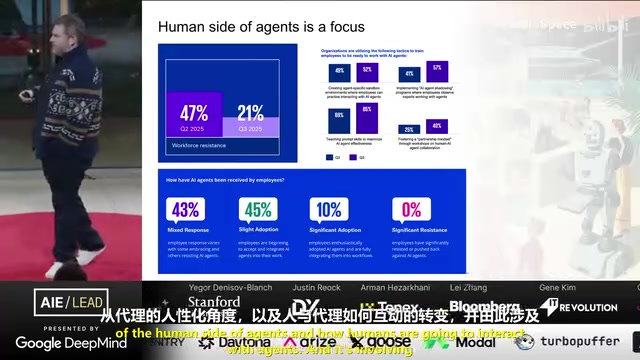
3,500 Enterprise AI Use Cases Reveal: Is AI Investment Actually Worth It?
Survey of 1,000+ enterprises and 3,500 AI use cases reveals: 44% see moderate ROI, 37% see high ROI. AI Agent adoption surged from 11% to 42%. Coding and risk use cases top the charts.
Read more →