#Cursor premium models
165 related articles

·7 min
LangChain.js + Nuxt.js: An AI Full-Stack Advancement Path for Frontend Engineers
Frontend hiring now treats AI capabilities as a core assessment, covering RAG knowledge bases, AI Agent development, and LangChain.js engineering. Learn how LangChain.js + Nuxt.js helps frontend developers build memory- and retrieval-capable AI full-stack apps.
Read more →

·2 min
A Complete Methodology for Upgrading Wireframe Pages to Commercial-Grade Visuals with Cursor
How indie developers can use Cursor and reference pages to upgrade wireframe sites to commercial-grade visuals. A 3-step workflow: extract design prompts, migrate visual specs, and narrow AI instructions.
Read more →

·4 min
Using Codex in China with Zero Barriers: A Complete DeepSeek Alternative Tutorial
No ChatGPT Plus? No problem. Learn how to use Codex in China via Codex++ and DeepSeek API in 5 simple steps — starting for as little as ¥10.
Read more →

·4 min
AI's Impact on the Entry-Level Developer Job Market: Crisis or Opportunity?
Generative AI is reshaping software development, shrinking demand for junior developer roles. This article analyzes why entry-level positions are most at risk, the talent pipeline implications, and how junior developers can leverage AI tools to stay competitive.
Read more →

·4 min
AI-Powered Chrome Extension Monetization: A No-Code Practical Guide
No coding skills? Learn how to build Chrome extensions for global markets using AI — from finding demand and generating code to publishing on the Chrome Store and earning subscription revenue.
Read more →

·3 min
Programmer's Guide to the AI Era: Application Development Is a Real Opportunity for Ordinary Developers
Too hard to become an algorithm engineer? Too basic to just use AI tools? This guide breaks down the three levels of AI adoption for programmers, with a focus on Agent development and large model engineering — including salaries, timelines, and window risks.
Read more →

·3 min
Programmers Pivoting to AI: Opportunities in Application Development and Pitfalls to Avoid
How can ordinary programmers break into AI? This guide breaks down the gap between algorithm engineers and AI app developers, covering Agent development, model fine-tuning, salary trends, and the three hidden risks behind the current opportunity window.
Read more →

·7 min
AI Agent Development: A Four-Stage Competency Model from 15K to 40K RMB Salary Growth Path
A detailed four-stage competency model for AI Agent development: from Python/RAG basics (15K) to workflow orchestration (20K), inference optimization (30K), and Agent cluster governance (40K RMB).
Read more →

·7 min
A New Core Skill for Programmers: How to Effectively Lead Your AI Agent Dev Squad
Coding alone isn't enough anymore. Learn the 5 key steps to commanding AI Agents—define outcomes, split tasks, provide context, iterate small, and keep humans in the loop.
Read more →

·3 min
Cursor Beginner's Guide: Build a Complete Project with AI from Scratch
Build a complete project with AI from scratch! This guide covers Cursor's three chat modes (Agent/Ask/Manual), Claude model selection, and a Python student management system walkthrough.
Read more →

·3 min
Cursor in Action: A Complete Guide to Building Python Projects with AI from Scratch
Learn how to build a Python student management system from scratch using Cursor AI — covering Agent/Ask/Manual modes, Claude model selection, auto error fixing, and environment setup.
Read more →

·3 min
Cursor AI Coding Tool: A Complete Beginner's Guide with Hands-On Tutorial
A complete beginner's guide to Cursor AI: installation, interface, three conversation modes, model selection, and a hands-on demo building a student management system from scratch.
Read more →

·4 min
Three Modes of AI Development: A Complete Guide from Chat to Agent to IDE
A systematic guide to three AI development modes: chat-based, Agent, and AI IDE. Covers model selection, cost comparison, and use cases for beginners.
Read more →

·3 min
Cursor Pay-Per-Use Billing Explained: How Account Pool Scheduling Reduces Usage Costs
Deep analysis of Cursor's low-cost usage solution: clean account pool scheduling, 35% pay-per-use billing, and intelligent quota flow mechanisms to help developers evaluate third-party alternatives.
Read more →
·4 min
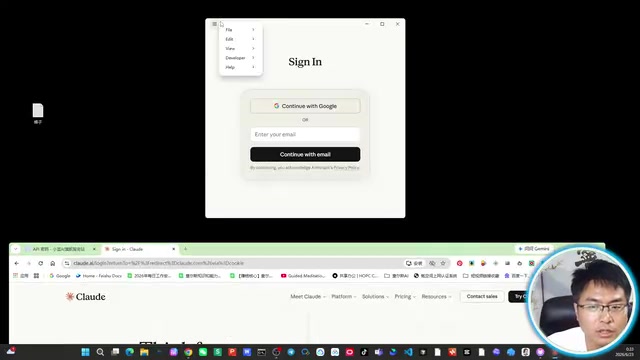
Tutorial: Configuring Claude Code Desktop to Use Third-Party API Proxy Services
Step-by-step guide to configuring Claude Code desktop with third-party API proxy services, including Developer Mode setup, API Key creation, Gateway configuration, and cost control tips.
Read more →

·3 min
Claude Code vs. Codex: A Practical Guide to Enterprise-Grade AI Programming
A deep dive into enterprise AI programming with Claude Code and Codex — from Vibe Coding limitations to SuperPower engineering workflows, model selection, and AI aggregation platforms.
Read more →

·2 min
Zero-Code Development of a Desktop AI Art Review Tool: A Vibe Coding Case Study
A game art director uses Vibe Coding to build Muse AI, a zero-code desktop tool with AI scoring, one-click image generation, and atmosphere presets that dramatically improves art team review efficiency.
Read more →

·4 min
DeepSeek + Resonix: A Low-Cost AI Coding Solution — 150 Million Tokens for Just $1.10
Real-world test: DeepSeek API + Resonix coding tool consumed 150M tokens for just $1.10. Deep dive into DeepSeek pricing, Resonix's 95% cache hit rate, and honest comparison with GPT models.
Read more →

·2 min
Using UU Accelerator to Speed Up Cursor: A Compliant Solution for Stable AI Coding in China
Learn how to use NetEase UU Accelerator to speed up Cursor AI coding tool in China, with step-by-step setup including node selection and launch configuration.
Read more →

·4 min
Deep Dive into a Cursor Discount Renewal Plugin: Is 65%-Off Pay-Per-Use Legit?
Deep analysis of a third-party plugin claiming 65%-off Cursor Pro renewal. We break down its account scheduling architecture, pay-per-use model, and assess compliance risks, data security, and value for developers.
Read more →