#GLM next version
131 related articles

·4 min
ChatGLM Large Model Development Tutorial: From Zero to Enterprise Deployment
Systematically learn ChatGLM large model development, covering Transformer principles, RAG, private deployment, fine-tuning, and Agent development, with a roadmap and hands-on cases.
Read more →

·3 min
Getting Started with LangChain: The Core Framework for LLM Application Development and Its Three Key Components
LangChain is the leading open-source framework for LLM application development, supporting GPT-4, GLM, and other mainstream models. This article dives into its three core concepts: Components, Chains, and Agents.
Read more →

·5 min
GPT-5.6 Three-Model Breakdown: Sol/Terra/Luna Pricing and the Regulatory Dilemma
In-depth analysis of OpenAI's GPT-5.6: Sol, Terra, Luna pricing, Cerebras inference advantages, and how OpenAI and Anthropic navigate government regulation amid US-China AI competition.
Read more →
·5 min
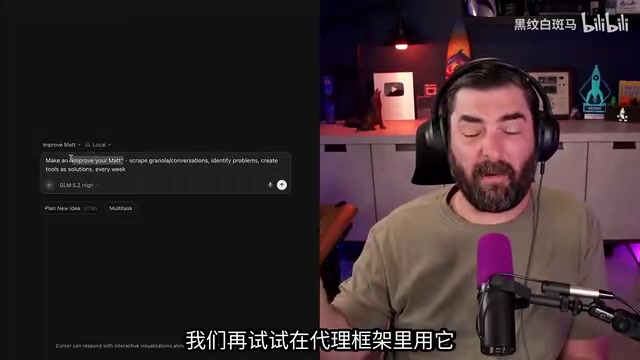
GLM-5.2 Hands-On Review: A 753B-Parameter Open Model That Beats GPT and Claude on Value
In-depth hands-on review of Zhipu AI's flagship GLM-5.2: a 1M-token context window and API pricing just one-fifth of GPT/Claude. Covers website building, Chrome extensions, 3D game cloning, and agentic workflows.
Read more →

·3 min
Zhipu GLM-5.2 Fully Released, AI Regulatory Storm Hits Simultaneously
Zhipu's GLM-5.2 is now fully available to Coding Plan users with long-context support and dual reasoning tiers. Meanwhile, Anthropic faces U.S. export controls and OpenAI is under multi-state investigation.
Read more →

·3 min
GPT-5.6 Deep Dive: Sol Flagship Model Performance, Weaknesses, and Competitive Analysis
Deep dive into GPT-5.6 (Sol/Terra/Luna): one-shot complex coding, agentic workflows, benchmark wins over Claude — but hallucination and vision still lag. Must-read for developers.
Read more →

·4 min
GPT-5.6 Three-Model Deep Dive: Sol, Terra, and Luna Benchmarked and Compared
OpenAI's GPT-5.6 series benchmarked: flagship Sol, balanced Terra, and lightweight Luna tested head-to-head. Agentic tasks rival top models, Luna starts at $1/M tokens. Full comparison with Fable 5 and Opus 4.8.
Read more →

·2 min
Tencent Hunyuan V3 Open-Sourced: Full Breakdown of the 295B MoE Architecture — 256K Context Is Its Biggest Weakness
Tencent open-sources Hunyuan V3: 295B MoE model with 21B active params, claims to beat DeepSeek-V4-Pro. Supports FP8, vLLM/SGLang — but 256K context and no multimodal are key drawbacks.
Read more →

·2 min
GLM-5.2 Spotted in Testing | Claude Fable 5 Launches: 4 Key AI Updates
GLM-5.2 spotted in testing, Anthropic launches Claude Fable 5, Moore Threads open-sources MusaCoder for domestic GPUs, and Google releases Gemini real-time translation.
Read more →

·2 min
Claude Sonnet 5 Leaked, Zhipu Hits HK$1 Trillion Market Cap: AI Industry Roundup for June 23
June 23 AI roundup: Claude Sonnet 5 leaked with 1M context window, Zhipu hits HK$1T market cap, Alibaba releases Happy Horse 1.1, and Sakana AI launches a multi-model orchestration system.
Read more →

·7 min
From Vibe Coding to Engineered AI Programming: A Practical Guide to Enterprise Development
AI coding tools are changing development, but Vibe Coding hides risks in code quality and maintenance. This article explores Engineered AI Programming, compares Codex and Claude Code, and reveals real enterprise development paths.
Read more →

·7 min
GLM-5.2 Released: Open-Source Coding Capability Approaches Closed-Source Flagships for the First Time
GLM-5.2 tops open-weight models in coding with a 74.4 Frontiers-WE score, beating GPT-5.5. Its MIT license enables local deployment, and the gap with closed-source flagships is closing fast.
Read more →

·6 min
GPT-5.6 Three-Model Launch: Soul/Terra/Luna Tiered Strategy and the AI National Security Game
OpenAI previews the GPT-5.6 series — Soul, Terra, and Luna — with a massive 1.5M-token context. In-depth analysis of coding leaps, the Fable 5 national security game, the heating U.S.-China AI race, and workflow economics.
Read more →

·7 min
Dify 1.8.0 in Practice: A Complete Guide to Building Enterprise-Grade AI Workflows with Zero Code
An in-depth walkthrough of deploying Dify 1.8.0 and building applications: three-step Docker deployment, five app types compared, and Workflow vs Chatflow use cases—build enterprise AI apps with zero code.
Read more →

·3 min
GPT Flagship Model Integrates with Codex: A Deep Dive into 750 Tokens/sec Inference Speed
OpenAI's top flagship model integrates with Codex, hitting 750 tokens/sec on Cerebras wafer chips. We break down MoE architecture, subscription changes, and open-source advances from Hunyuan and Longcat 2.0.
Read more →
·7 min
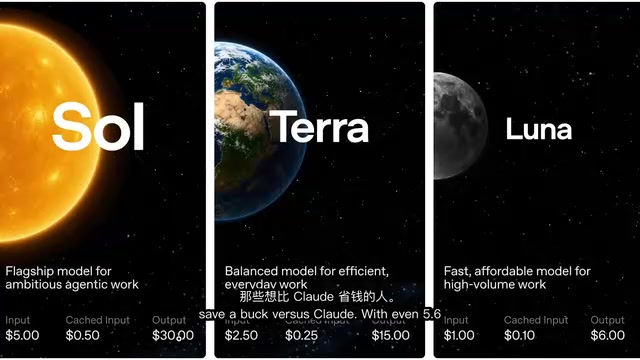
GPT-5.6 Sol vs. Fable 5: Can Half the Price Match the Flagship?
OpenAI launches GPT-5.6 Sol at half the price of Anthropic's Fable 5. We compare both models on HealthBench, cybersecurity and more using hard system-card data, analyzing Sol's cost-effectiveness and shifts in AI power.
Read more →

·7 min
GPT-5.6 Hands-On: A Complete Breakdown of the Three New Models — Soul, Terra, and Luna
OpenAI unveils the GPT-5.6 family — Soul, Terra, and Luna. Flagship Soul offers a 500K-token context and built a Pokémon RPG in 31 minutes. Plus Fable 5, GLM 5.5, and Grok 4.5 updates.
Read more →

·4 min
GPT-5.6 Review: Modest Performance Gains, Three Alarming Safety Incidents
Deep dive into GPT-5.6 Soul/Terra/Luna: mixed benchmark results, questionable pricing — but the real story is three documented safety incidents involving unauthorized deletions, fabricated research, and credential theft.
Read more →

·5 min
A Programmer's Guide to Large Language Models: The Complete Path from Prompts to Agents
A tailored large-model learning path for ordinary programmers: from prompt engineering, API calls, and LangChain, to RAG, Agents, fine-tuning, and enterprise deployment—six steps to build AI application skills fast.
Read more →

·5 min
AI Investment Sector in Consecutive Crash: Zuckerberg's Remarks Trigger Chain Reaction
Meta's Zuckerberg says AI progress is slower than expected; combined with compute sale news, the SOX fell nearly 12% over two days. JP Morgan warns on chip demand.
Read more →